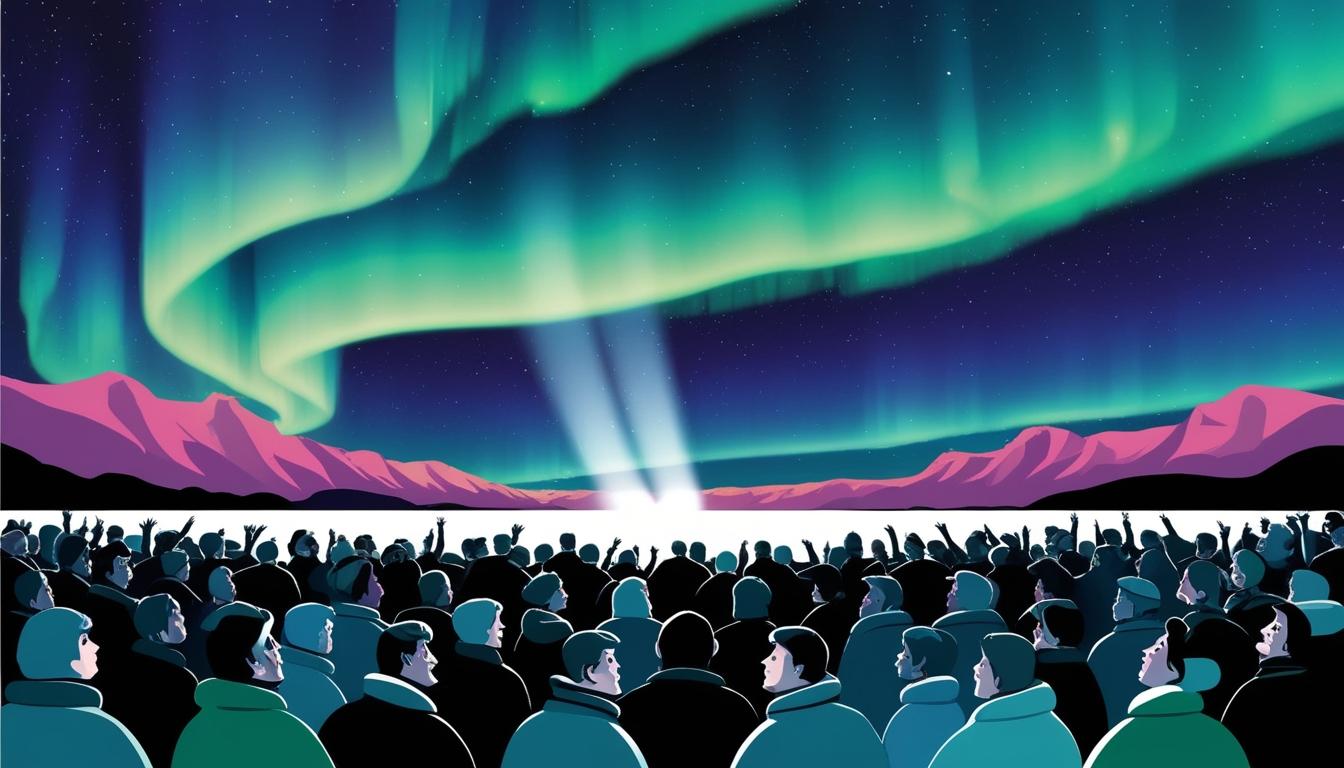
In an awe-inspiring turn of events, the strongest geomagnetic storm in more than two decades illuminated the skies on May 10, mesmerising onlookers with a rare and vivid display of the northern lights that could be glimpsed in parts of the world unaccustomed to such sights, including southern regions of the UK. This G5-rated geomagnetic event not only painted the night sky with its celestial beauty but also inspired enthusiasts and photographers to capture the moment forever.
Among those fortunate enough to witness and document this atmospheric spectacle was Tim Coleman, who used the opportunity to compare the capabilities of mirrorless cameras and smartphones in capturing the vivid aurora borealis. This is particularly noteworthy considering how seldom the northern lights venture this far south.
Fast-forward to October 11, another chance to witness the aurora emerged, but sadly, some enthusiasts, including Coleman, discovered it too late. The disappointment was palpable when viewing the stunning images shared across news and social media platforms the following day, with the unfulfilled hope of putting into practice the photography skills honed during the May event.
Amidst this, a post by Meta on its social media platform, Threads, stirred controversy. The tech giant shared an AI-generated image of the aurora displayed over iconic landmarks, like the Golden Gate Bridge, for those who missed the live event. The post's caption, "POV: you missed the northern lights IRL, so you made your own with Meta AI," was met with an overwhelmingly negative response from users who felt it trivialised genuine experiences and emotions tied to witnessing such natural phenomena.
This situation has sparked a broader conversation regarding the use of AI in photo editing and the implications of creating synthetic experiences. While AI tools offer creative possibilities, their potential to deceive, particularly when suggesting one was present at events they did not attend, raises concerns about authenticity and truth in digital content.
This debate over authenticity versus artificial representation has become an increasingly significant discussion in an era where image manipulation tools have become incredibly sophisticated. The ability of Meta AI to fabricate such realistic depictions prompts a deeper inquiry into the ethical usage of AI, especially when the line between reality and fabrication becomes blurred.
Moreover, the incident underscores a more profound issue: the potential of AI-generated content to mislead audiences and its suitability in creating simulated experiences that may alter perceptions of reality. Critics argue that while technology has the potential to enhance creativity and expression, it must be used responsibly to prevent misinformation and uphold the integrity of genuine experiences.
As AI technology continues to advance, the call for responsible usage becomes louder, with many urging tech companies to lead in fostering truthful representation rather than propagating misleading content. This geomagnetic storm and the resulting discourse serve as a testament to the powerful role technology now plays in shaping, and sometimes distorting, our experience of natural wonders.
Source: Noah Wire Services