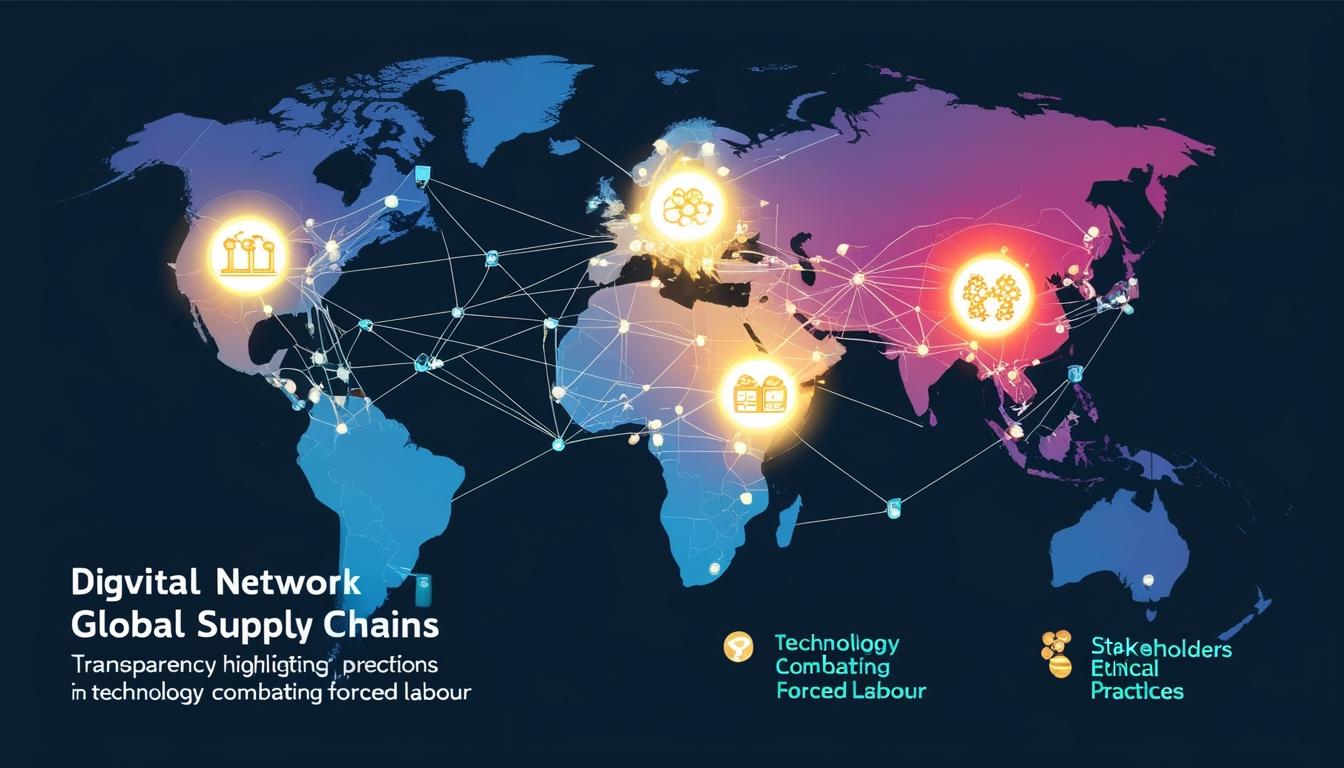
AI Collaboration Enhances Fight Against Forced Labour within Global Supply Chains
In an era marked by increasingly complex global supply chains, the quest for ethical standards faces significant challenges. The intricate web of international suppliers and manufacturers often leaves companies vulnerable to unethical practices such as forced labour and child exploitation. In response, the UK-based non-governmental organisation Hope for Justice, established 16 years ago, has intensified efforts to eradicate modern-day slavery, human trafficking, and labour exploitation. Operating across seven countries, the charity is dedicated to addressing exploitation at its roots, rescuing victims, and facilitating their reintegration into society.
A significant initiative by Hope for Justice is the Slave-Free Alliance, which was established in 2018. This division aims to assist multinational companies in purging their supply chains of any slavery-related practices. According to Hope for Justice's CEO and co-founder, Tim Nelson, the initiative begins with a comprehensive gap analysis to identify inconsistencies between a company's ethical objectives and its actual supply chain practices. However, the complexity of contemporary supply chains often means that traditional audit methods may overlook critical details.
Recognising these limitations, Slave-Free Alliance and Hope for Justice sought a technology partnership to enhance supply chain transparency. Following a rigorous evaluation of over 400 platforms, the organisation collaborated with Exiger, a leading software company leveraging artificial intelligence to offer granular visibility and risk assessment in supply chains.
Exiger’s platform has enabled its clients, including large corporations, to identify and mitigate hidden issues of forced labour in multi-tier supply chains. Brandon Daniels, Exiger’s CEO, recounted a notable case where their AI-enabled platform exposed a vendor's connection to an entity implicated in trafficking Vietnamese migrants to the UK. Such instances underscore the importance of advanced technologies in preemptively identifying and addressing unethical practices.
The collaboration between Exiger and Hope for Justice not only provides a technological solution but also underscores the shared commitment to effect impactful change. Exiger’s sophisticated AI platform offers capability beyond mere due diligence, peeling back the layers of supply chains to inspect each component down to raw materials. This detailed mapping permits companies to ascertain potential inclusion of forced labour in their supply chains.
Implementation of Exiger’s technology by Slave-Free Alliance involves understanding the individual operational nuances of client companies, many of which require a consensus among multiple stakeholders before adopting such sophisticated solutions. The platform’s utility notably includes identifying and scrutinising the supply chain of tantalum, a metal integral to electronic and medical devices, frequently associated with child labour.
Adopting Exiger’s technology aligns with mounting governmental regulations demanding comprehensive visibility and accountability from corporations for potential forced labour within their supply chains. As such, companies partnered with Slave-Free Alliance are increasingly recognising the necessity of integrated solutions like Exiger’s 1Exiger platform to achieve and maintain ethical standards.
Looking forward, Exiger plans to augment its offer by incorporating new technologies that enhance supplier analysis capabilities. This will enable businesses to scrutinise their sources comprehensively, extending to suppliers of their suppliers. As Nelson emphasises, this extended visibility is crucial for companies to make informed decisions aligning with ethical obligations.
The ongoing partnership between Hope for Justice and Exiger exemplifies the potential of technological solutions in the battle against modern-day slavery. Together, they advocate for supply chain transparency, strengthened monitoring, and a unified goal among businesses to maintain ethical, slavery-free operations. Through these efforts, the aspiration for a just and safe future for workers worldwide takes a significant step forward.
Source: Noah Wire Services