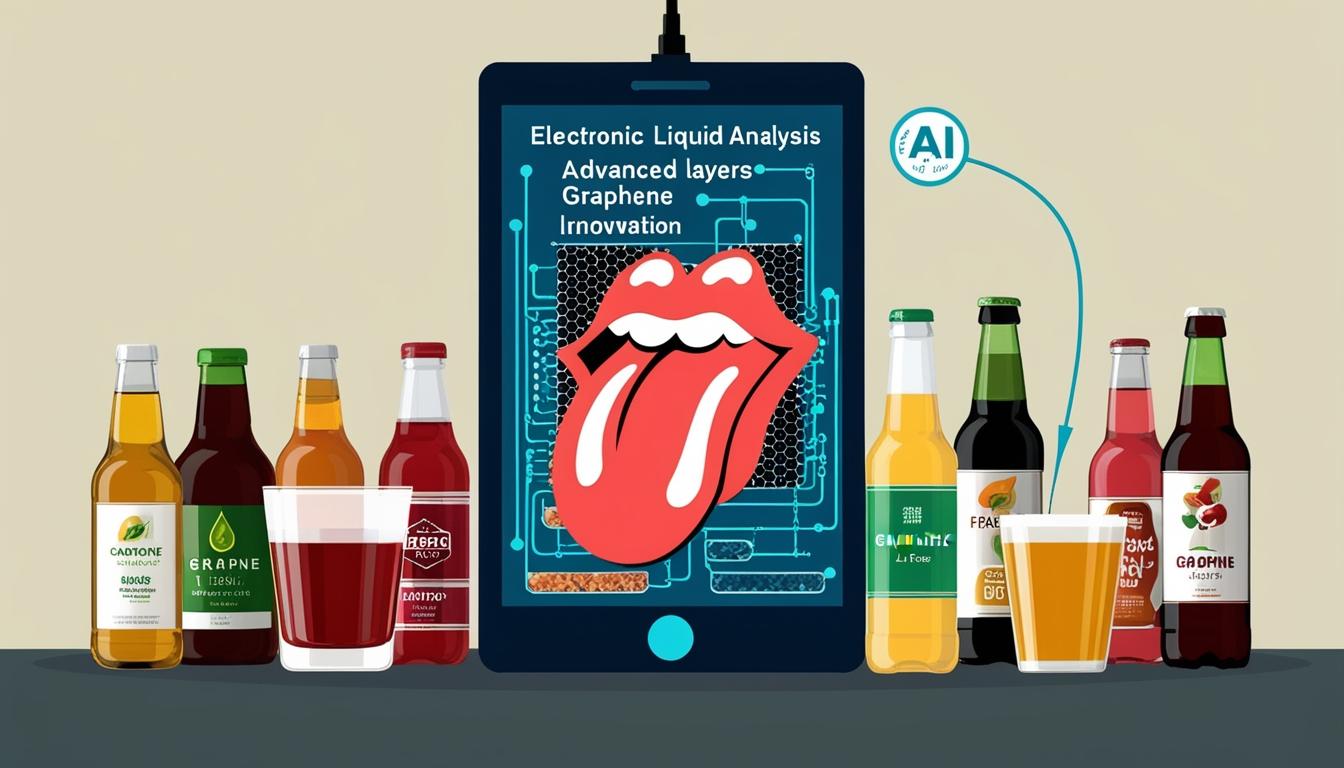
Electronic 'Tongue' Developed by Scientists at Pennsylvania State University Promises Advanced Liquid Analysis
In a pioneering advancement in the field of artificial intelligence and material science, researchers from Pennsylvania State University have developed an electronic "tongue," an innovative device designed to distinguish between different liquids at a level beyond human capability. This development could have far-reaching applications, particularly in ensuring food safety and quality.
The electronic tongue leverages the unique properties of graphene—a single layer of carbon atoms arranged in a honeycomb pattern—combined with an AI neural network, to mimic the human gustatory system, responsible for taste perception. The researchers at Penn State have worked extensively to simulate the functionality of the gustatory cortex within this device, allowing it to identify and differentiate between complex liquid compositions.
During trials, the electronic tongue has demonstrated remarkable accuracy in distinguishing between two of the world's most popular soft drinks, Coke and Pepsi, including their different variants such as diet and regular. Furthermore, the device has shown a proficient ability to analyse other liquids such as diluted milk, coffee blends, and various fruit juices. Impressively, it boasts an overall accuracy rate of 80% across several tests, with its precision for fruit juices reaching 98% on type identification and 99% in determining the freshness or age of the fruit used.
The potential applications of this technology extend beyond simple taste differentiation. The researchers have highlighted its capability in detecting harmful contaminants in food and beverages, such as PFAS—commonly referred to as "forever chemicals" due to their persistence in the environment and potential health impacts. This feature is crucial considering the increasingly complex and time-sensitive nature of chemical compositions in food, which pose significant challenges in existing monitoring systems.
"This development could revolutionise the approach to ensuring food freshness and safety," the study noted, addressing the intricate job of monitoring evolving chemical makeups in consumables. Spoiled food not only poses health risks but also results in a considerable reduction in nutritional value, making this technology highly relevant.
As researchers continue to refine this electronic tongue, they suggest it could serve as a cost-efficient platform across a wide spectrum of chemical sensing applications, particularly in the food supply chain. This innovative approach holds promise for industries focused on food safety, potentially transforming how freshness and contamination are assessed in the future. By enhancing detailed chemical analysis capabilities, the electronic tongue offers a glimpse into a future where food safety is more dependable and efficient.
Source: Noah Wire Services