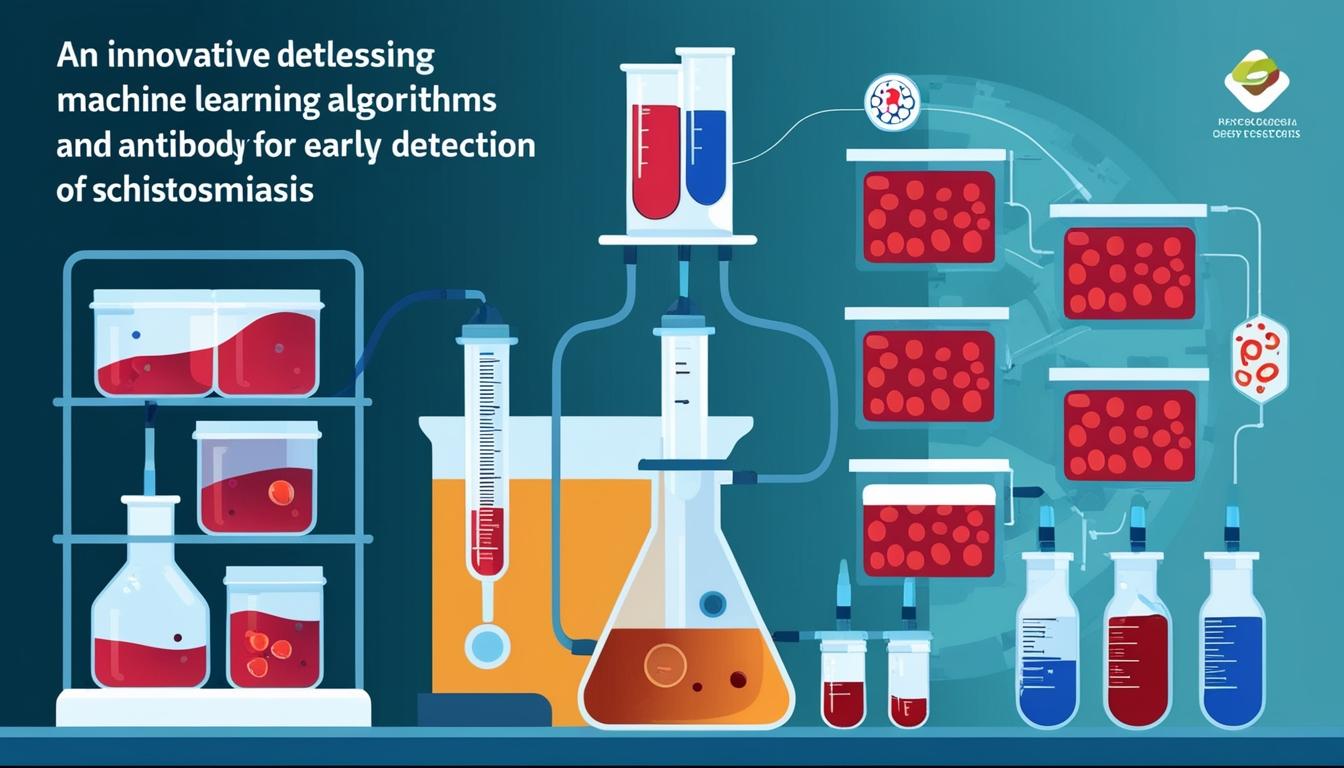
Emerging Machine Learning Techniques Illuminate Schistosomiasis Detection
In a significant stride towards combating schistosomiasis, a recent study has harnessed machine learning to unravel complex immune response data from patients' blood samples, paving the way for improved early diagnosis of this debilitating disease. This research, conducted by a team of scientists and published in a peer-reviewed journal, promises to enhance the detection and management of schistosomiasis, a neglected tropical disease affecting over 200 million people globally.
The Disease and Its Complex Cycle
Schistosomiasis is caused by a parasitic worm that requires two hosts—snails and mammals, including humans—for its lifecycle completion. The disease initiates when freshwater worm eggs penetrate human skin, subsequently travelling through the body and impacting various organs such as the liver and bladder. As the parasites mature into adult worms, they reproduce and their eggs are excreted through human waste, perpetuating the cycle.
Current diagnostic techniques involve detecting these eggs in faeces, which only becomes feasible during advanced phases of infection. This delay in diagnosis hampers effective treatment, as the prevalent medication, praziquantel, cannot eliminate juvenile worms or prevent reinfection in early stages.
Innovative Diagnostic Approaches
The study's breakthrough lies in identifying subtle immunological signals in blood samples indicative of early-stage schistosomiasis. The researchers developed two pioneering techniques:
Antibody Profiling Assay: By examining various antibodies and their communication with immune cells, the researchers could distinguish between uninfected individuals and those with early or advanced stages of the disease. This profiling captures both quantitative and qualitative aspects of the immune response.
Machine Learning Model: A sophisticated algorithm was trained to analyse antibody data, uncovering latent characteristics of the immune response that correlate with disease stage and severity. Tested against data from different geographical areas, the model successfully identified biomarkers and potential mechanisms underlying schistosomiasis infection.
Implications and Future Directions
The potential impact of this research is substantial. With an annual death toll of approximately 280,000 due to schistosomiasis, early detection can significantly enhance treatment outcomes and mitigate severe health consequences. Moreover, the interpretability of the machine learning approach offers deeper insights into disease development mechanisms, informing future diagnostic and therapeutic strategies.
However, questions remain regarding the stability of the identified biomarkers across diverse populations. Future investigations could determine their applicability to broader demographic groups and advance our understanding of the immune response to specific proteins during intermediate infection stages.
The researchers aim to deploy these diagnostic and treatment strategies in schistosomiasis-endemic regions, potentially transforming the approach to this neglected disease. This study not only highlights the promise of machine learning in medical diagnostics but also marks a critical step towards a more comprehensive understanding and management of schistosomiasis worldwide.
Source: Noah Wire Services