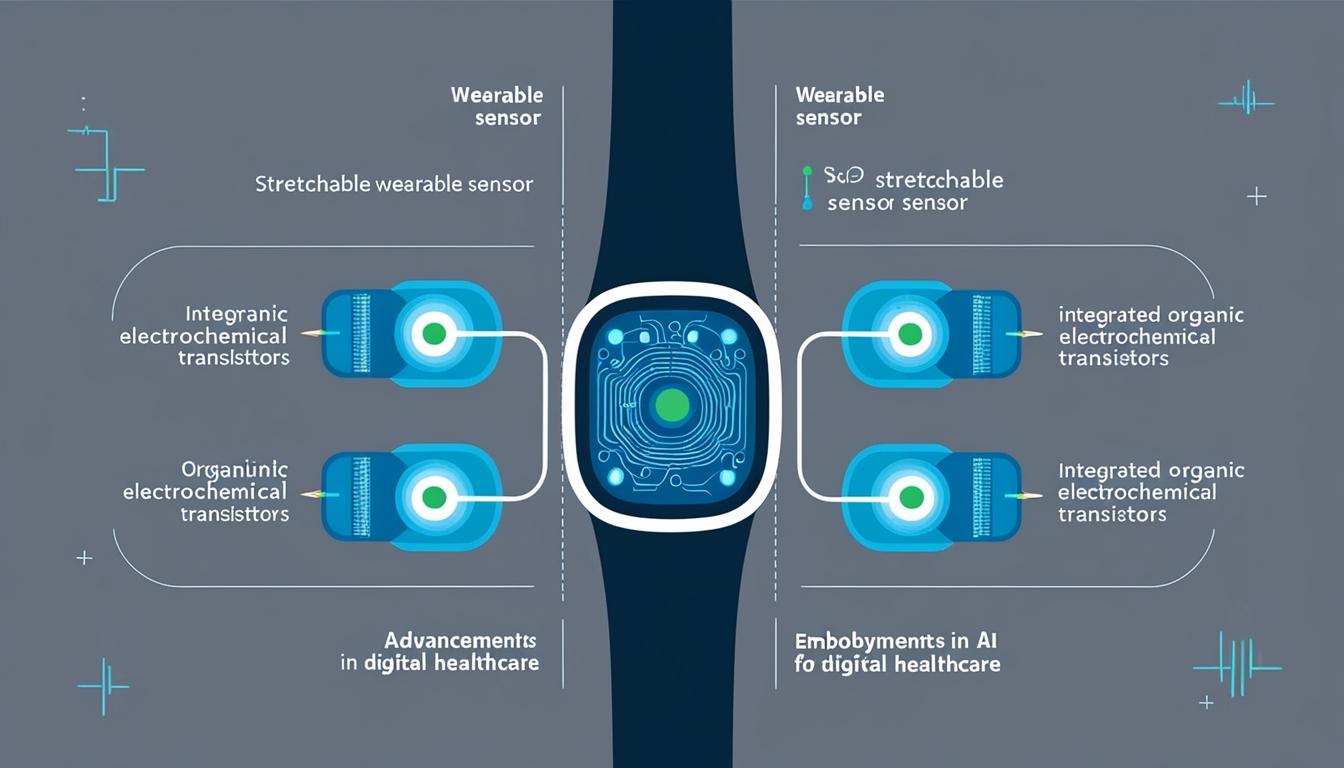
A research team at the University of Hong Kong (HKU), under the leadership of Professor Shiming Zhang from the Department of Electrical and Electronic Engineering, has made significant strides in the field of biomedical engineering. They have introduced a wearable in-sensor computing platform based on organic electrochemical transistors (OECTs), which promises to advance the application of AI in digital healthcare and machine interfacing.
The team's innovation addresses a critical barrier in wearable technology—integrating computing capabilities directly into the sensors. Traditional sensors have often struggled with mechanical mismatches with soft tissues, resulting in motion artifacts that limit their practical use. The HKU team has circumvented this by designing a compositionally unique OECT that offers durability and stretchability, making it well-suited for bioelectronics applications.
Utilising state-of-the-art soft microelectronics technology, the researchers have established a fabrication protocol that standardises these advances, enabling the creation of sensors that can stretch and conform to human skin. This integration means the devices can process data locally, improving real-time responsiveness and minimising dependency on network interfaces, thereby achieving lower power consumption and enhanced user privacy.
One of the key achievements of this platform is its ability to measure human electrophysiological signals reliably, even during motion, due to the low-power, multi-channel nature of the technology. This technological leap was demonstrated in tests that highlighted the sensor's capacity for stable in-situ computing.
The implications of this development stretch beyond traditional health monitoring and could significantly enhance applications in smart wearable technology and human-machine interfacing. Published in the reputable journal Nature Electronics, the study is titled “A wearable in-sensor computing platform based on stretchable organic electrochemical transistors,” indicating the potential broad impact of this research.
Professor Zhang commented on the groundbreaking nature of their work, suggesting that it opens new avenues for wearable technologies and would propel further advancements in AI healthcare applications. The research team plans to continue refining their technology and exploring its applications across various healthcare settings, aiming to enhance the capabilities and integration of edge-AI in everyday health monitoring.
This advancement is seen as a testament to HKU's commitment to advancing health technology that has tangible benefits for improving quality of life, marking a significant step in the convergence of AI and wearable sensor technologies for the future of digital health.
Source: Noah Wire Services