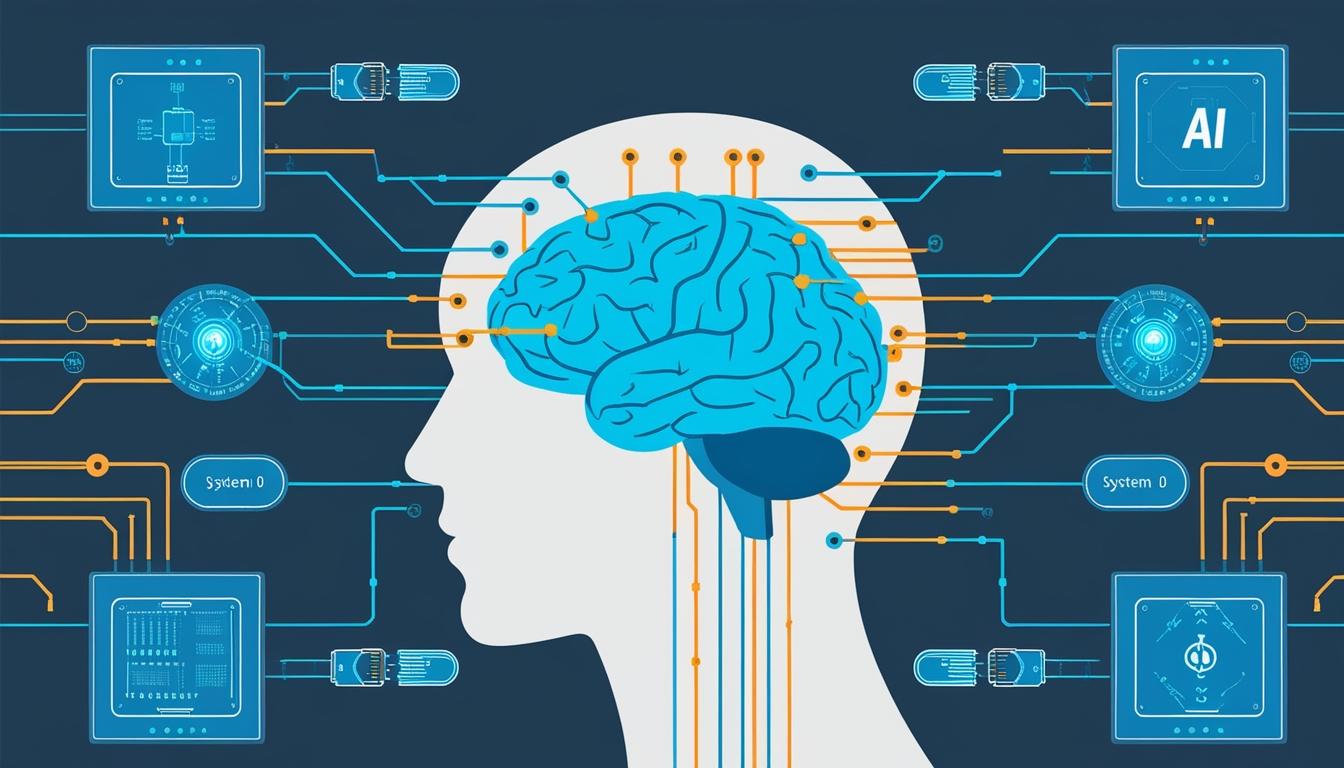
Researchers from Università Cattolica del Sacro Cuore in Italy have introduced a novel concept in cognitive science that could redefine how humans engage with technology. The study, published in the journal Nature Human Behaviour, postulates the existence of "System 0" thinking—a new form of cognitive interaction that occurs outside the human brain, primarily utilising artificial intelligence (AI) to enhance mental processes.
Building on the theories of System 1 and System 2 thinking outlined in Daniel Kahneman's well-regarded work, "Thinking, Fast and Slow," which describes System 1 as fast and intuitive and System 2 as slower and more analytical, the researchers propose that System 0 could significantly alter these traditional modes of thought. Unlike its predecessors, System 0 operates independently from the human brain yet remains intrinsically linked to it by leveraging AI's capabilities.
In articulating their hypothesis, the researchers liken this new system to how a computer interfaces with an external hard drive. Just as a computer can access and use the data on the hard drive, humans can utilise AI to efficiently gather and organise information. However, ultimate control and decision-making remain human responsibilities.
The study acknowledges the potential benefits of this interdependence between humans and AI. System 0 could expedite data processing and provide solutions to intricate problems that demand thorough analysis. However, the researchers emphasise the importance of maintaining critical engagement with AI outputs and cautions against over-reliance on AI-generated solutions. The danger lies in losing the ability to think autonomously and create innovative ideas if humans relinquish their critical faculties in favour of automated systems.
The researchers’ analysis reflects the ongoing conversation about the role of AI in human cognitive processes and the necessity for humans to remain critically engaged. The potential for AI to significantly contribute to cognitive tasks offers vast possibilities; however, the challenge lies in directing and managing its use responsibly.
By initiating discourse on System 0 thinking, the researchers highlight the delicate balance required as technology continues to evolve. They suggest that the future effectiveness of System 0 will ultimately depend on humans' capacity to thoughtfully guide AI, ensuring that it serves as a complementary tool in enhancing cognitive function while preserving human creativity and independence.
Source: Noah Wire Services