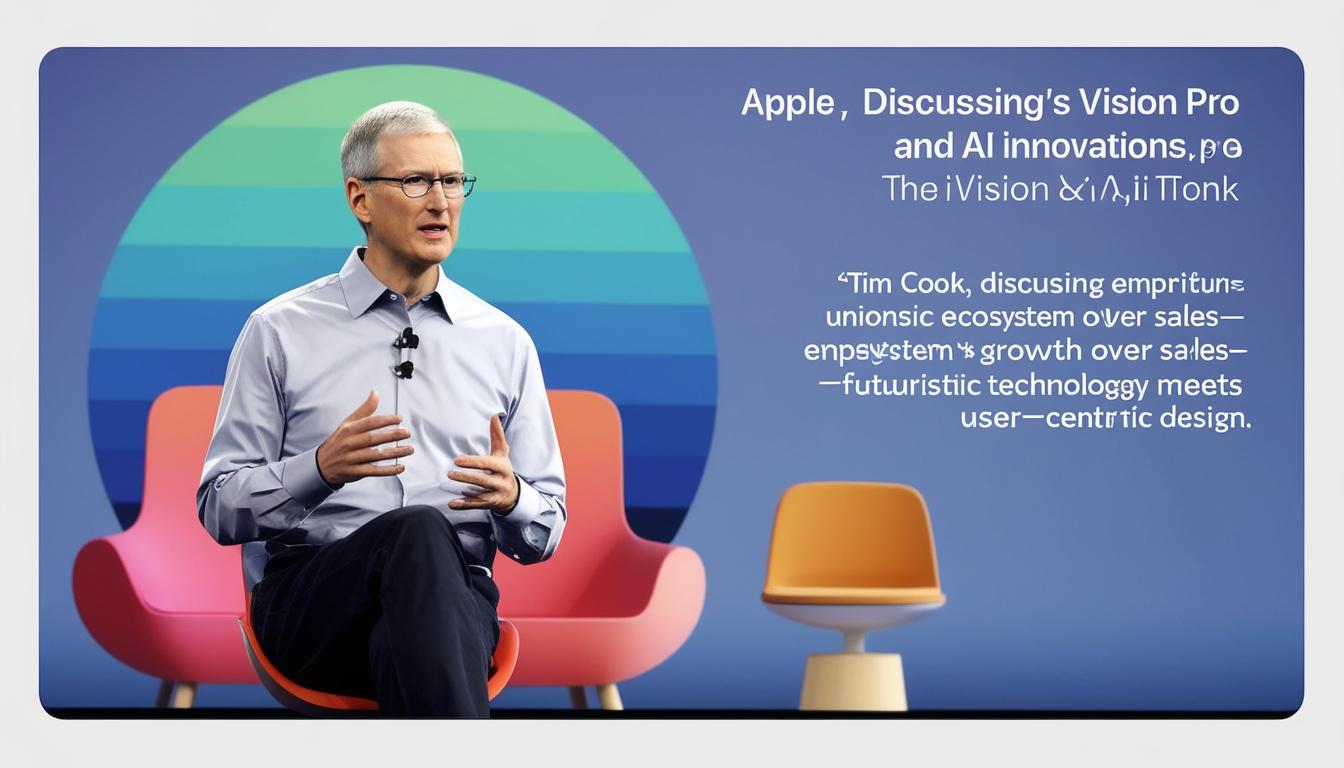
Apple CEO Tim Cook recently provided new insights into how the tech giant measures success for its latest innovations, the Vision Pro and Apple Intelligence, during an interview with the Wall Street Journal. These remarks come as the company charts its course in emerging technology realms, including augmented reality and artificial intelligence.
The Vision Pro, Apple’s foray into spatial computing, has seen a mixed reception. While it has not experienced overwhelming sales figures, Cook described it as “arguably a success today,” albeit with a unique justification. Rather than typical measures such as customer satisfaction or sales volume, Cook evaluates its success through the perspective of ecosystem development. He outlined the progress as an ongoing journey, stating, “Over time, everything gets better, and it too will have its course of getting better and better. I think it’s just arguably a success today from an ecosystem-being-built-out point of view.”
This assessment suggests that Apple views the Vision Pro not solely through immediate commercial metrics but as part of a broader objective to establish a robust spatial computing platform. Cook's remarks imply that the device’s ultimate success hinges on its role in transitioning both Apple and its user base into a future where spatial computing becomes mainstream.
Similarly, Cook’s comments on Apple Intelligence, the company’s initiative in artificial intelligence, reflected a distinctive approach to defining success. He reiterated Apple’s philosophy of “Not first, but best,” suggesting that Apple prioritises customer-centric AI advancements over being a front-runner in developing cutting-edge AI technology. Cook explained, “We weren’t the first to do intelligence, but we’ve done it in a way that we think is the best for the customer.” This echoes the brand’s objective to integrate AI solutions that enhance user experience, a sentiment encapsulated in their slogan, “AI for the rest of us.”
The strategic focus is not on claiming the top spot purely in AI prowess but rather on achieving meaningful enhancements to user experience, aligning with Apple’s longstanding product ethos of meeting specific user needs through practical applications rather than abstract technological developments.
Cook’s comments suggest a long-term vision where Apple is setting groundwork today for future gains, focusing on building a supportive ecosystem for the Vision Pro and ensuring Apple Intelligence supplements user needs effectively. By redefining their success metrics, Apple places less emphasis on immediate financial indicators and more on potential future impacts.
These insights provide an intriguing glimpse into Apple’s strategy as it navigates the adoption of groundbreaking technologies, concentrating on cultivating environments conducive to future innovations. Cook’s interpretations of success signal Apple’s intent to lead with thoughtful integration rather than hastening to market, aligning closely with the company's overall mission of enriching lives through technology.
Source: Noah Wire Services