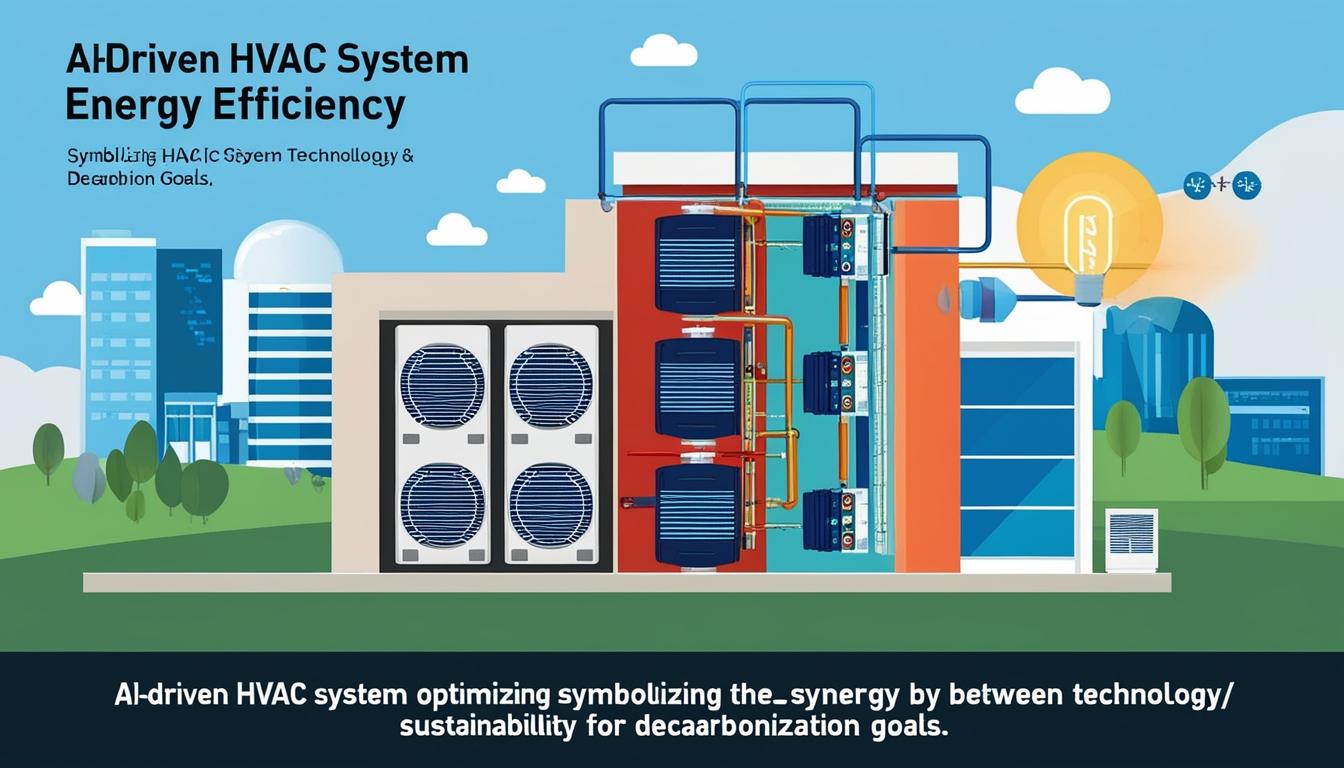
As the U.S. pushes forward with ambitious decarbonisation goals, buildings across the nation find themselves at the forefront of this transformative movement. With federal, state, and local mandates pressuring a reduction in energy use intensity, there is a growing shift towards more sustainable building operations. Both seasoned engineers and building operators are increasingly looking towards innovative solutions to curtail energy consumption and decrease carbon footprints. Among these solutions, the integration of artificial intelligence (AI) into HVAC systems stands out as a pivotal development.
Traditionally, building operations have grappled with the dichotomy between energy savings and occupant comfort. However, recent advances in AI technology signal an end to these so-called "thermostat wars". AI-driven HVAC controls are proving effective in balancing these two critical aspects by providing both enhanced comfort and energy efficiency.
AI systems excel in processing diverse data streams, which include temperature, humidity, equipment status, and occupancy levels. By analysing these along with external data like weather forecasts, AI technologies can predict and cater to a building's thermal needs with precision hours before changes occur. This preemptive management allows for the most efficient control strategies to be enacted swiftly, reducing energy usage and, consequently, carbon emissions. This process not only slashes energy bills but also aligns with broader organisational sustainability objectives.
Importantly, adopting AI solutions presents a minimal barrier to entry for many institutions. Some building owners may be unable to invest in entirely new high-efficiency mechanical systems immediately. However, AI controls can significantly boost the efficiency of existing, even older, equipment, which broadens accessibility to such advanced technology. Through automation and other sophisticated building management tools, these systems improve sequencing, scheduling, and overall management without demanding extensive capital investment.
For instance, Trane's Autonomous Control system exemplifies how AI enhances existing equipment's performance. Operating as a cloud-based service, it perpetually identifies improvement areas, optimising equipment performance constantly, thereby conserving energy and reducing costs. These improvements facilitate a phased implementation strategy, wherein the energy savings garnered through AI are reinvested into newer, more efficient technologies, creating a cycle of continuous improvement and cost-efficiency.
Furthermore, the reduced necessity for human oversight afforded by AI is particularly advantageous in a challenging labour market. Experienced facility engineers often develop an intuitive understanding of their buildings, making adjustments throughout the day. However, as this process can be time-intensive, AI systems can take over these repetitive tasks, allowing engineers to focus on other pressing duties. Over time, AI supports achieving long-term sustainability targets without compromising on interior comfort.
Thus, AI-powered HVAC controls underscore a promising collaboration between technology and sustainability, evidencing that energy efficiency and user comfort can indeed coexist harmoniously. As the U.S. advances towards wide-scale decarbonisation, adopting such intelligent systems could mark a significant step forward for the building sector and its environmental impacts.
Source: Noah Wire Services