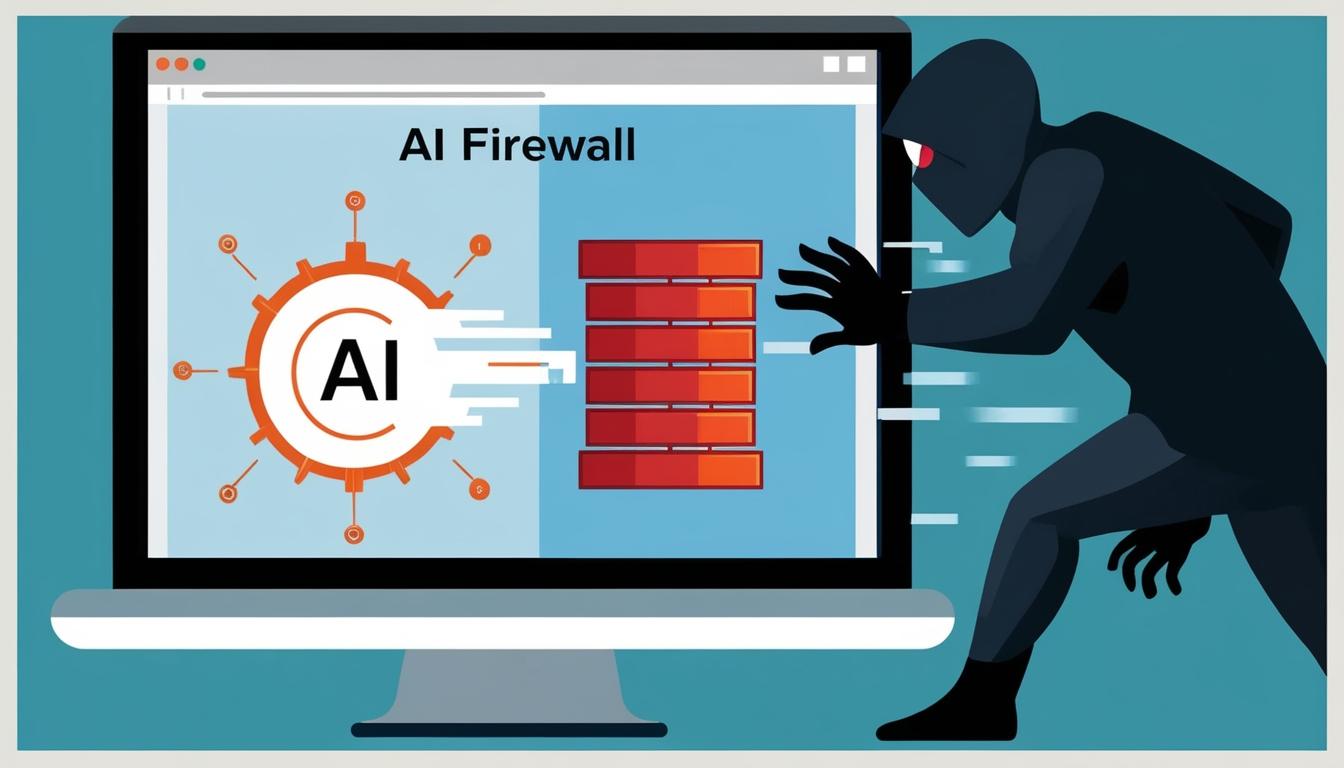
Artificial Intelligence at the Forefront of Cybersecurity Threats and Defences
In recent years, the rapid advancement of Artificial Intelligence (AI) has revolutionised numerous sectors, including the field of cybersecurity. As AI technology becomes even more sophisticated, cybercriminals are exploiting its capabilities to conduct intricate cyberattacks such as phishing, social engineering, and voice/video cloning scams. The increasing utilisation of AI in the cyber domain was a focal point at the recent Official Cybersecurity Summit held in McLean, Virginia, where experts from various industries converged to discuss the dual-sided nature of AI in cybersecurity.
At the summit, representatives from major businesses and government agencies, including the IRS and the Department of Homeland Security (DHS), joined forces with cybersecurity providers like Hughes, alongside a myriad of information security analysts. Key industry leaders, such as Chief Information Security Officers (CISOs), Chief Information Officers (CIOs), Chief Technology Officers (CTOs), and Chief Executive Officers (CEOs), engaged in discussions on the evolving roles of AI technologies in both protective measures against cyber threats and the mechanisms used by adversaries.
AI's Dual Role in Cybersecurity
In the realm of cybersecurity, AI serves two distinct purposes for two opposing groups. Cybersecurity vendors employ AI to scrutinise networks, monitor traffic data, and enhance their protective solutions through real-time visibility, automated responses, and advanced threat detection. This advanced forecasting ability allows companies to preempt security incidents, drastically shifting the paradigm to proactive cybersecurity management.
Conversely, cybercriminals are harnessing the power of AI to refine their tactics, employing generative AI to craft nearly undetectable phishing schemes, mimicry scams using voice and video cloning, and even malwares that can autonomously steal sensitive user data. These sophisticated techniques give cybercriminals an edge, enabling them to carry out fraudulent activities with greater precision and efficiency. By impersonating legitimate business interactions, these AI-enhanced scams are increasingly managing to sidestep conventional antivirus defences.
Software Development and Cybersecurity Measures
To counteract these new threats, software developers face the ongoing challenge of creating robust and secure applications. Although no software development life cycle can guarantee 100% security, frameworks such as the Secure Software Development Framework (SSDF) are vital. This framework encourages developers to integrate essential security practices to reduce the number and impact of vulnerabilities and to address the root causes of security issues.
The Increasing Risk of Data Breaches
Data breaches and leakages remain significant threats to industries, particularly those dealing with valuable customer data like retail, banking, and governmental sectors. With franchises dispersed geographically, cybersecurity efforts can become fragmented, often leaving systems vulnerable. A breach in a single franchise can potentially compromise the entire chain.
In 2023 alone, the United States reported 3,205 data compromise incidents affecting over 353 million individuals. The financial repercussions are substantial, with the average cost of a data breach rising to $9.48 million, highlighting an urgent need for enhanced cybersecurity strategies.
A sentiment echoed at the McLean summit encapsulates the ongoing transformation: "AI won't replace humans—but humans with AI will replace humans without AI." As AI continues to evolve, its role in both augmenting human capabilities and posing new cyber challenges becomes increasingly pertinent. The summit underscored the necessity for continuous vigilance and adaptation in leveraging AI to both protect and innovate in the modern digital landscape.
Source: Noah Wire Services