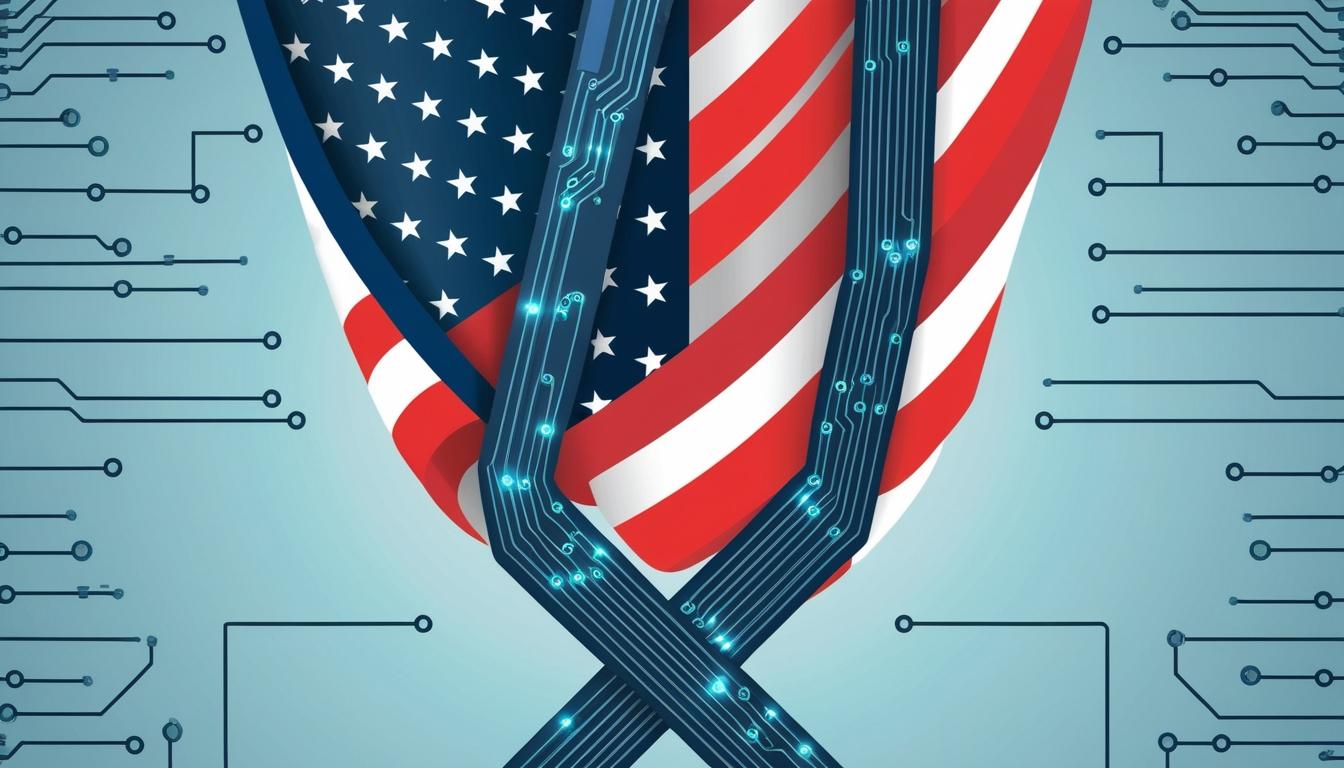
In a significant move to address the burgeoning role of artificial intelligence (AI) in global security, U.S. President Joe Biden has formally directed national security agencies to adopt advanced AI technologies while instituting stringent security measures to prevent misuse. The new national security memorandum, issued towards the end of Biden's presidential term, aims to strike a balance between harnessing AI's potential and safeguarding against its potentially perilous use.
The directive explicitly bans the use of AI to bypass established nuclear weapon protocols and restricts its application in ways that could infringe upon freedom of expression or undermine democratic values. Such provisions, while appearing evidently necessary, are viewed by Biden's administration as critical in ensuring that agencies can effectively exploit AI's capabilities while precluding its exploitation by adversaries.
Senior officials suggest that clear guidelines can foster experimentation and broader adoption of AI technologies, assuring agencies of a defined framework for their usage. President Biden, in concert with his national security team, has been refining these policies for several months to guarantee their applicability, even amidst crises.
Biden's National Security Advisor, Jake Sullivan, articulated the significance of meticulously managing AI's rise during an address at the National War College. Sullivan underscored the pivotal nature of AI to national security in the foreseeable future, asserting the necessity of "getting this right."
Moreover, the memorandum mandates agencies to collaborate with American companies to shield AI technologies from foreign espionage and to perpetuate the advancement of semiconductor production — crucial components in AI technology.
While the order sets long-term directives with deadlines extending beyond Biden's tenure, uncertainty looms regarding former President Donald Trump's prospective approach should he reclaim office. Concurrently, Vice President Kamala Harris maintains an active role in AI-related initiatives, including her participation in a notable summit in London.
The administration anticipates that AI's rapid evolution will ignite a new era of geopolitical competition. Although AI innovations largely originate within the United States, nations such as China are swiftly integrating these technologies across military and civilian sectors.
The U.S. has engaged China in dialogues regarding AI, aspiring to expand discussions on its more hazardous applications. Sullivan highlighted concerns over China's technological advancements, which he suggested create vulnerabilities through mass surveillance, misinformation dissemination, and potential coercion.
With these considerations, the U.S. aims to construct an appealing technological pathway that encourages nations to veer away from potentially unreliable and costly alternatives. The administration is resolute in its intention to establish a robust framework for AI that aligns with democratic principles, thus fortifying national security and maintaining an edge in global technological leadership.
Source: Noah Wire Services