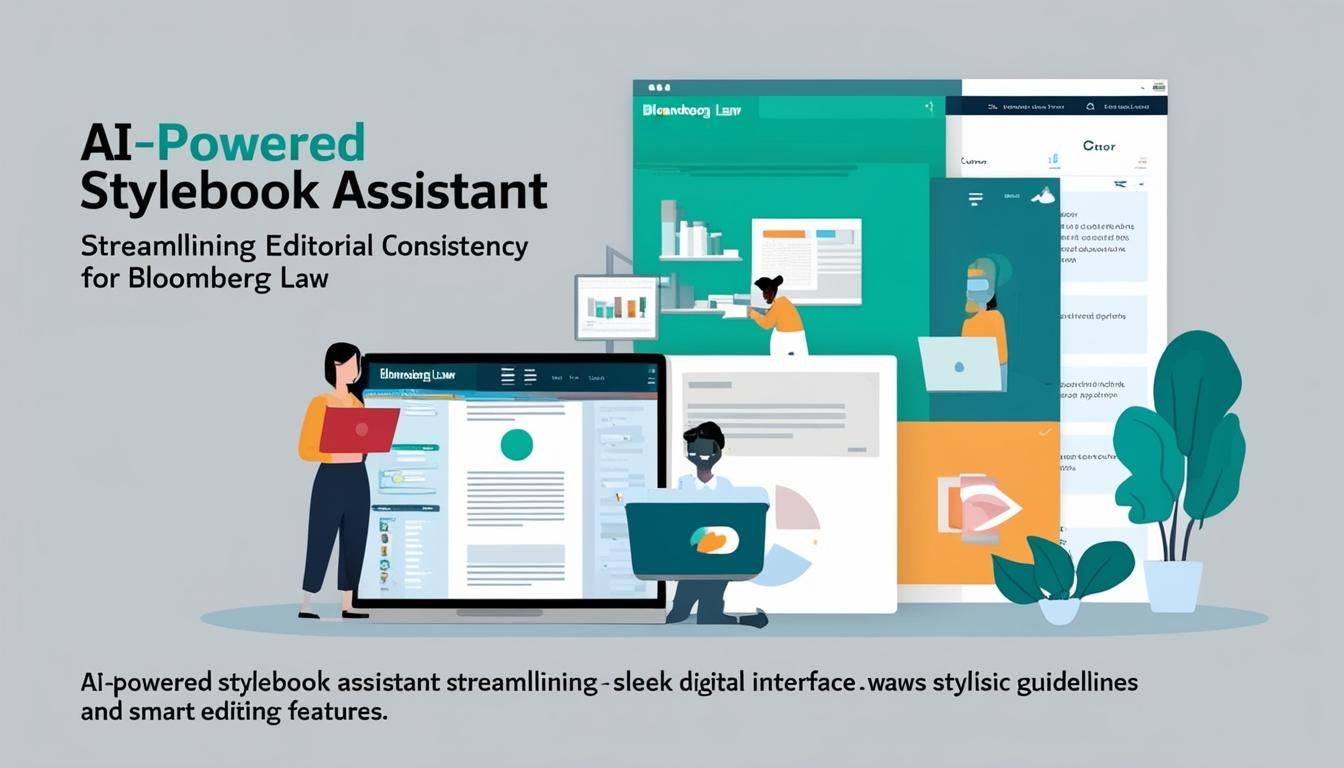
Bloomberg Law is in the process of developing an innovative AI-powered tool designed to streamline the editing process by focusing specifically on stylistic consistency within articles. This cutting-edge tool, known as the Stylebook Assistant, is set to transform how articles are edited by aligning them with the unique style standards of Bloomberg Law's newsroom.
Marissa Horn, writing for the American Society of Business Publication Editors, delves into the characteristics that set the Stylebook Assistant apart from existing text editors such as Tansa or Grammarly, which prioritise grammar, sentence structure, and tone. Unlike these tools, the Stylebook Assistant is dedicated to enhancing stylistic continuity, ensuring articles adhere to specified style guidelines distinct to Bloomberg Law.
The adoption of style consistency is crucial for most newsrooms, which typically follow established standards like those found in the Associated Press (AP) Stylebook. These standards encompass grammar, punctuation, and language usage, forming a universal structure across published articles. However, certain media outlets, including those in specific industries or regional areas, have customised entries to address unique editorial needs. Bloomberg Law, along with prestigious publications like The New York Times, has developed its own stylebook. This creates a challenge for reporters and editors who may work across various newsrooms throughout their careers, each with its own set of stylistic nuances to remember and apply.
The introduction of the Stylebook Assistant aims to alleviate this challenge by employing a large language model trained specifically for stylistic editing. This marks a significant shift from common editing tools which focus primarily on grammatical correctness. By doing so, Bloomberg Law is positioning itself at the forefront of editorial innovation, leveraging artificial intelligence to enhance productivity and maintain editorial consistency across its publishing operations.
The development of the Stylebook Assistant underscores the growing trend in the media industry to integrate artificial intelligence into editorial processes, aiming to reduce the burden on human editors and optimise workflow efficiency. Through such technological advancements, it is anticipated that more streamlined operations may be achieved, allowing editorial teams to focus on more strategic and content-driven tasks. While the exact release date and broader implementation strategies remain to be seen, the initiative reflects Bloomberg Law’s commitment to embracing technological advancements to support and refine its editorial practices.
Source: Noah Wire Services