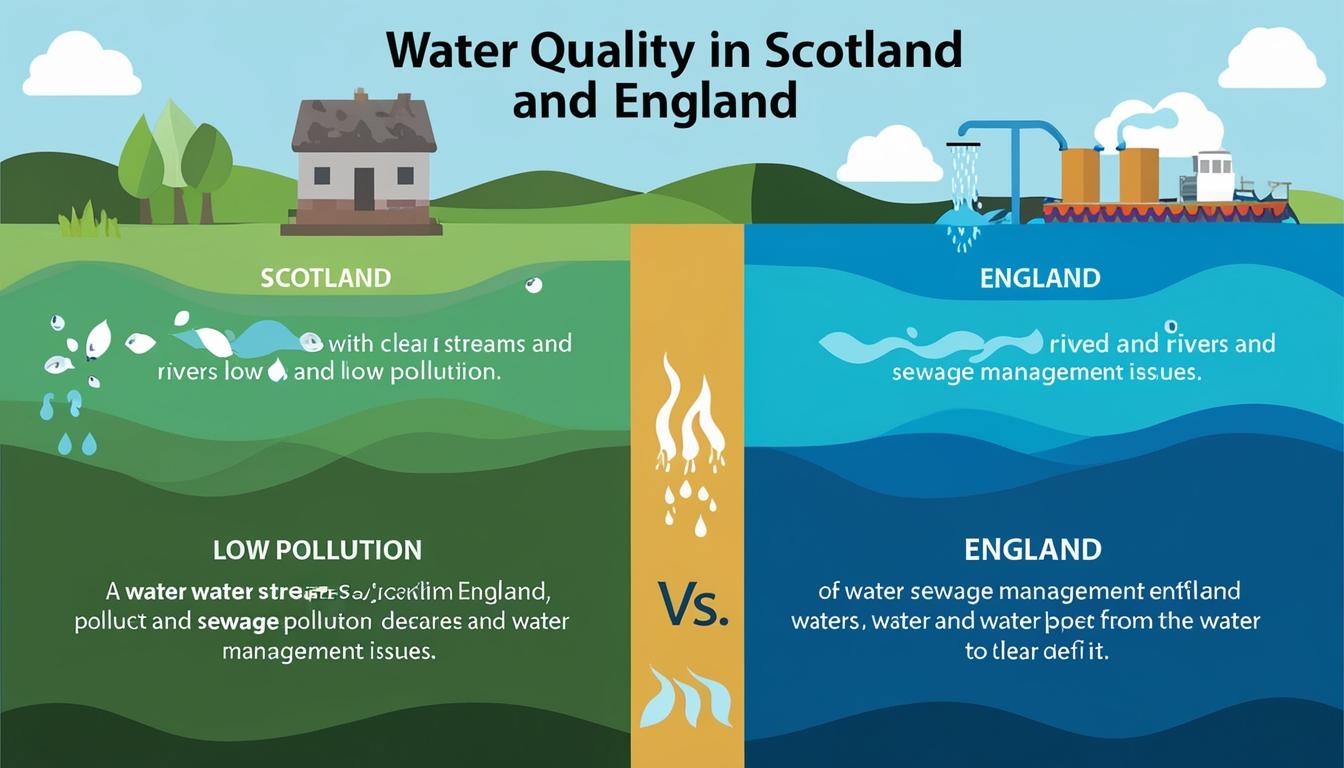
Comparison of Water Quality and Management: Scotland vs England
In recent times, there has been a growing discourse comparing the state of water quality and management in England and Scotland, often highlighted during political discussions such as those on BBC's Question Time. The conversation pivots around the contrasting situations surrounding the management of water resources in these two parts of the United Kingdom.
A key point in this debate is the handling of sewage and subsequent fines imposed for management failures. In England, a substantial fine was proposed by Ofwat, the regulatory body for water services in England and Wales, amounting to £168 million in total for the year 2024. The fines were directed at three major companies: Thames Water faced a proposed fine of £104 million, Yorkshire Water £47 million, and Northumbrian Water £17 million. These fines were a result of companies failing to adequately manage their wastewater treatment and sewer networks.
Conversely, Scotland's water management, specifically through Scottish Water, has seen far fewer issues in terms of regulatory fines. The last recorded fine for Scottish Water related to sewage incidents was in 2020, amounting to £19,000, with the only other previous occurrence in 2013, with a fine of £20,000. As of 2024, no sewage discharge fines have been issued to Scottish Water, illustrating a stark contrast to England's situation.
Further differentiating the two regions is the quality of water in their respective rivers. In England, a significant 83% of rivers have been found to possess high levels of pollution, due largely to sewage and agricultural waste. This information emerged from the most extensive citizen science water testing initiative in the UK, underscoring a critical environmental issue.
Scotland, on the other hand, reports that 87% of its water environments are classified as 'good' or better, marking the highest level of water quality the nation has ever recorded. Additionally, Scotland boasts a record number of bathing waters that have been rated as ‘excellent’, highlighting a positive trend in maintaining and enhancing water standards.
This discussion frequently arises in political debates, often used to form narratives around regional governance efficiency and the state of public utilities, calling into question the management practices in place and the wider implications on the environment and public health. Notably, the disparity between the fines and the quality of water in both regions has provided ammunition in political arenas to discuss and assess governance efficacy.
Such comparisons are critical in understanding the broader implications of regulatory practices and the role they play in ensuring the sustainable management of resources. They offer a lens into the challenges and successes faced by public utilities across different political landscapes in the UK.
Source: Noah Wire Services