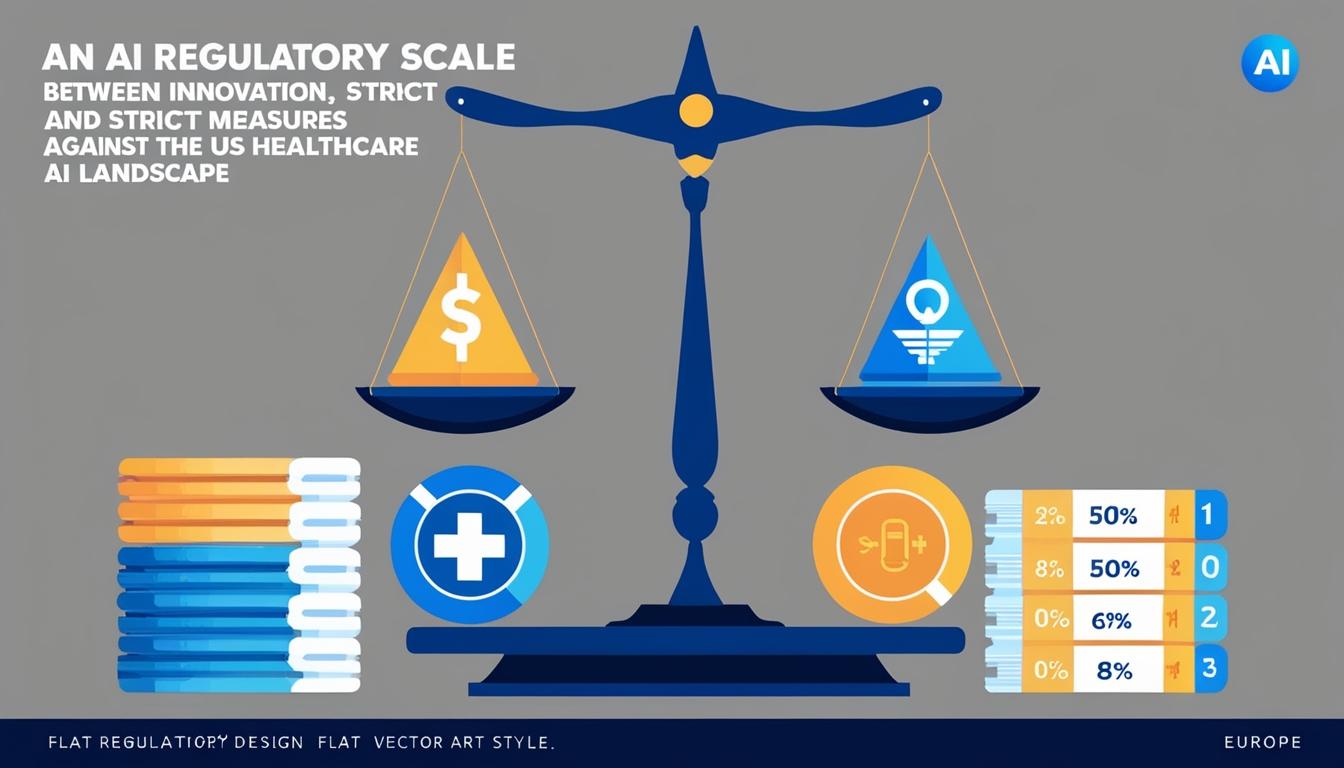
European Tech Leaders Voice Concerns Over AI Regulation as US Pushes Ahead with Health AI Oversight
European tech leaders have expressed concern over the impending European Union (EU) regulations on artificial intelligence (AI), which they fear could stifle innovation and competitiveness, particularly as the US implements new oversight measures in healthcare AI. As the EU becomes the first major political bloc to propose stringent AI regulation, companies such as Germany's SAP are challenging these measures.
SAP's CEO, Christian Klein, cautioned against excessive regulatory constraints, suggesting that such actions could hinder Europe’s competitive stance against technological giants in the US and China. Klein, at the helm of Europe’s largest software enterprise since 2020, highlighted the importance of targeting AI outcomes rather than imposing broad and potentially restrictive technology controls. His comments reflect a broader apprehension among European tech leaders that over-regulation could damage the AI startup ecosystem within Europe, potentially handicapping the region in a rapidly evolving global tech landscape.
In contrast, the US is advancing its regulatory framework in the healthcare sector with the Food and Drug Administration (FDA) announcing substantial changes to its AI oversight. The FDA, detailed in the Journal of the American Medical Association (JAMA), is instituting a risk-based oversight model that is intended to foster innovation while ensuring patient safety. Having approved nearly 1,000 AI-driven medical products since 1995, the regulatory body now faces a rapid increase in AI-related submissions, particularly in areas such as drug development.
The FDA's strategy focuses on the lifecycle management of AI tools, implementing continuous monitoring post-deployment to address potential unpredictability, especially in complex models like large language models. The framework will subject critical health applications, such as life-saving devices, to rigorous examination, while offering more flexible regulation for administrative uses. Efforts involve international cooperation, aiming to create unified global standards, ushering in a new era of governance over medical technology as AI applications in healthcare expand across various domains.
Meanwhile, leading tech companies face challenges in aligning their AI models with the stringent requirements of the European AI Act. Recent testing, conducted through a compliance framework devised by Swiss startup LatticeFlow AI, has shown significant gaps in major AI models from companies like OpenAI, Meta, and Anthropic. These models, although generally strong, reveal weaknesses in areas crucial to compliance, like cybersecurity and bias prevention, which could lead to steep penalties for non-compliance, reaching up to 7% of global annual revenue.
For instance, OpenAI’s GPT-3.5 Turbo scored low on measures of discriminatory output, and Meta’s Llama 2 received modest cybersecurity resilience scores. Anthropic's Claude 3 Opus topped the charts but still highlighted the necessity for considerable modifications to meet EU standards. Released as the EU gears up to draft enforcement guidelines expected by spring 2025, this evaluation framework serves as an initial step towards compliance, illustrating the substantial challenge that AI developers face in balancing innovation with regulatory conformity.
These developments reflect the present dichotomy in global AI policy, with Europe pushing for regulatory thoroughness while the US aligns its safety protocols within healthcare, raising important considerations for the future landscape of AI technology adherence and advancement across different sectors internationally.
Source: Noah Wire Services