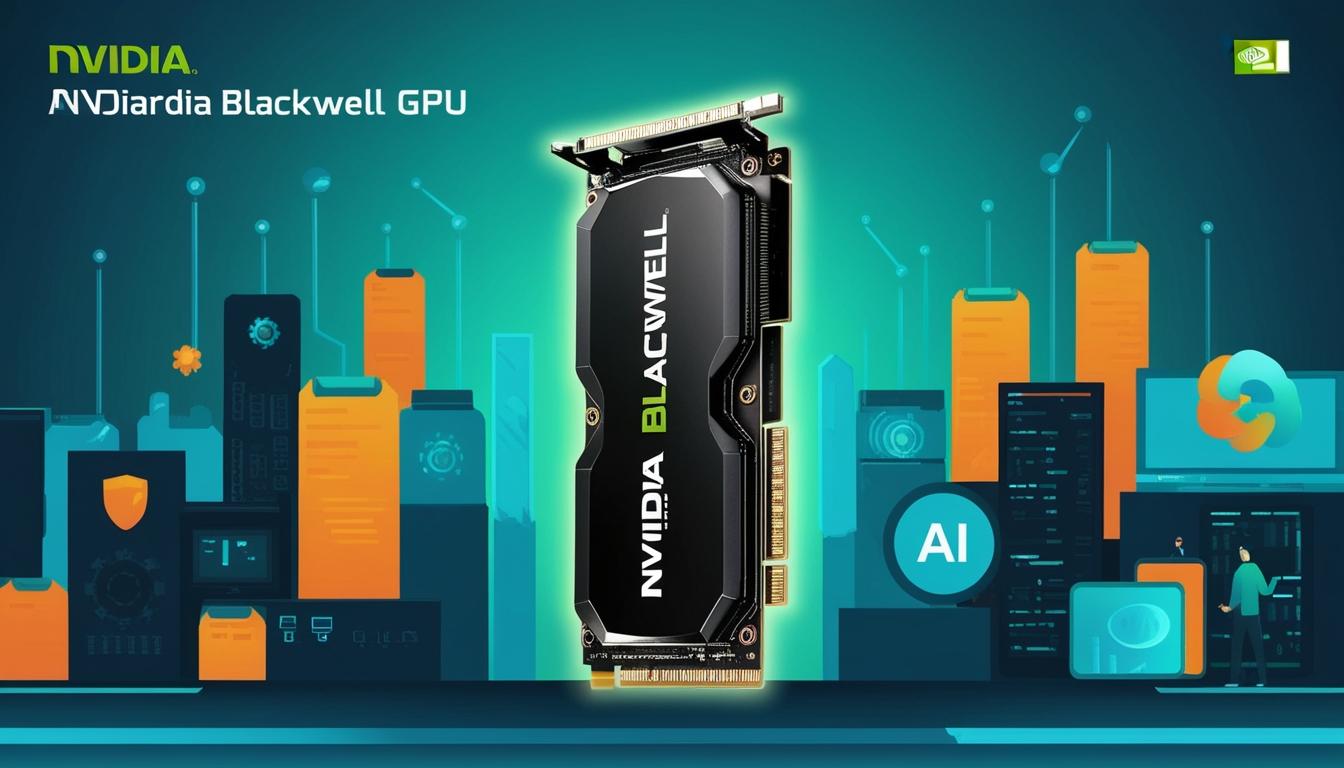
NVIDIA GPUs Sell Out Until 2025 Amid Soaring AI Demand
Silicon Valley-based tech giant NVIDIA has announced that its latest Blackwell graphics processing units (GPUs) are completely sold out until the end of 2025. Among the eager clientele snapping up these pivotal chips are tech titans such as Meta, Microsoft, Google, Amazon, and Oracle. This unprecedented demand, predominantly fuelled by the burgeoning field of artificial intelligence, places smaller companies at a distinct disadvantage as they face extended delays in securing these crucial components.
The NVIDIA Blackwell: What Makes It a Must-Have?
The Blackwell GPU series is an extension of NVIDIA's commanding presence in the world of high-performance computing. Designed with applications in data centres, artificial intelligence (AI), and high-performance computing (HPC) in mind, these next-generation chips outpace their predecessors such as the H100 and GH200. The Blackwell B200 and GB200 come equipped with more than 200 billion transistors and deliver over 20 petaflops of processing power. Additionally, possessing nearly 200 GB of HBM3e memory facilitates up to 8 TB/sec of bandwidth, ensuring they meet the demands of intricate and compute-heavy AI tasks.
What's Driving the Shortage?
Several factors have converged to create the current scarcity of Blackwell GPUs. Beyond their raw computational prowess, these chips are the linchpin of an exploding AI market, popularised significantly by platforms like ChatGPT. Data centres, recognising the necessity of upgrading their technology stacks to accommodate complex AI workloads, find these GPUs indispensable. What's more, the broader trend in the chip industry to stretch the limits of thermal design power reflects the urgent need for these GPUs in coping with heavy-duty processing tasks integral to large language models (LLM).
Broader Market Implications
The scarcity situation has presented both challenges and opportunities within the tech ecosystem. Smaller firms looking to expand their AI capabilities find themselves potentially sidelined as heavyweight players leverage their purchasing power with NVIDIA, thereby delaying access for these lesser resourced entities. This could foster competitive imbalances, with larger firms consolidating their foothold in critical sectors.
Some industry experts anticipate the rise of a black market as entities pursue other avenues to obtain the sought-after chips. Conversely, this gap also allows NVIDIA's rivals, such as Intel and AMD, an opportunity to capture market share. Intel, for instance, claims its Gaudi 3 AI chip outperforms NVIDIA’s H100, while AMD has focused on efficiency with their AMD-135M model backed by the AMD Instinct MI250 accelerators.
Looking to the Future
Though the NVIDIA Blackwell GPUs are out of reach for the foreseeable future, the current scenario underlines the tension between colossal demand and supply capabilities. The company faces pressure to upscale production while maintaining quality assurance, especially after recent packaging issues that led to delays. Meanwhile, competitors ready alternative solutions, potentially reshaping market dynamics.
The outcome of this supply-demand anomaly will unfold over the coming months, determining whether NVIDIA can maintain its stranglehold on the market, or whether competing entities will capitalise on the delay to advance alternative technologies, thereby reshuffling the ranks in an increasingly vital sector for AI development.
Source: Noah Wire Services