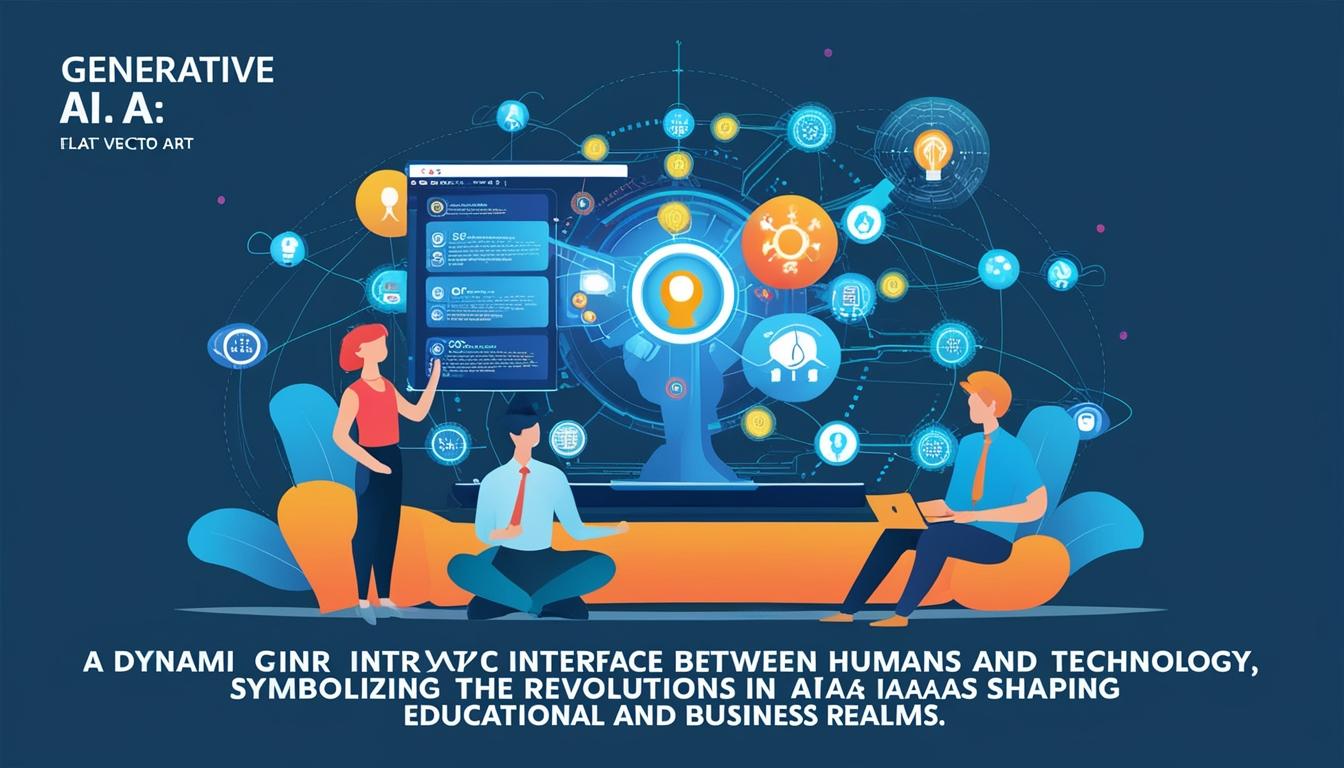
The burgeoning field of Artificial Intelligence as a Service (AIaaS) is increasingly becoming a central component in both private sector and educational institutions' technology strategies, driven by the advancements in Generative AI. Generative AI, or GenAI, utilises comprehensive learning models to generate a wide array of content, from text to images, and is reshaping how organisations approach computational tasks.
Prominent companies such as OpenAI have capitalised on this technology by creating chat interfaces that allow users to interact conversationally with AI, answering everyday queries efficiently. Developers benefit from access to large language models (LLMs) through application programming interfaces (APIs), which empower them to develop sophisticated applications, harnessing the full capabilities of state-of-the-art LLM innovations.
Vince Kellen, Chief Information Officer at the University of California San Diego, describes the evolution of AIaaS as entering a "multiverse." His institution is a microcosm of the broader AIaaS landscape. While UCSD's supercomputing centre facilitates in-house AI development, tech giants like Microsoft, Oracle, and SAP are actively embedding GenAI functionalities into their platforms, establishing a competitive edge. This trend is mirrored by software companies serving educational sectors, which are also embracing AI-driven automation.
Despite the dominance of current leaders such as Google, Anthropic, and OpenAI, the AIaaS marketplace remains fiercely competitive, and the future could see new players usurp today's titans. Kellen notes, "Just because [these companies] have a large language model doesn’t mean they're going to be successful in this new competitive landscape."
The implications of AIaaS extend into strategic planning for educational institutions. Bill Campman, Microsoft's director of data and AI for U.S. education, emphasises the necessity for IT leaders to thoroughly understand the integration of AI and data within their tech ecosystems. He stresses, "AI is a strategy, not a product," highlighting the importance of high-quality data as foundational to any AI strategy. He urges IT leaders to prioritise learning about data protection and responsible AI usage to mitigate potential security, compliance, and ethical risks.
Sidney Fernandes, Chief Information Officer and Vice President of Digital Experiences at the University of South Florida, concurs with the need for strategic foresight. He advises that AIaaS implementations must address specific business problems and not be adopted merely for novelty. Moreover, AI should enhance rather than impede people’s daily activities. He advocates for engaging tech-savvy and innovative staff to leverage AIaaS opportunities, suggesting that integrating their capabilities should be an integral part of strategic plans.
The ongoing evolution of AIaaS represents a significant shift in how institutions and businesses operate, promising a future that leverages artificial intelligence in more integrated and potentially transformative ways. As this sector continues to grow, the strategic decisions being made by organisations today will likely shape their success in this new technological era.
Source: Noah Wire Services