University of Houston Study Links Air Travel to Global COVID-19 Spread with AI Innovation
A recent study conducted by a team of engineers at the University of Houston has offered new insights into the role of international air travel in the global spread of COVID-19. The findings were published in the journal Scientific Reports, highlighting the significance of air traffic patterns in the transmission of the virus worldwide.
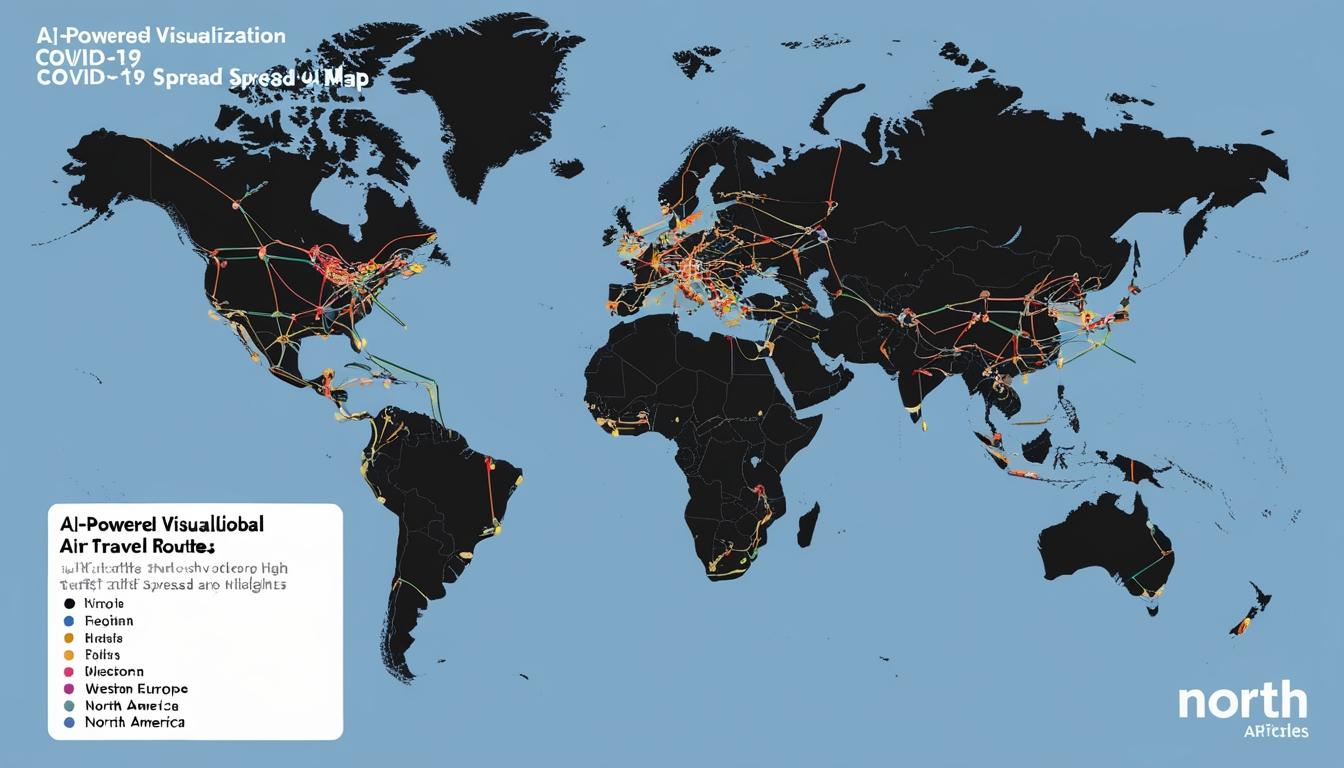
The study, led by Hien Van Nguyen, an associate professor of electrical and computer engineering, employed an advanced artificial intelligence tool to map and analyse regions that have been pivotal in spreading the virus internationally. The key regions identified include Western Europe, the Middle East, and North America. These areas were noted for having a high volume of outgoing international flights, which has been a significant conduit for the virus's transmission.
Van Nguyen and his team developed a sophisticated computer program named Dynamic Weighted GraphSAGE, which is capable of analysing large networks of data that change rapidly over time, such as flight schedules. This program uses spatiotemporal graphs, a method that examines connections across different locations and over time, to discern patterns that impact the spread of diseases and transportation systems.
Through perturbation analysis—a technique that involves testing small changes in their model—the researchers determined which aspects of air traffic most significantly influence the virus's spread. By examining flight connections between diverse regions and nations, they aimed to identify which specific flight reductions could effectively diminish predicted global COVID-19 cases.
The research team proposes that strategic reductions in air traffic, particularly from Western Europe, could substantially control the pandemic with minimal impairment to human mobility. The study's approach represents a novel application of perturbation analysis on spatiotemporal graph neural networks, providing valuable insights for pandemic forecasting and policymaking. These insights are not restricted to COVID-19 and hold applicability for future global health crises.
The study's relevance extends to its collaboration with experts from the Houston Methodist Research Institute, further enriching the depth of the findings. The study, spearheaded by Nguyen alongside graduate students Akash Awasthi and Syed Rizvi, signifies a breakthrough in how AI and deep learning can contribute to global health strategies.
By understanding the structural dynamics of air travel and its impacts, policymakers can better navigate decisions regarding travel restrictions in any future pandemics.
Source: Noah Wire Services