Young Students Navigating the Challenges of AI-Generated Content in School Projects
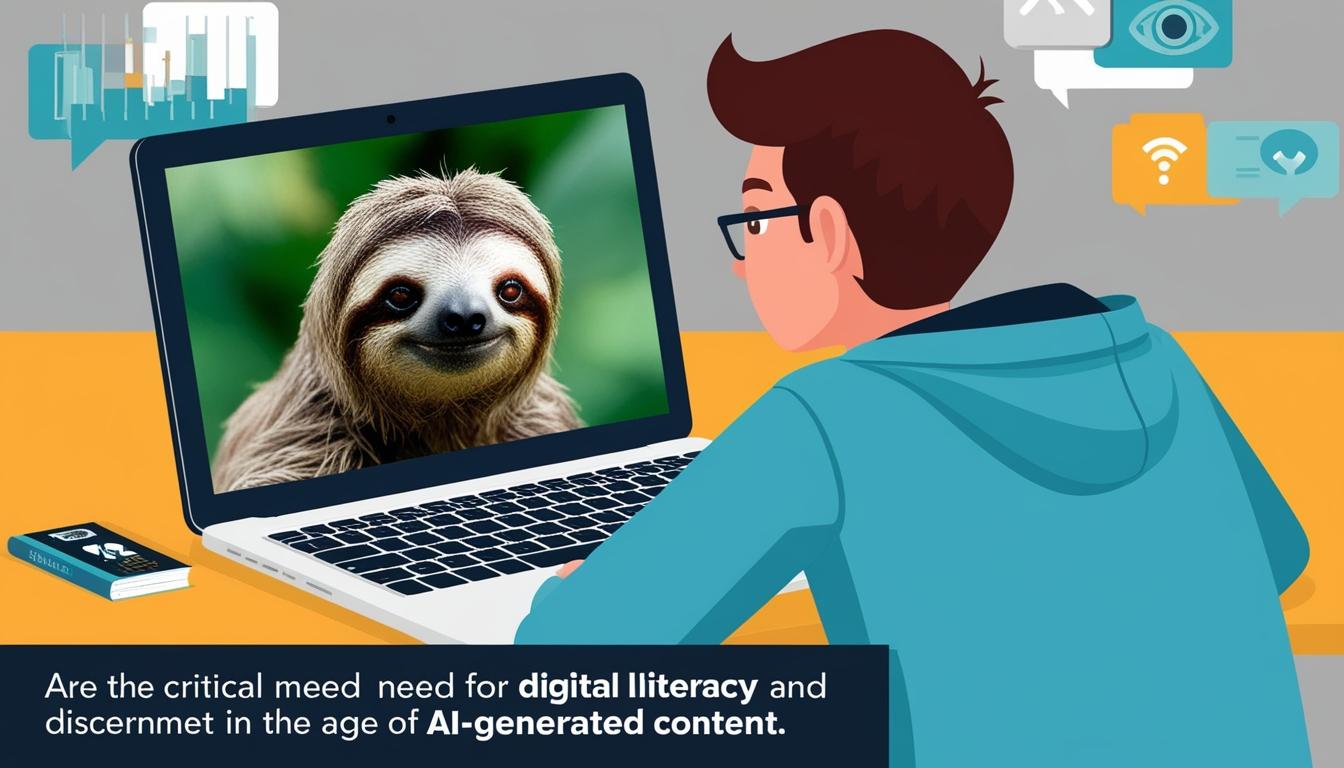
In recent discourse about technology in education, concerns have emerged regarding the impact of artificial intelligence (AI) on young learners. A particular incident, shared by a Times writer, brought this issue to light when his daughter encountered AI-generated fake images during a school project on sloths. This has sparked a broader discussion about the skills necessary for students to critically assess digital content.
Tony Barboza, an editorial writer, recounted his daughter's experience with misleading online images of sloths, which she had intended to use in her school report. This incident underscores the growing complexity that digital natives face in distinguishing authentic material from manipulated content.
In response to this incident, educators are emphasising the importance of digital literacy. Valerie Belt, a tech instructor at a public elementary school in Pacific Palisades, highlighted her efforts in teaching students how to discern the authenticity of online resources. Belt advocates using platforms like Common Sense Media to instruct students on applying critical thinking skills to evaluate whether images and information have been manipulated.
The importance of teaching students to think critically about their online interactions is echoed by other educators. Some suggest that the solution lies in balancing traditional methods of learning with digital tools. Mary Sikonia, from Manhattan Beach, voiced concerns over young children potentially wasting time deciphering fake images online. Sikonia proposed encouraging students to develop foundational skills, such as vocabulary building and social interaction, through direct communication with family and friends, as well as utilising books and handwritten notes. She advocates for these methods to form the cornerstone of students' education before they rely heavily on technological aids.
The discussion surrounding this issue touches upon a broader educational challenge: how to integrate technology effectively into learning without compromising fundamental educational goals. With education increasingly intersecting with digital advancements, educators and parents alike are tasked with ensuring students develop the necessary skills to navigate a digitally-driven world.
As students continue to encounter AI-generated content, educators are tasked with equipping them with the tools needed to critically assess digital information. This ongoing adaptation in teaching methods reflects the evolving landscape of education in the 21st century. The dialogue prompts consideration of how to best prepare young minds for a future where distinguishing between reality and digital fabrication becomes an integral part of their cognitive toolkit.
Source: Noah Wire Services