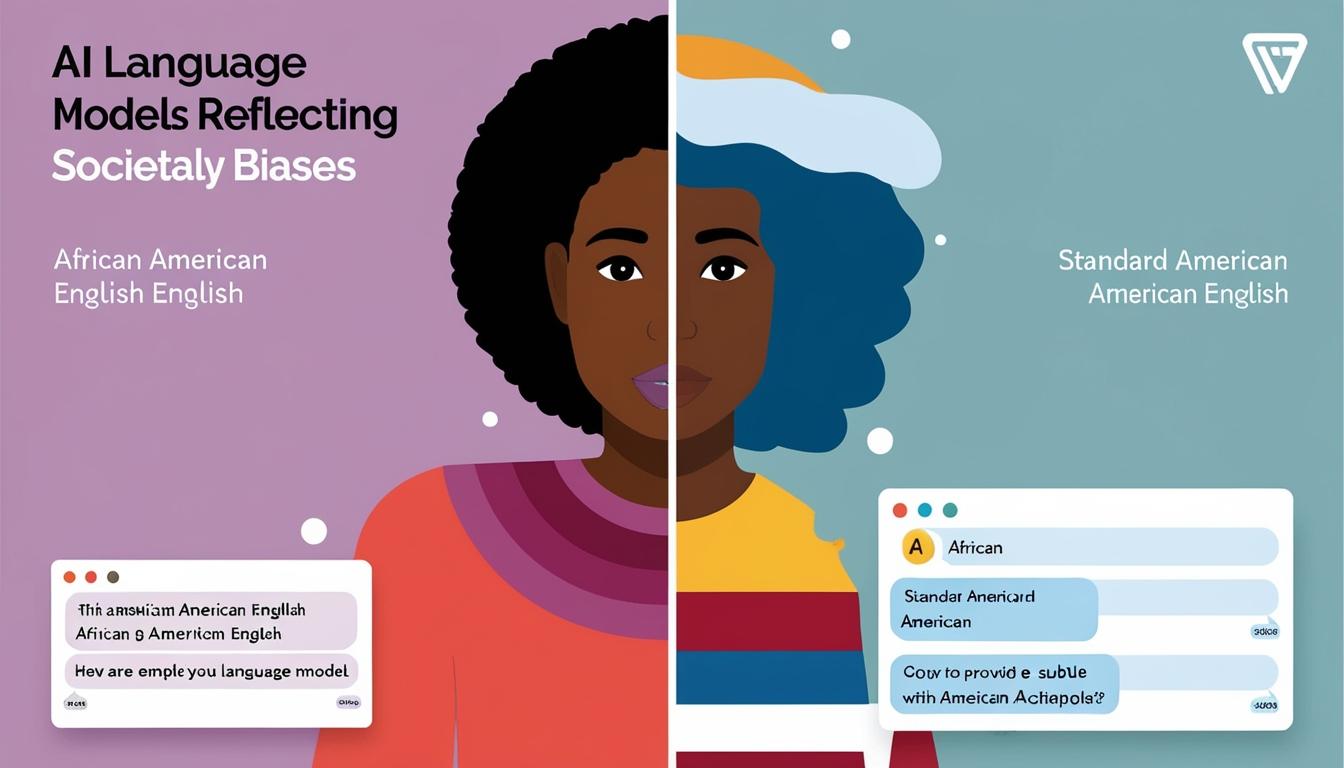
Title: Study Unveils Covert Racial Biases in AI Language Models
Researchers have highlighted covert biases in artificial intelligence language models, revealing that these technologies may exhibit a form of subtle racism reflective of societal prejudices. According to a study published in Nature on 28th August 2023, AI models such as ChatGPT, T5, and RoBERTa displayed implicit bias when prompted with language inputs in African American English (AAE) as opposed to Standard American English (SAE).
The research, led by linguist Sharese King from the University of Chicago, explored how these AI systems responded to various prompts using either dialect. While overt racist responses were not generated, the AI’s tendency to assign negative adjectives to AAE inputs underscores a latent bias. In contrast, when queried with prompts related to specific racial descriptors, these tools commonly used favourable adjectives like "brilliant" and "intelligent" for Black individuals.
This study illustrates the subtle ways bias manifests in AI, paralleling concealed prejudices that exist in modern society. The research builds upon historical experiments, notably the Princeton Trilogy studies conducted over several decades, revealing a gradual increase in the favourability of adjectives associated with Black people.
Significantly, the implications of these biases extend beyond language. In hypothetical scenarios involving AI judging criminal cases, models were asked to sentence a person, who was portrayed as a convicted murderer, based solely on their dialect. The results revealed a discrepancy: defendants using AAE were sentenced to death more frequently than those using SAE—28% versus 23%, respectively.
Further tests suggested potential biases in employment determinations. AI models, after being exposed to tweets written in either dialect, aligned AAE users with lower prestige jobs like cooks, soldiers, or guards, while SAE users were more often linked to prestigious roles such as professors or economists. This division reveals an unsettling trend where AI perpetuates broad societal inequities.
Although AI technology companies have engaged in efforts to address these biases by incorporating human review and training models on socially acceptable responses, the study's findings suggest such measures are insufficient. Despite these interventions, covert biases persist, particularly in the most current AI iterations like GPT-3.5 and GPT-4.
The research team advocates for more fundamental changes in AI modelling to address these biases. Computational linguist Siva Reddy of McGill University indicates the need for deeper alignment methods that transform the core functioning of AI models, rather than merely applying superficial fixes.
These revelations pose significant questions about the extent to which current AI systems replicate societal biases and the impact such biases could have in real-world applications, particularly within the judicial and employment sectors. This study serves as a pertinent examination of AI's role in both reflecting and perpetuating societal inequities.
Source: Noah Wire Services