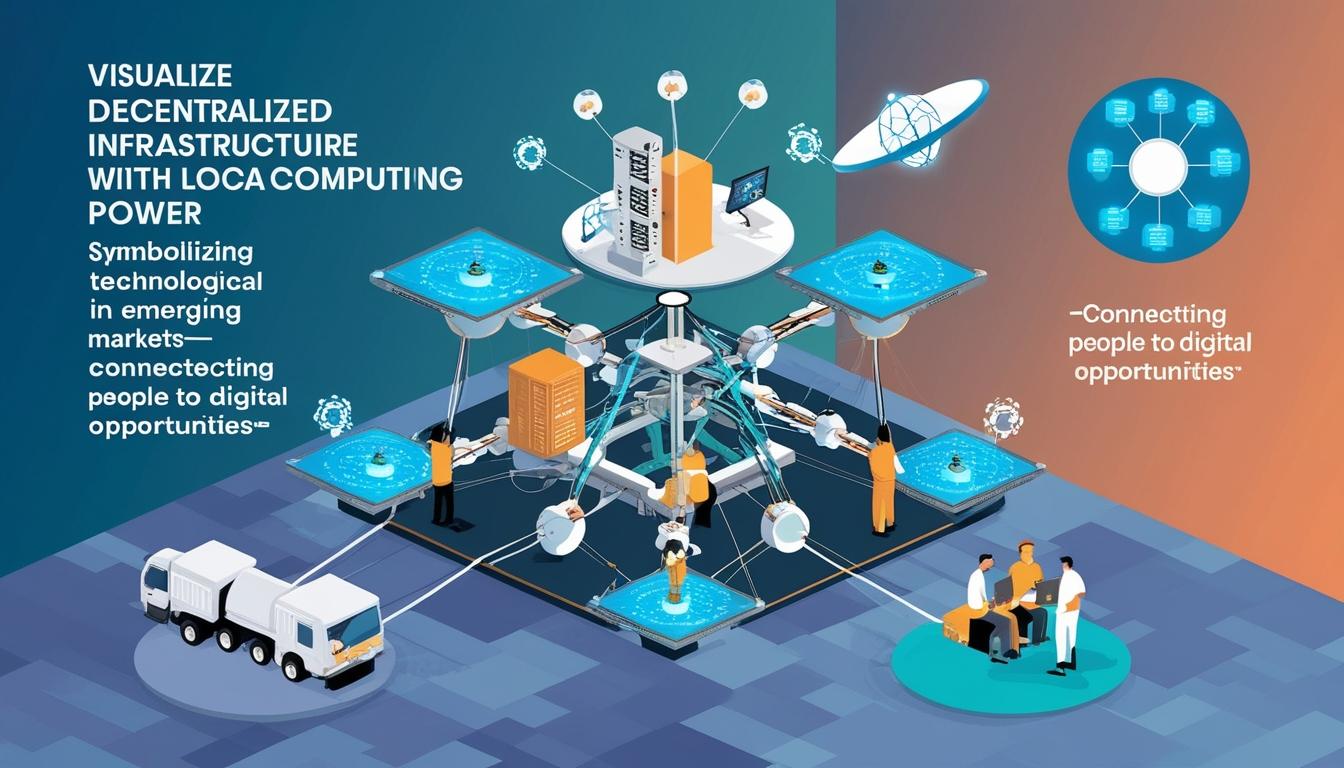
Emerging Markets Set for Transformation with Decentralized Infrastructure
In an era marked by rapid technological advancement, companies are increasingly turning towards decentralized infrastructure solutions to reach and serve underdeveloped markets. The concept, likened to a scaled-down Starlink, offers localized computing power and data storage facilities in regions where existing infrastructure is notably deficient. This approach not only extends the reach of businesses into previously inaccessible areas but does so while mitigating the cost and speed barriers typically associated with traditional methods.
The innovative push towards decentralized infrastructure, often abbreviated as DePIN, is primarily driven by the continuous demand from enterprises to broaden their consumer base. By investing in frameworks that bridge the technological gap in underserved regions, businesses can capitalize on untapped markets, fostering a more inclusive digital economy.
Such decentralization is particularly advantageous for sectors such as gaming, artificial intelligence (AI), and other data-intensive industries. These fields inherently require robust computational capabilities and vast amounts of data storage, which can be prohibitively expensive or inefficient through centralised infrastructure in areas with poor connectivity or technological scarcity. Decentralized solutions present a compelling alternative, offering both operational efficiency and cost-effectiveness.
Industry analysts suggest that this shift towards decentralized solutions could herald significant advancements in these sectors. For gaming companies, for instance, improved infrastructure could mean smoother, more immersive experiences for users in remote areas. AI enterprises stand to benefit from enhanced data processing speeds, leading to faster and more reliable outputs that are crucial for innovative AI applications.
While the implementation of decentralized infrastructure is still in developmental phases, its potential impact is undeniable. By strategically positioning localized hubs of computing power and data capabilities, companies are not only poised to expand their operational footprint but also contribute to the digital transformation of emerging markets.
This technological evolution aligns with broader trends favouring decentralisation and user empowerment, resonating with both consumers and producers who seek more flexible, adaptable, and accessible technological solutions. As such, businesses that can successfully navigate this terrain stand to not only gain a competitive edge but also play a pivotal role in shaping the future of global digital infrastructure.
Source: Noah Wire Services