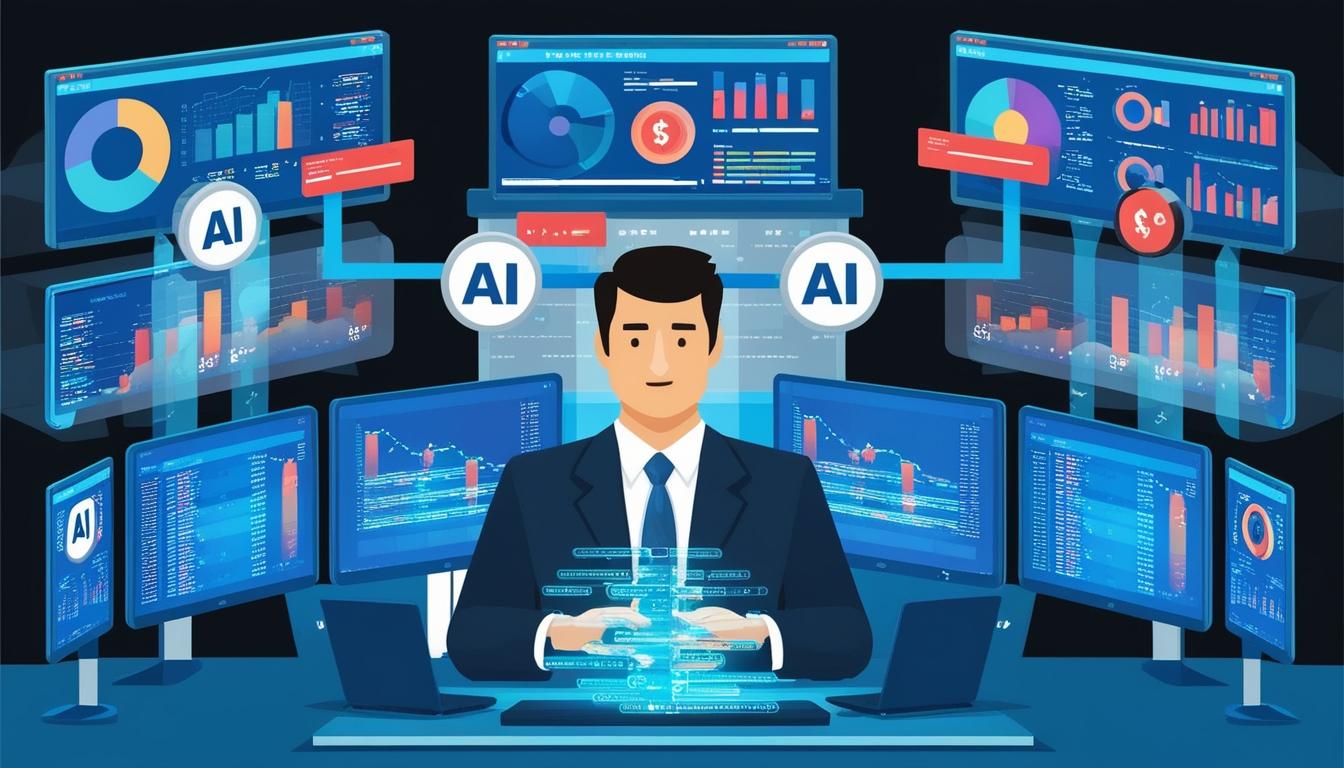
In recent years, the hedge fund industry has increasingly adopted artificial intelligence (AI) technologies to enhance decision-making processes and maintain competitive edges in the fast-paced financial markets. The application of AI in this sector primarily revolves around its capacity to process vast quantities of data with remarkable speed, thereby transforming information into actionable insights.
Within financial markets, the ability to access and process timely information is crucial, often marking the fine line between securing substantial profits and incurring losses. AI models, particularly those rooted in machine learning, are deployed by hedge funds to comb through an extensive range of data sources. These include traditional datasets such as news articles and financial reports, as well as more contemporary sources like social media feeds and prevailing market trends. By aggregating and analysing this plethora of information, hedge funds can anticipate market fluctuations with enhanced precision, thus positioning themselves advantageously ahead of potential shifts.
A noteworthy aspect of AI's integration into hedge fund operations is the use of alternative data. This refers to non-conventional information sets that offer unique insights into market dynamics. For instance, satellite imagery can provide data on physical asset conditions or track changes in commercial activities. Similarly, analysing consumer sentiment, often gleaned from online platforms, reveals public opinion and potential impacts on market behaviour. Supply chain data, another form of alternative data, can indicate economic activity levels, thereby offering foresight into market movements. By harnessing the power of AI to interpret these diverse datasets, hedge funds can formulate a more holistic understanding of current market states.
The AI algorithms employed by these funds are increasingly sophisticated, capable of synthesising information from an array of alternative data sources. This comprehensive approach allows for more nuanced insights and the capability for well-informed decision-making. The integration of AI into data analysis thus enables hedge funds to not only react to market developments with agility but also to anticipate future trends with a degree of accuracy that was previously unattainable.
As the financial landscape continues to evolve, the reliance on AI technology by hedge funds is indicative of a broader trend towards automation and machine-driven analysis in investment strategies. In an industry where every second counts, the edge provided by AI-driven data analysis is proving to be indispensable for sustaining and enhancing competitive advantage.
Source: Noah Wire Services