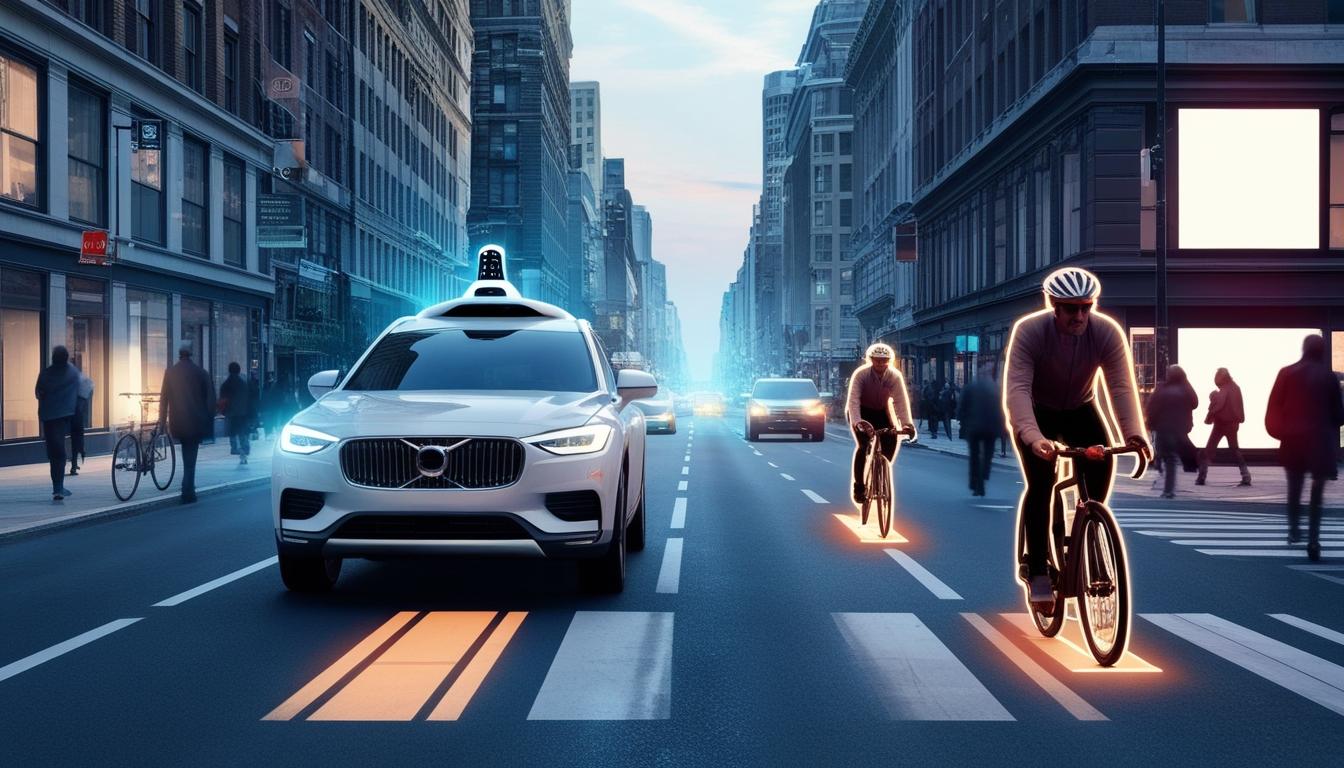
In an innovative development for the autonomous vehicle industry, a new algorithm has been designed to improve the ability of driverless cars to anticipate the presence and movement of hidden objects, such as pedestrians, bicycles, or other vehicles concealed behind structures like parked cars. This advancement addresses a significant challenge faced by the artificial intelligence systems that guide these vehicles, which often struggle to predict the sudden emergence of unexpected road users.
Developed by VERSES AI, a cognitive computing firm based in California, the algorithm enhances the predictive capabilities of autonomous vehicle technology by incorporating real-world complexities into its calculations. As explained by Hari Thiruvengada, a representative of VERSES AI, the algorithm was specifically engineered to comprehend and anticipate unpredictable movements of road users who may be obscured from the direct line of sight of the vehicle's sensors.
This development is particularly significant for urban environments like downtown Los Angeles, where dense traffic, parked cars, and bustling pedestrian activity create a complex landscape for autonomous navigation. The enhanced algorithm employs a method known as "occlusion reasoning," which aims to predict the likelihood of hidden objects appearing on the road, thereby improving the vehicle's response to unexpected situations.
Driverless car technology has been under scrutiny for its ability to safely integrate into everyday traffic without human intervention. The unpredictability of pedestrian movement and the sudden appearance of cyclists or other vehicles are challenges that have historically posed difficulties for self-driving algorithms. The integration of this new predictive system into autonomous vehicles is a promising step toward addressing these challenges, potentially paving the way for safer and more reliable driverless technology in congested urban areas.
While the implementation and testing phases are ongoing, this algorithm represents a significant stride in the field of autonomous driving. As the technology continues to develop, it holds the potential to transform traffic systems, reduce accidents, and enhance transportation efficiency in urban landscapes.
Source: Noah Wire Services