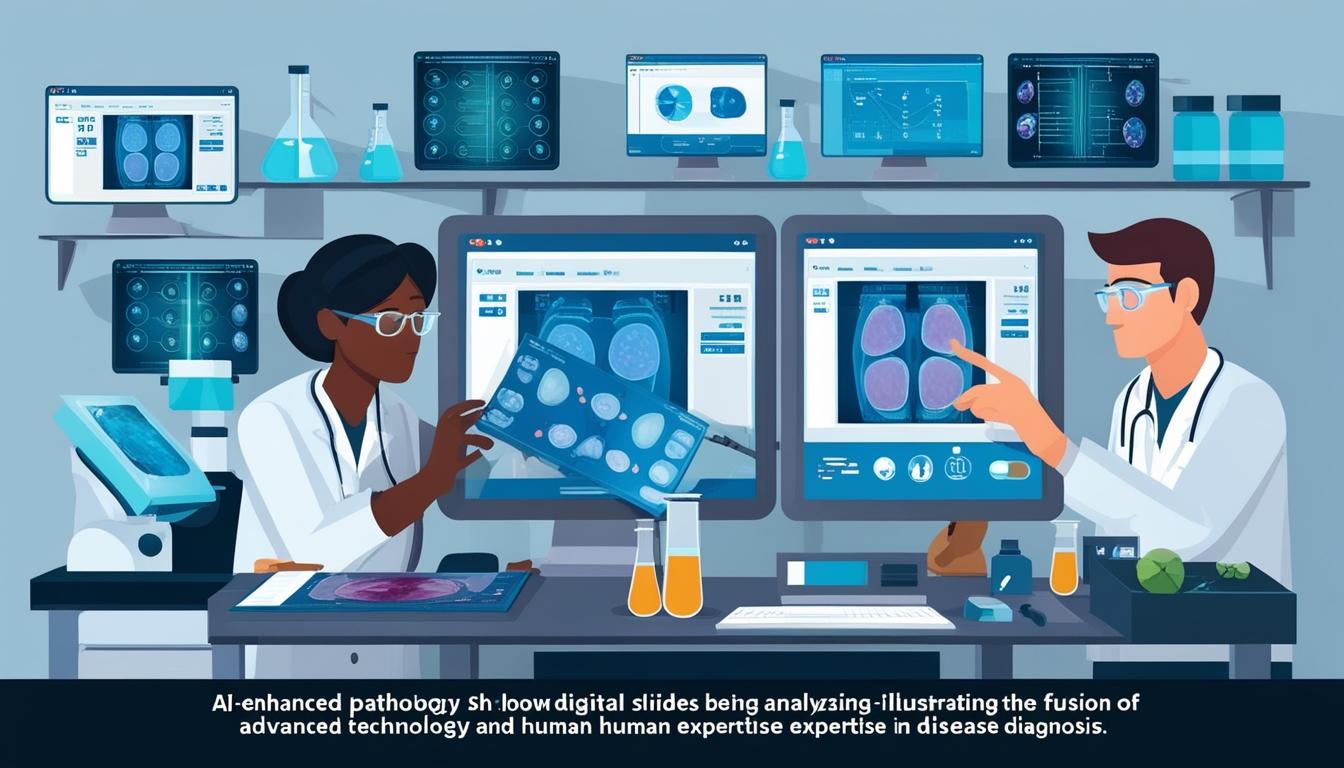
Title: AI Set to Revolutionise Pathology Practices Across the UK
As the healthcare sector continues to evolve, the integration of artificial intelligence (AI) into the field of pathology heralds a new era for disease detection and diagnosis. Pathology departments across the UK are on the cusp of a technological transformation, driven by the adoption of AI in digital slide processing.
AI's Impact on Pathology
Artificial intelligence is reshaping how pathologists approach their work, primarily through its ability to enhance efficiency, accuracy, and speed in screening procedures. This technology has shown great promise in the detection and diagnosis of conditions like breast, bowel, and cervical cancer, offering a transformative impact on patient care.
By analysing extensive datasets and recognising intricate patterns within tissue samples, AI can streamline the diagnostic process. This capability not only allows for quicker disease identification but also promises greater accuracy than traditional methods, which often rely on manual examination of glass slides. Such traditional approaches can be costly and time-consuming and might pose security risks, especially when collaboration among pathologists becomes necessary.
Meeting NHS Targets
The National Health Service (NHS) aims to increase its cancer diagnosis rate to 75 per cent within 28 days—a goal currently hindered by significant delays affecting many patients. With the demographic data showing a considerable portion of the UK’s pathology workforce nearing retirement, AI implementation could offer a solution. It would enhance diagnostic capabilities, enabling the healthcare system to meet rising demands without compromising quality.
AI in Practice
One of the most promising applications of AI in pathology is histology sample analysis. By automating the analysis process, AI can detect disease-specific patterns swiftly and accurately, using biomarkers to aid diagnosis. For patients, this could translate to earlier access to treatment, reduced financial strain, and potentially lifesaving interventions. However, the high costs of implementing, calibrating, and maintaining AI technology have slowed its widespread adoption despite these benefits.
Security and Governance Concerns
In the wake of recent cyber-attacks on NHS pathology testing organisations, which disrupted operations and delayed outpatient appointments, the challenges of implementing AI in pathology primarily lie in security and governance. Centralising AI within dedicated data centres offers a more secure alternative to decentralised data distribution, thereby mitigating risks associated with data breaches.
Robust data management and selecting conscientious AI suppliers are crucial to prevent vulnerabilities when images are sent to external AI platforms. Centralising AI systems within secure environments reinforces data governance, ensuring effective management of sensitive pathology information.
Collaboration with Pathologists
AI's role in pathology is not about replacing human expertise but rather enhancing it. Serving as a 'second pair of eyes', AI can automate identification of biomarkers and analyse volumes of slides, providing support for pathologists in decision-making processes. As a result, pathologists can focus on complex diagnostics that demand their nuanced expertise.
With the pathology workforce facing shortages due to impending retirements, AI offers a way to ease demand. By automating routine tasks, it allows pathologists to allocate their expertise to high-priority cases, helping bridge the gap between current staffing levels and patient demand.
Conclusion
AI poised to transform pathology has necessitated a strategic approach balancing innovation with security and governance. Through thoughtful integration of AI technologies into diagnostic workflows, pathology departments can expect improvements in accuracy, operational efficiency, and patient care, marking a significant advancement in the field of medical diagnostics in the UK.
Source: Noah Wire Services