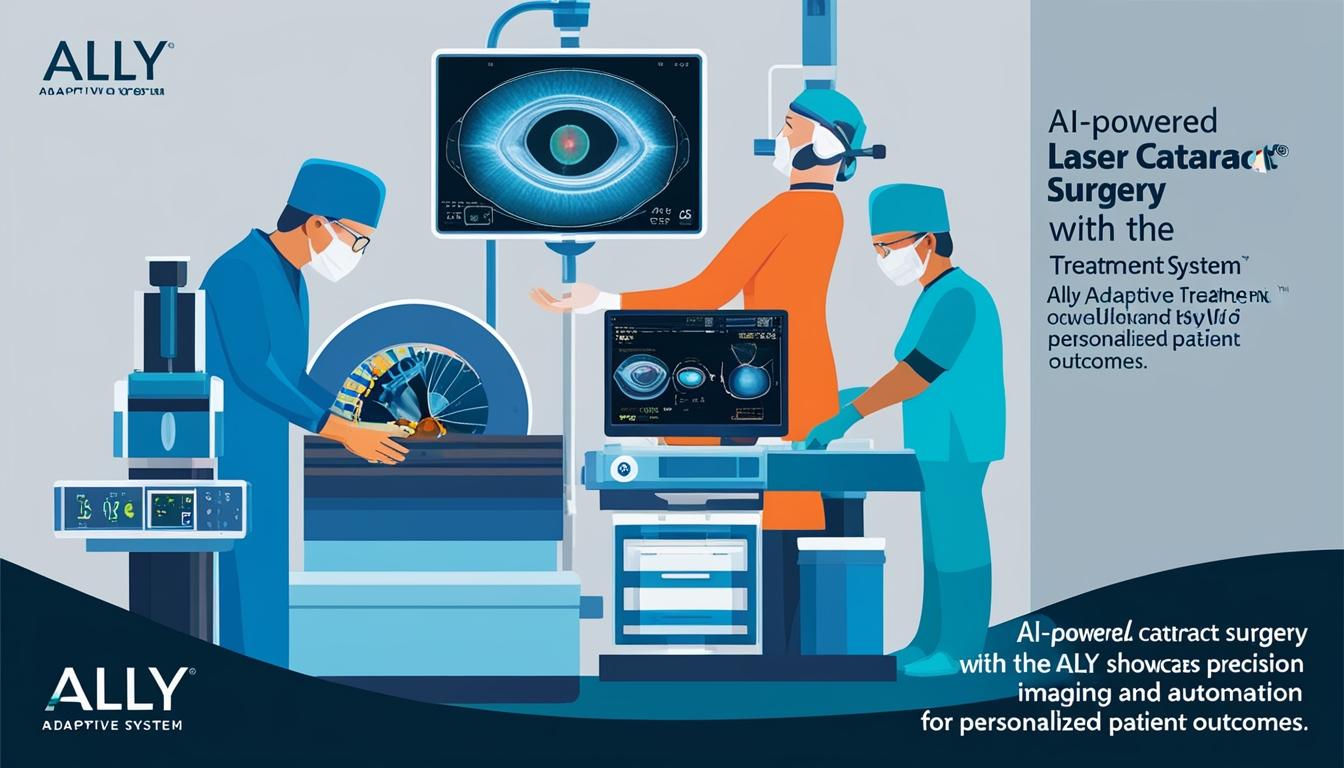
The integration of artificial intelligence (AI) in medical technology is heralding significant advancements, particularly in the field of ophthalmology. A notable development in this domain is the incorporation of AI in laser cataract surgery, offering unprecedented levels of precision and improved surgical outcomes. One of the pioneering innovations in this field is the ALLY Adaptive Cataract Treatment System by LENSAR, which utilises AI to enhance the efficacy and safety of cataract surgery through sophisticated imaging, automation, and analysis techniques.
The ALLY system stands out due to its Adaptive Intelligence technology, which is designed to streamline the various stages of cataract surgery. This advanced technology automates critical steps in the procedure, such as corneal incisions, capsulotomy centration, and the management of astigmatism, all guided by iris registration with cyclorotation adjustment. By doing so, the system reduces the uncertainty often associated with surgical planning and execution by allowing customisation of the procedure tailored to the specific intraocular lens (IOL) selected. This personalisation ensures symmetric overlap of the IOL, reducing the risk of postoperative lens tilt or decentration and ensuring stability as the capsule contracts over time.
A key benefit of the ALLY system is its use of Cataract Density Imaging, which incorporates extensive data to automatically assess and categorise the density of cataracts. This data-driven approach recommends customised fragmentation patterns by accurately identifying the nucleus and layers of the lens. This combination of features enables personalised treatment plans that take into account the unique anatomy of each patient and the surgeon’s preferences.
Furthermore, the ALLY system boasts wireless integration capabilities, compatible with a wide range of preoperative diagnostic devices. The AI-driven system assesses and validates preoperative data, providing recommendations that can be quickly reviewed and accepted by surgeons. This automation ensures consistency and reliability, minimising the risk of human error. The system’s AI is also employed in iris registration, accurately identifying the correct axis of astigmatism, which is crucial whether making corneal incisions or placing a toric IOL. Additionally, the system centres the capsulotomy on the optical axis, facilitating optimal lens alignment within the capsule, leading to enhanced postoperative stability and reduced lens tilt.
Scheimpflug imaging technology used by ALLY captures detailed images of the eye, allowing for precise analysis of the central nucleus. This capability supports the creation of customised fragmentation patterns specific to the density and location of the cataract. This results in more precise cataract disassembly, with reduced energy applied to the eye, thereby preserving surrounding tissue.
In conclusion, the use of AI in cataract surgery with systems like ALLY represents a significant leap forward in medical technology, offering enhanced surgical precision and improved patient outcomes. With its capabilities in astigmatism management and customised nuclear fragmentation, the ALLY system exemplifies how AI can streamline both routine and complex cataract procedures. As AI technologies continue to evolve, it is anticipated that systems such as ALLY will increasingly transform the standard practices in cataract surgery.
Source: Noah Wire Services