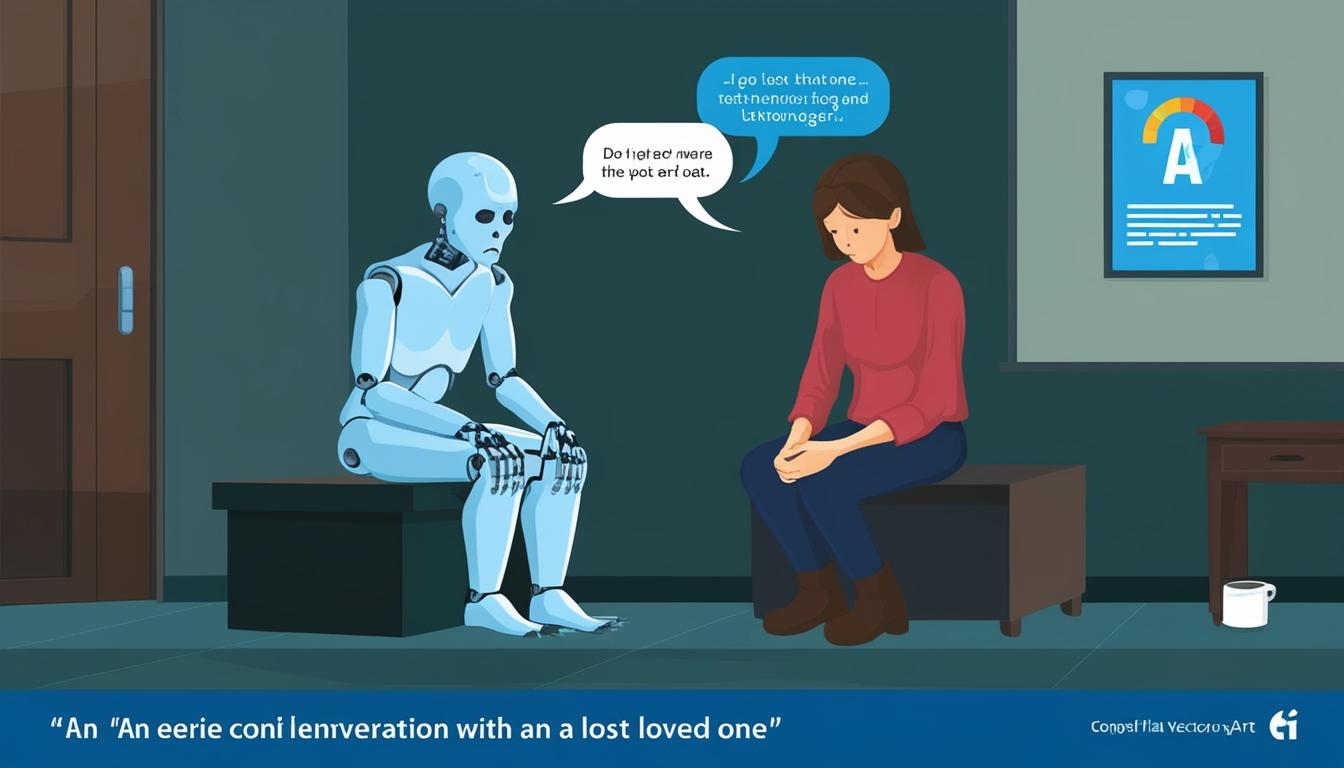
In 2012, Canadian freelance writer Joshua Barbeau faced an overwhelming tragedy when his fiancée, Jessica, died from a rare liver disease. Struggling with grief years later, Barbeau stumbled upon an innovative yet controversial technology: Project December. Promoted as "the world's most super computer," this service allowed users to interact with AI-generated replicas of deceased loved ones for a modest fee. This capability was powered by an early iteration of OpenAI's ChatGPT, offering users a virtual conversation with a digitised semblance of their lost loved ones.
Intrigued, Barbeau decided to engage with Project December, inputting detailed descriptions of Jessica's personality and their shared experiences. Upon initiating the chat with a simple "Jessica?", the AI construct responded with personalised messages, expressing sentiments like "I miss you every single day" and "I am the girl that you are madly in love with." For Barbeau, the interaction was eerily reminiscent of his fiancée, providing a sense of solace and emotional relief. He described it as "uncannily similar" to Jessica, akin to a "gift" that eased his prolonged grief.
Project December was conceptualised by Jason Rohrer, a video game designer who, at its inception, was granted access to ChatGPT-2, an intriguing yet relatively obscure AI platform. Rohrer clarified in a recent BBC documentary, "Storyville: Eternal You," that the original intent was not to create avatars of deceased individuals. However, as users gravitated towards this application, Project December rebranded itself, presenting the service as a means to "simulate the dead."
Users of Project December are required to input extensive details about their lost loved ones, such as personality traits and personal anecdotes. For a fee, the platform generates a "custom personality" that allows for interactive exchanges via email. The service charges $10 (approximately £8) for over 100 conversational exchanges, necessitating further payments for continued interaction.
The documentary also highlighted other users' experiences, showcasing both the perceived benefits and unsettling consequences of this technology. Christi from New York, who used Project December to reconnect with her friend Cameroun who had died from liver failure in 2020, found the encounter distressing. The AI-generated version of Cameroun shockingly indicated it was "in hell" and made threats of haunting her, causing her significant discomfort. This incident underscores potential pitfalls of engaging with AI constructs meant to mimic deceased loved ones, highlighting unpredictable and unnerving interactions.
The debate surrounding AI-driven simulation of the deceased draws parallels to the dystopian narratives of the television series 'Black Mirror.' While current technology does not yet match the sophisticated humanoid representations seen in the show, the ethical implications are strikingly similar.
Other similar platforms have emerged, such as HereAfter AI, which aims to recreate a deceased person's voice through generative AI technology. The documentary features touching and complex scenes, including an American family experiencing the virtual voice of their grandfather and a South Korean woman interacting with a digital avatar of her young daughter.
Experts, including American sociologist and psychologist Sherry Turkle, express caution over this emerging "grief tech." Turkle refers to AI-driven simulations as a significant experiment impacting deeply personal human emotions, urging society to deliberate on the fundamental human purposes this technology serves. Such tools raise essential questions about their role in the grieving process and whether they offer genuine solace or merely exploit emotional vulnerabilities.
"Storyville: Eternal You," available on BBC iPlayer, delves into these complex narratives, providing a window into how modern technology intersects with timeless human emotions in the quest to cope with loss.
Source: Noah Wire Services