Title: Study Highlights Racial Disparities in Medical Testing and Offers AI Solutions
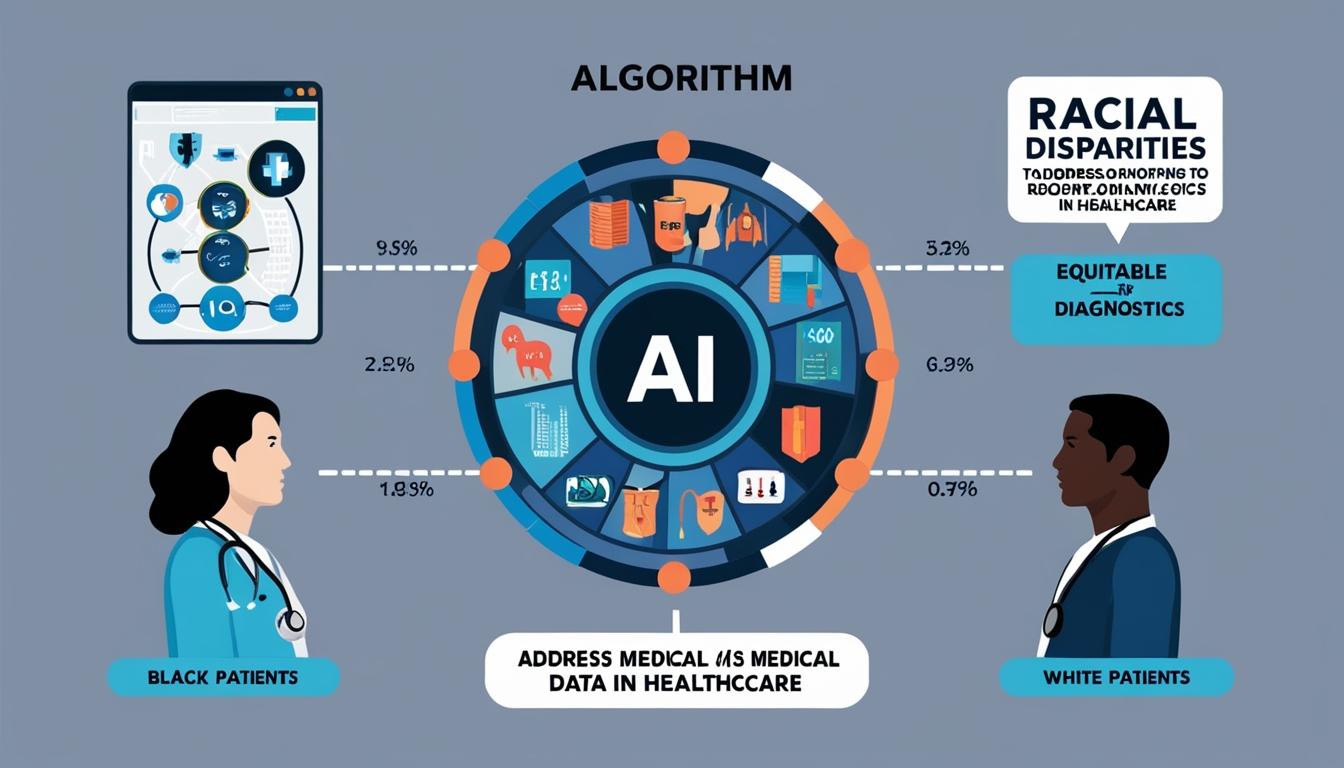
ANN ARBOR, Michigan — A recent study conducted by researchers at the University of Michigan has shed light on significant racial disparities in medical testing, particularly concerning Black and white patients. The research highlights the tendency for Black patients to be less frequently subjected to diagnostic tests for severe diseases, such as sepsis, when compared to their white counterparts. This disparity has consequential effects on patient care and the development of artificial intelligence (AI) models used in medical diagnostics.
In a study published in PLOS Global Public Health and presented at the International Conference on Machine Learning in Vienna, Austria (July 2024), it was revealed that white patients reported higher testing rates—up to 4.5% more—than Black patients with identical medical profiles, including age, sex, medical complaints, and urgency of medical needs assessed during emergency triage.
The research identifies systemic biases in the datasets used for training AI models, as they often underestimate illness in Black patients due to their underrepresentation in medical testing records. Jenna Wiens, an associate professor of computer science and engineering at the University of Michigan, emphasizes the necessity of recognizing data flaws and their implications when developing AI tools for medical use.
Data from both Michigan Medicine in Ann Arbor and the Medical Information Mart for Intensive Care (a dataset often employed for AI training, based at Beth Israel Deaconess Medical Center in Boston) exhibit such biases. The research indicates that white patients are more frequently diagnosed and admitted to hospitals even when Black patients present equivalent medical needs, which partially explains the disparity in testing.
The research team, recognizing the importance of equitable healthcare delivery, has developed a novel computer algorithm to mitigate this bias. This algorithm evaluates untested patients' likelihood of illness based on race and other vital signs. By factoring in the racial component, the AI can more accurately predict patient conditions, even when the initial data set is skewed due to testing disparities.
In simulations, the algorithm proved effective. It corrected artificially imposed biases in a dataset where some identified as ill were mislabeled as "untested and healthy." Applying this correction, a standard machine-learning model could accurately discern between sepsis patients and non-sepsis patients about 60% of the time—performance that aligned with models trained on ideal unbiased data.
Trenton Chang, a doctoral student in computer science and engineering and the first author of the studies, notes that addressing systematic bias is crucial as healthcare increasingly integrates AI solutions. The findings underscore the need for tools that balance data and create fairer outcomes.
This research represents a collaborative effort with contributions from Michigan Medicine and the VA Center for Clinical Management Research in Ann Arbor, aiming to pave the way for more accurate and equitable AI-based healthcare solutions.
Source: Noah Wire Services