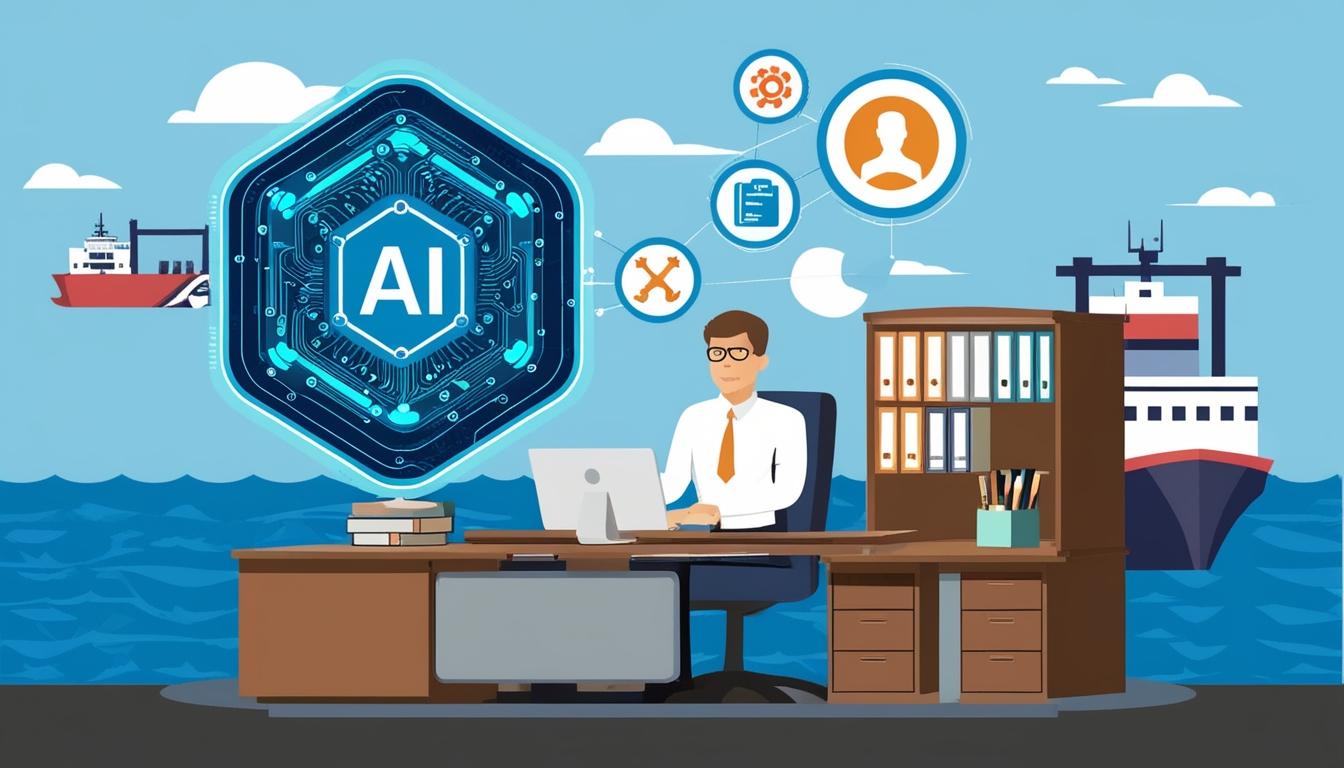
AI Revolutionises Ship Broking Industry
The ship broking industry, traditionally reliant on personal relationships grounded in expertise and trust, is on the cusp of a significant transformation driven by advances in artificial intelligence (AI). This evolution promises to reshape the role of ship brokers as the sector embraces technology to enhance efficiency and decision-making capabilities.
AI's Growing Influence in Ship Broking
Ship brokers have long served as pivotal intermediaries between shipowners and charterers, their work encompassing deal negotiation, market condition assessment, and market transport facilitation. Traditionally, their success has hinged on in-depth industry knowledge, sharp negotiation skills, and expansive global networks. However, with AI's entry into the industry, these processes are being enhanced through a variety of innovative applications.
AI's capacity for data-driven insights, automation, and predictive analytics is set to revolutionise ship broking. By leveraging AI algorithms, ship brokers can rapidly analyse historical data and correlate it with current market trends, gaining predictive insights almost instantaneously. This technological leap enables brokers to anticipate shifts and pinpoint lucrative market opportunities more efficiently. Additionally, AI provides real-time data on shipping routes and fuel consumption, aiding brokers in negotiating more advantageous deals and selecting optimal routes.
Beyond strategic decision-making, AI streamlines routine tasks such as administrative duties including document management and data entry. This automation frees brokers to concentrate on higher-value, complex activities that require human intervention.
The Human Element
Despite AI's capabilities, it remains unable to replicate the nuanced emotional intelligence required for effective relationship-building— a cornerstone of ship broking. Personal interactions that establish trust and foster client relationships remain the domain of human brokers. AI might offer data insights, but emotional intelligence is still needed for client satisfaction and loyalty.
Challenges in Integrating AI
The integration of AI into ship broking comes with its own set of challenges. Regulatory compliance is a significant concern, particularly regarding data privacy and breaches. Brokers must ensure that AI systems are transparent and compliant with ever-evolving regulations introduced to govern new technologies.
Additionally, balancing AI's benefits with maintaining the personal, human element of ship broking poses a challenge. While AI can enhance efficiency, the industry must simultaneously preserve the essential human relationships that have historically underpinned it.
Looking Forward
The future of ship broking lies in the symbiotic relationship between AI and human expertise. While AI is poised to enhance the industry's efficiency, it is unlikely to supplant the importance of trust, relationship-building, and emotional intelligence. Ship broking will require both technological proficiency and the interpersonal skills that have always been essential to the industry's success.
As the role of AI in ship broking continues to evolve, industry professionals will be tasked with navigating these changes while retaining the core values that have defined their work. The amalgamation of AI and human skills will likely define the future landscape of ship broking, marking a new era in the industry's long-standing history.
Source: Noah Wire Services