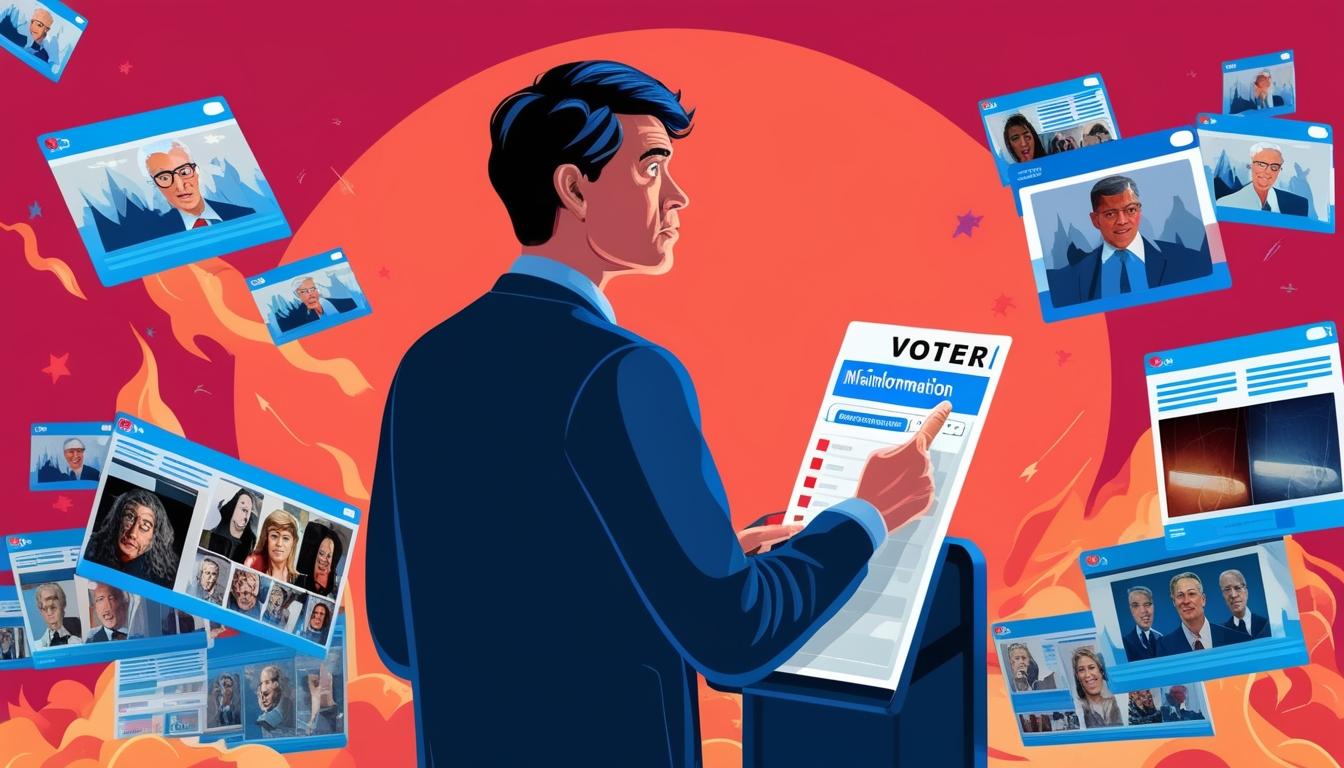
As the election season reaches its peak in Corpus Christi, Texas, concerns about the spread of disinformation have intensified among voters. A significant factor contributing to this anxiety is the growing use of artificial intelligence in the creation and dissemination of false information.
Dr. Jared Schroeder, an associate professor of journalism at the University of Missouri, has voiced these concerns. In his discussion with KRIS 6 News, Dr. Schroeder emphasised that the challenge of being an informed voter is greater than ever due to the rapid advancement of AI technologies. These tools are being increasingly exploited to generate misinformation — false or inaccurate information — and disinformation, which is false information deliberately crafted to deceive.
Referencing a study conducted by Forbes, Dr. Schroeder highlighted that over 75% of consumers have expressed unease about AI's potential to erode trust in online information. He noted the sophistication of AI-generated content, which is making it increasingly difficult for people to discern false information from factual data. This development, according to Dr. Schroeder, poses a threat to public confidence in elections, which he already sees as somewhat diminished.
A notable instance of AI-related controversy involves the use of AI-generated images on X's Grok AI chatbot. This platform recently introduced an image generator with minimal restrictions, enabling users to produce hyper-realistic depictions of figures such as President Joe Biden, Vice President Kamala Harris, and former President Donald Trump. These images, being seemingly authentic, illustrate the potential for AI to misinform the public.
Dr. Schroeder expressed his concerns about the possibility of significant disinformation surfacing around the time of the election. He warned of the potential impact on voters if false information, originating from obscure internet sources, gains widespread traction as results are announced.
Data from the Pew Research Center aligns with Schroeder's apprehensions, showing that over half (54%) of U.S. adults use social media as a source of news, with 73% acknowledging that they frequently encounter inaccurate election coverage online.
In light of these challenges, Dr. Schroeder offered some advice to the public to navigate this complex media landscape. He urged individuals to maintain a sceptical outlook, particularly when they encounter information that appears overly favourable or outlandish. He encouraged voters to verify information with additional sources before disseminating it, stressing the importance of a cautious and informed approach.
This rise in AI-driven misinformation signifies the necessity for vigilance among voters as the election approaches. Understanding these dynamics is crucial to navigating the complexities of modern information consumption in a democratic society.
Source: Noah Wire Services