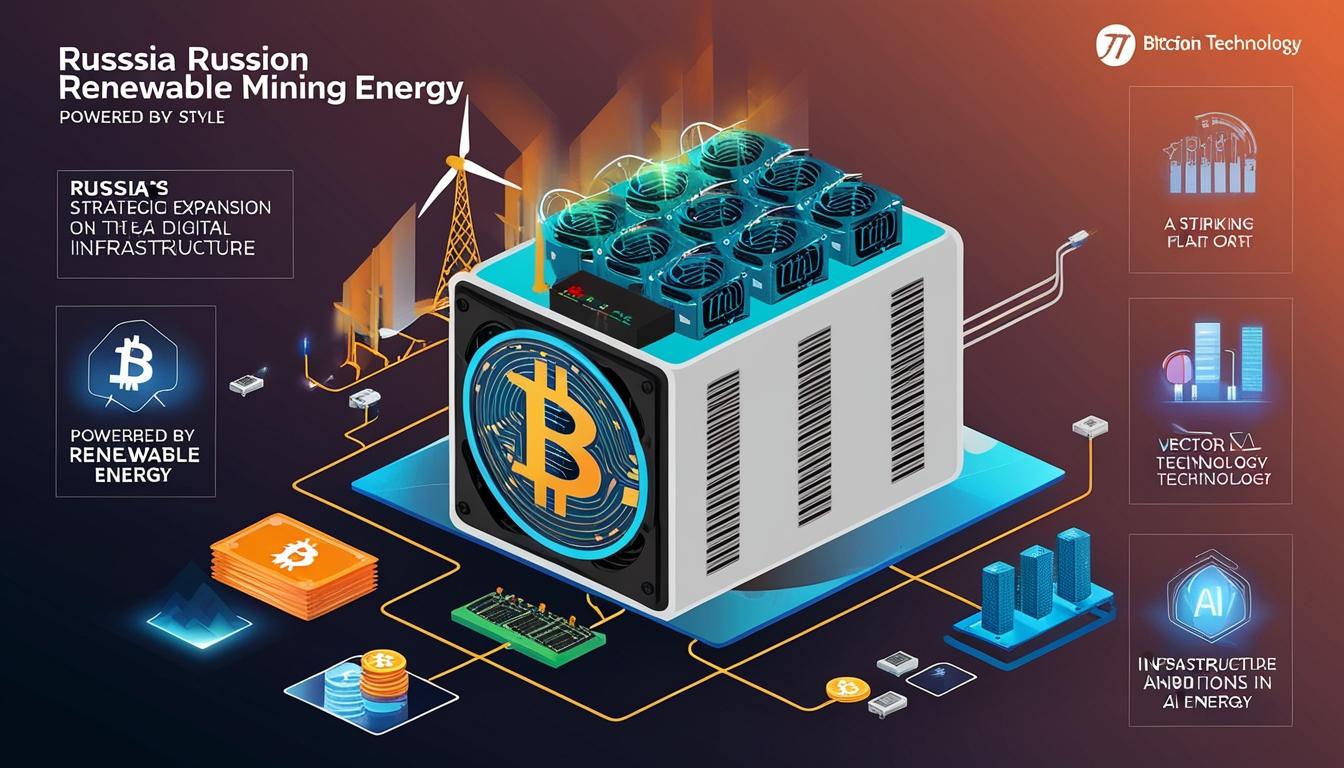
Russia's Strategic Expansion in Computing Infrastructure for Bitcoin Mining and AI
In a move set to reshape the global digital landscape, Russia has announced significant initiatives aimed at bolstering its computing infrastructure. The primary focus is to enhance capabilities in Bitcoin mining, while also establishing a foothold in artificial intelligence technology. This development underscores Russia's intent to achieve financial independence from Western influences and to potentially pivot the technological balance of power.
Announcement and Objectives
Russia's plans were unveiled at the BRICS Business Forum held in Moscow, reflecting a strategic alignment with its BRICS counterparts. The initiative seeks to leverage state-owned resources to generate electricity, which will be pivotal in sustaining this burgeoning infrastructure. The use of local resources is intended to keep the operation both cost-effective and locally controlled, a move that could potentially fortify Russia’s economic and digital sovereignty.
Implications for BRICS and Beyond
The BRICS alliance, comprising Brazil, Russia, India, China, and South Africa, represents a collective push towards diminishing reliance on the US dollar by establishing an alternative financial ecosystem. This includes utilizing digital currencies like Bitcoin. Nico Smid, founder of Digital Mining Solutions, emphasized the relevance of game theory, suggesting that it might incentivize other BRICS nations such as Argentina, Ethiopia, and the United Arab Emirates to participate in this initiative.
Matthew Sigel, Head of Digital Assets at VanEck, highlighted the urgency felt outside the U.S. to develop systems that circumvent American fiscal policies, which are viewed as unsustainable by some international observers. This sentiment is driving BRICS nations to unify their efforts towards creating a parallel economic structure.
Challenges and Opportunities
The expansion of these initiatives has not been without its hurdles. Russia, traditionally not known for its low energy costs, faces challenges due to the increased electricity demand coupled with the devaluation of the ruble. This situation underscores the necessity for utilizing older mining equipment in geographical areas where energy costs are significantly lower, thus maintaining profitability in otherwise unsustainable operations.
While there is potential for significant economic and strategic advantages, the geopolitical ramifications cannot be ignored. The initiatives, if successful, could potentially rival the combined GDP of G7 nations, signaling a shift in global economic hierarchies and possibly undermining longstanding financial systems dominated by Western economies.
Global Reactions and Political Context
The geopolitical landscape is set for potential realignments as these initiatives gather momentum. The initiatives are gaining traction amidst heightened political tension and an impending electoral climate in the United States that could redefine global regulatory approaches towards digital assets.
In summary, Russia's aggressive pursuit of advanced computing capabilities for Bitcoin mining and AI development could redefine its role on the global stage. While the outcome remains to be seen, the approach highlights a significant shift in how nations are strategizing to achieve digital supremacy and economic independence in an increasingly interconnected world.
Source: Noah Wire Services