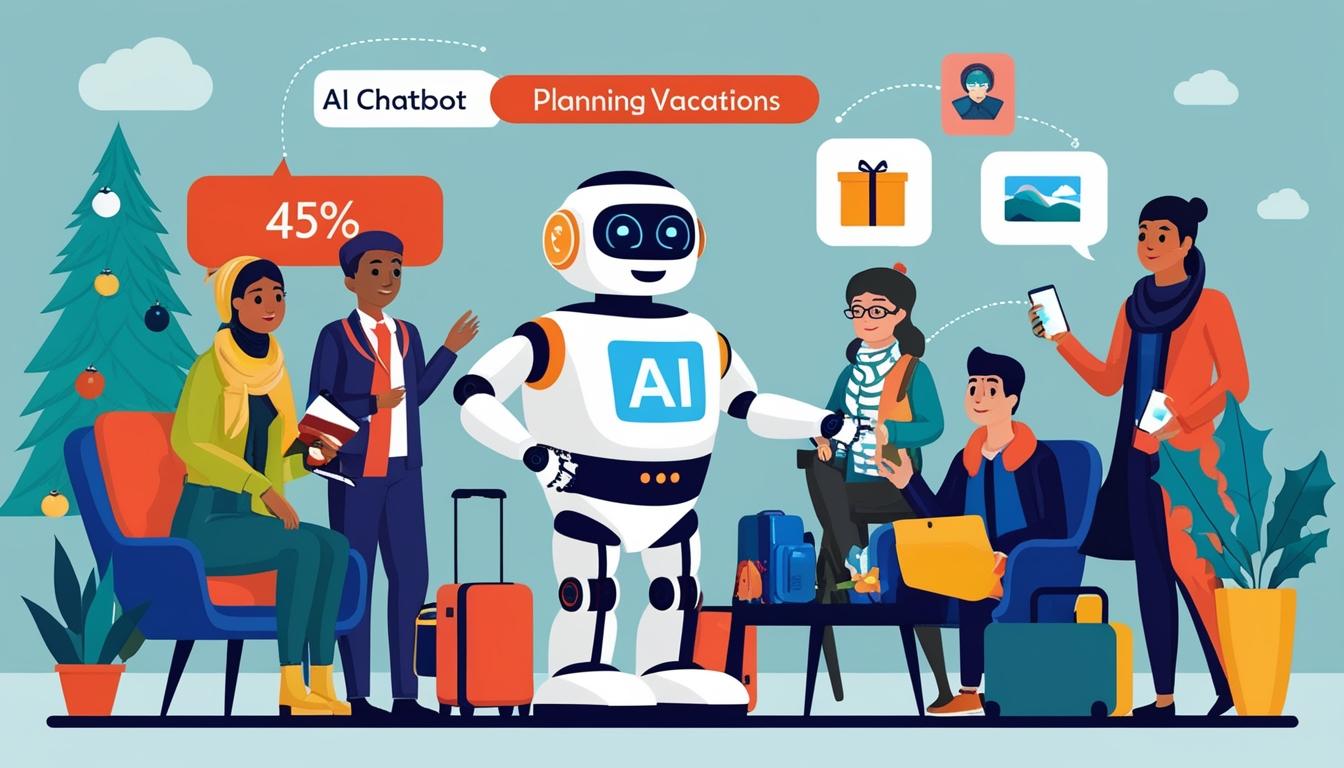
As the holiday season approaches, an increasing number of travellers are turning towards artificial intelligence (AI) to aid in planning their vacations. According to a survey conducted by Matador Networks, approximately 30 percent of individuals anticipate using AI to assist with travel arrangements this year, highlighting a growing trend towards technological solutions for what can often be a complex and daunting task.
The survey, which involved over 1,000 participants, reveals that the appeal of AI in trip planning is particularly strong among younger generations. Millennials and Generation Z, notably, show a high inclination towards using AI, with about half indicating they plan to utilise such tools. This contrasts with Gen X and Baby Boomers, who are less inclined to engage AI for planning their travels.
The use of AI is especially prevalent among those organising family trips or those with specific requirements, such as accommodating disabilities. The CEO of Matador Network, Ross Borden, emphasises AI’s advantages in crafting itineraries for diverse groups. Borden notes how generative AI can efficiently propose activities suitable for a broad range of interests and needs. For instance, inquirers can receive tailored dining suggestions in Chicago that accommodate both a wheelchair-using elder and a vegetarian teenager, all through the AI's capability to handle specific queries.
This trend towards AI-driven travel planning coincides with Google’s recent announcement of new AI features being incorporated into its Maps application. These enhancements are set to assist users in effectively organising their trips, aligning well with the rising demand for AI in travel.
Central to this innovation is GuideGeek, a free AI chatbot based on OpenAI technology. GuideGeek offers instant responses to travel-related questions via platforms such as WhatsApp, Facebook, and Instagram. Users can engage with the chatbot to design comprehensive travel plans, including recommended accommodations, dining options, and notable attractions, all swiftly and efficiently. The suggestions provided by GuideGeek are said to be drawn from human travel experts within the Matador network.
Anecdotal evidence from individuals using GuideGeek demonstrates its efficiency; a complete trip plan, from locations to visit to potential places to dine and stay, can be curated in as little as 20 minutes. The rising reliance on AI tools like GuideGeek signifies a significant shift in how travellers approach the often onerous task of planning.
As travel enthusiasts prepare to reconnect with family and friends over the festive period, the integration of AI tools in planning processes offers a less time-consuming and more streamlined approach. Whether satisfying a wide array of preferences or addressing unique personal requirements, AI presents a promising means to enhance the travel planning experience, regardless of the traveller's age or needs.
Source: Noah Wire Services