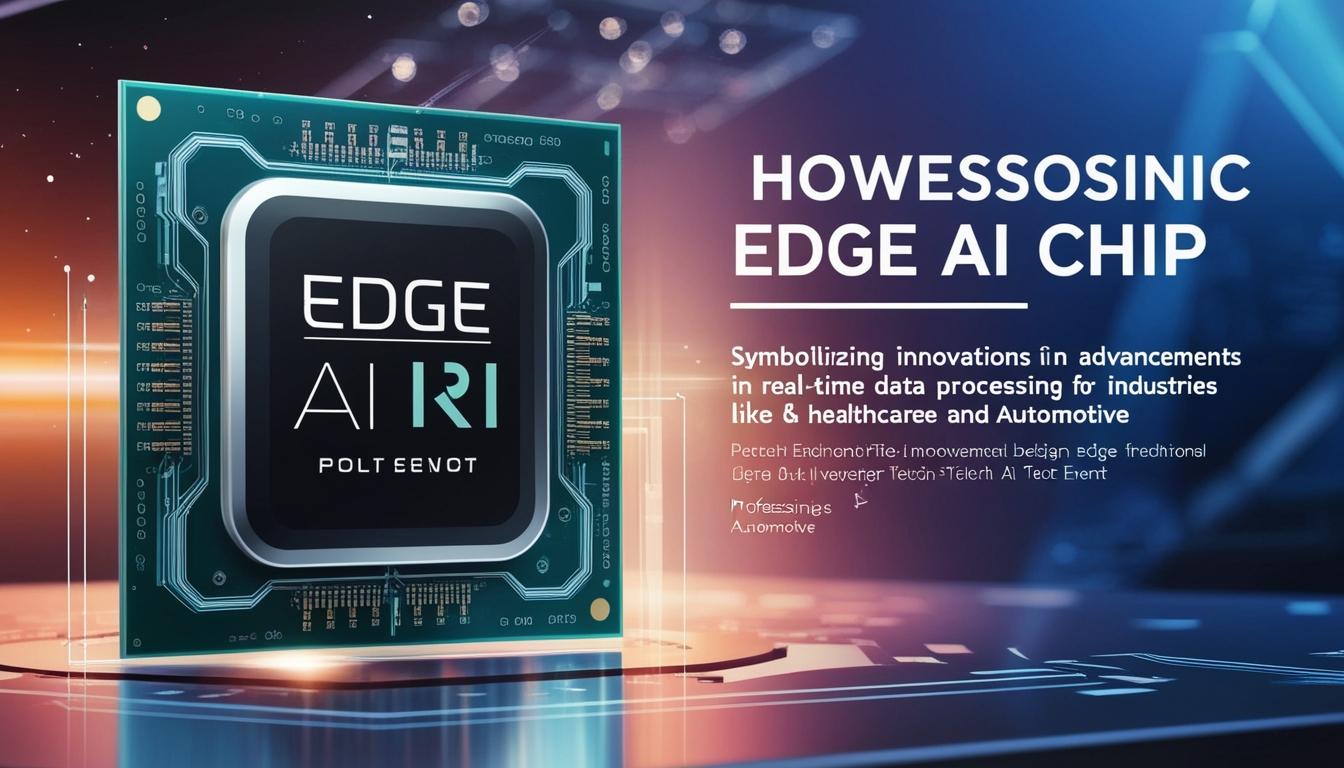
Embedded World 2024 has become a focal point for showcasing the significant advancements being realised in edge artificial intelligence (AI) technology. Held in a vibrant venue consistently known for technological innovation, the event highlighted pioneering progress across micro, thin, and thick edge applications, illustrating how edge AI is progressively impacting various industries by bringing computational intelligence closer to data sources.
Edge AI is rapidly evolving, offering enhanced data processing capabilities at or near the source of the data, rather than relying heavily on cloud-based processing. This evolution is marked by benefits that include faster response times, greater privacy for data users, and a decreased dependency on major cloud service providers. The resultant improvements are creating new opportunities for sectors such as healthcare, automotive, and industrial operations, which are poised to begin transforming traditional operational models.
In healthcare, edge AI can facilitate real-time analyses of patient data, potentially leading to faster diagnosis and intervention. Automotive industries are expected to benefit from enhanced vehicle automation and safety features, while industrial applications will likely see more efficient production processes through predictive maintenance and real-time monitoring.
An intriguing aspect of the discussion at Embedded World 2024 was the anticipated influence of edge AI on the Internet of Things (IoT) infrastructure. As edge AI continues to mature, IoT systems will become more efficient, enabling connected smart devices to make decisions with greater speed and accuracy. The integration of edge AI into these systems is expected to drive significant automation, which could lead to reduced operational costs and a reshaping of embedded computing paradigms.
Central to this progression are the developments in AI chips specifically designed for edge processing. These chips allow for versatile applications of AI technology directly on devices, fostering quicker decision-making processes without the latency typically associated with cloud processing. Attendees at the event witnessed demonstrations of these chips in action, illustrating their potential to enhance functionality across varied platforms.
As these technologies progress, the role of edge AI within both IoT and AI ecosystems is set to widen. Industry experts at the event predicted that as edge AI capabilities expand, so too will its applications, leading to an increased influence across multiple sectors.
Embedded World 2024 has underlined a critical juncture in technological evolution, showcasing how edge AI is beginning to permeate and redefine numerous facets of industry. As developments continue apace, the impacts of this technology will likely be felt more profoundly in the coming years, fostering a new era of innovation.
Source: Noah Wire Services