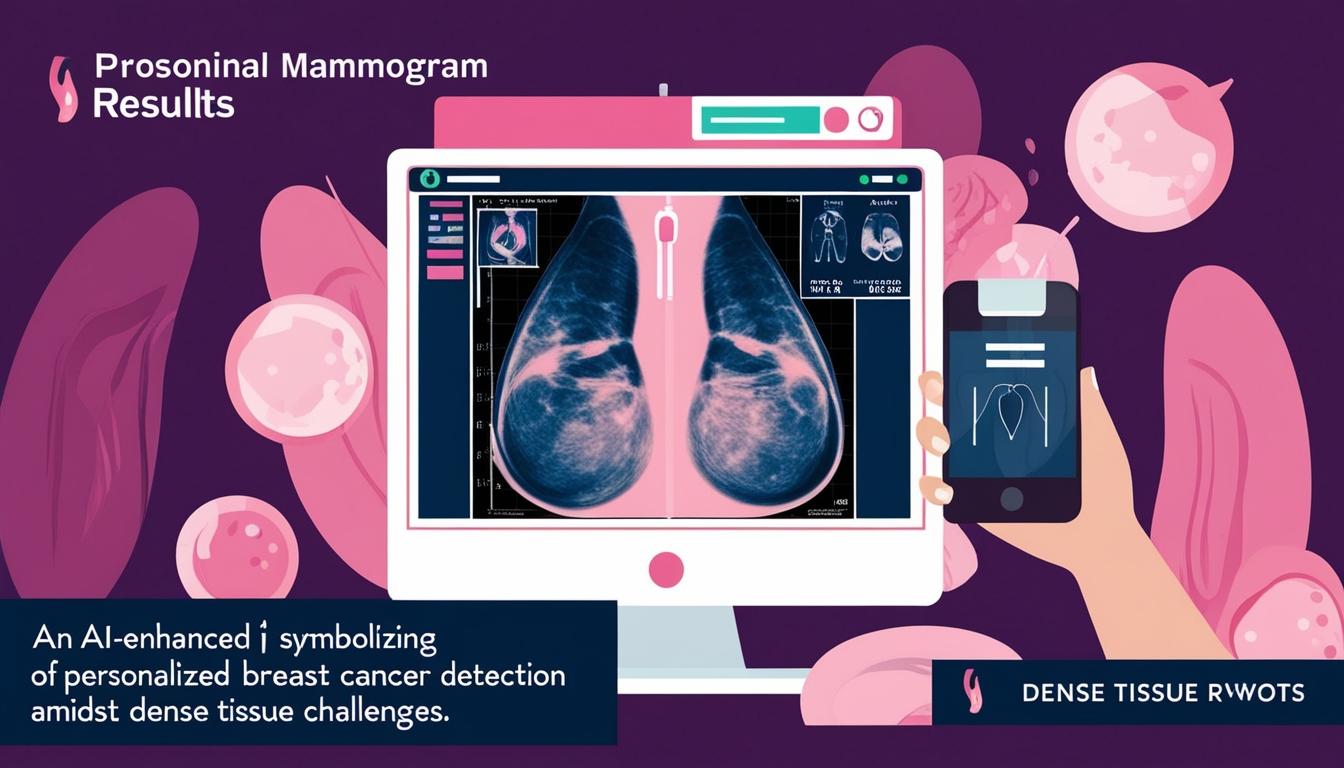
In a recent interview, Dr. John Simon, a seasoned radiologist specialising in women's imaging and interventional radiology, shed light on the transformative role of artificial intelligence (AI) in the detection of breast cancer. His insights emphasise the importance of early detection in the successful treatment and management of breast cancer, a condition that holds a cure rate of over 99% when identified at an early stage.
Dr. Simon addressed the persistent challenge of detecting breast cancer through mammographic screenings, particularly in women exhibiting dense breast tissue. This issue affects approximately 40% of women in the United States, where dense breast tissue can obscure cancerous developments on mammograms. Simon likened this challenge to spotting an object in a cloudy sky, illustrating the difficulty healthcare professionals face in such scenarios.
Mammography, specifically in its 3D form, continues to be the primary imaging technique used for the detection of breast cancer. However, when faced with dense breast tissue, additional imaging techniques like ultrasound and magnetic resonance imaging (MRI) become crucial. Ultrasound can penetrate the dense tissue, acting like a radar to identify irregularities. However, MRI, being more invasive and expensive due to the use of contrast agents, is generally reserved for patients deemed to be at high risk.
A cornerstone of Simon’s discussion was the importance of adopting personalised strategies for breast cancer detection. Such strategies take into account individual risk factors, including breast density and family medical history, often assessed using the Tyrer-Cuzick score. This approach allows for the development of tailored surveillance strategies aimed at improving early detection rates.
A significant hurdle in successful breast cancer detection is patient compliance with recommended annual screenings. Despite the critical role these screenings play in saving lives, a notable number of eligible patients opt out due to reasons such as fear or discomfort, with statistics suggesting that nearly 40% of eligible women skip their annual exams. Dr. Simon underlined the impact of patient education in mitigating these issues.
AI is progressively enhancing the landscape of breast cancer detection by augmenting the capabilities of radiologists reviewing mammograms. It does so by increasing the sensitivity of cancer detection processes, thus identifying more cases of breast cancer. Furthermore, AI assists in reducing the occurrence of false positives, which are instances where cancer is suspected but not present. The technology also provides consistent and reproducible assessments of breast density, which vary widely when interpreted by different radiologists. This consistency is crucial for informing patients about their breast density, thereby influencing the success of early detection efforts.
In addition to these advancements, AI improves the organisation of patient history documentation and data management, paving the way for a more personalised approach to cancer detection. The rapid advancements in AI technology over recent years have markedly improved the accuracy and efficiency of detecting breast cancer, which in turn encourages patients to maintain a proactive stance towards their screenings.
In conclusion, Dr. Simon encouraged patients to adhere to annual mammogram recommendations, and for those identified with dense breast tissue, to also consider annual ultrasounds. He underscored the necessity of understanding personal risk factors as a means of enhancing the quality and effectiveness of breast cancer care.
Source: Noah Wire Services