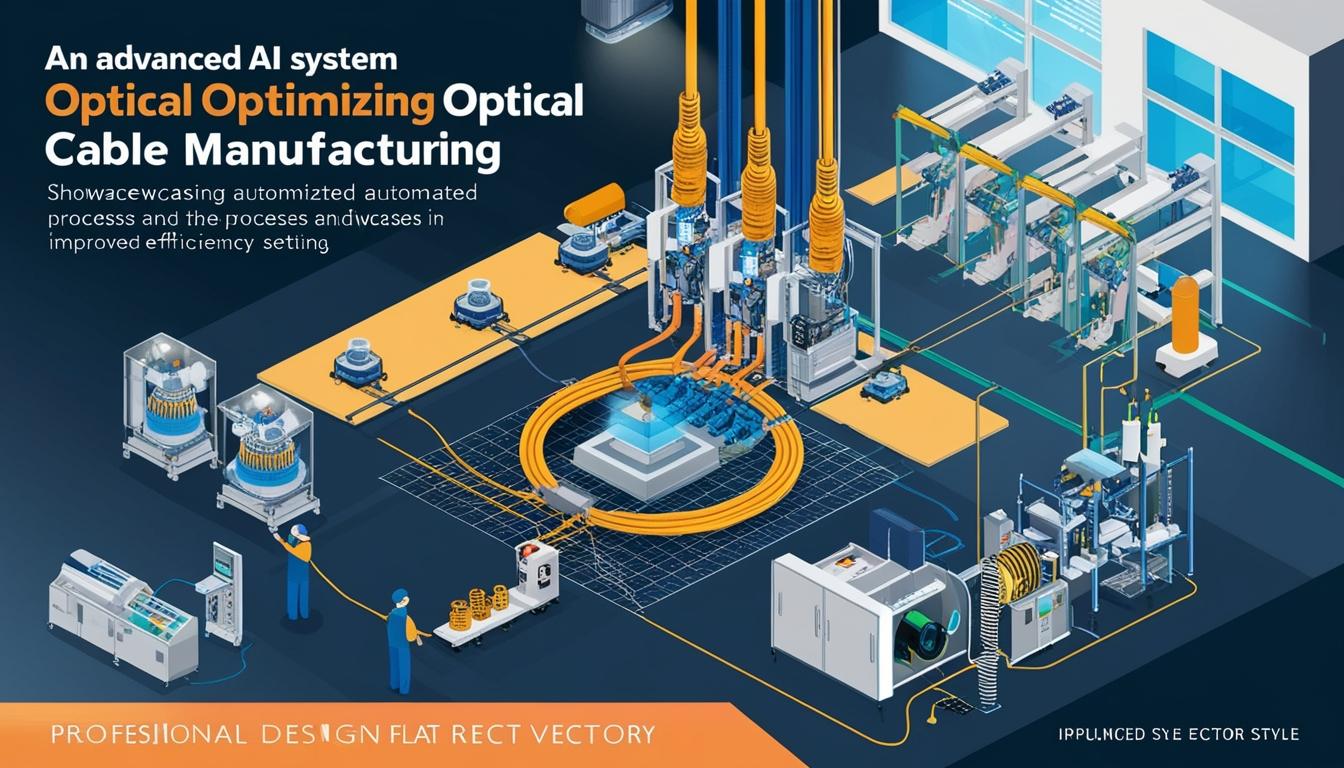
AI-Driven Smart Buffering Revolutionises Optical Cable Manufacturing
In a significant advancement for the cable manufacturing industry, the implementation of AI-powered process control system, Smart Buffering, has shown remarkable improvements in product quality, operational efficiency, and material savings. Deployed in high-speed optical cable secondary coating lines, Smart Buffering introduces a sophisticated layer of automation that enhances traditional manufacturing processes.
Deployment and Functionality
Traditionally, cable coating lines have relied heavily on human-operated process automation systems. This dependency possesses inherent risks of inefficiencies and human error, which can compromise product quality and operational efficiency. Smart Buffering addresses these challenges by automating critical tasks and decision-making processes typically carried out by human operators. Integrated with existing automation layers, it effectively optimises the manufacturing workflow.
Operational Success and Benefits
The deployment of Smart Buffering has been particularly successful in a real-world production setting at a cable manufacturing facility. It has demonstrated its efficacy by stabilising the production process, leading to superior product quality. Furthermore, the system has contributed to notable material savings and reduced waste, endorsing a more sustainable production cycle.
One of the pivotal advantages of Smart Buffering is its capability to increase uptime by predicting maintenance needs before any significant disruptions occur. This proactive maintenance approach not only prolongs the operational life of machinery but also minimises downtime and ensures continuous production.
Impact on the Manufacturing Industry
The integration of AI into manufacturing through Smart Buffering signifies a remarkable shift in the industry. As AI technology becomes more pervasive, it reshapes the role of human operators. Instead of performing repetitive tasks, operators can now focus on overseeing processes and managing exceptions, which may increase job satisfaction and reduce manual labor.
Moreover, the broader impact of AI-driven optimisation extends beyond the operational benefits. It provides a framework for a more resource-efficient production model, contributing to the sustainability objectives increasingly valued in modern industrial operations.
Future Prospects
Looking ahead, Smart Buffering and similar AI technologies are likely to continue evolving, offering deeper insights and greater efficiencies. As the industry embraces such advancements, the prospect for enhanced operational models becomes more tangible, potentially setting new standards for manufacturing processes across various sectors.
In conclusion, the introduction of Smart Buffering in optical cable manufacturing emerges as a milestone, with its successful deployment offering a glimpse into the future of AI-enhanced production environments.
Source: Noah Wire Services