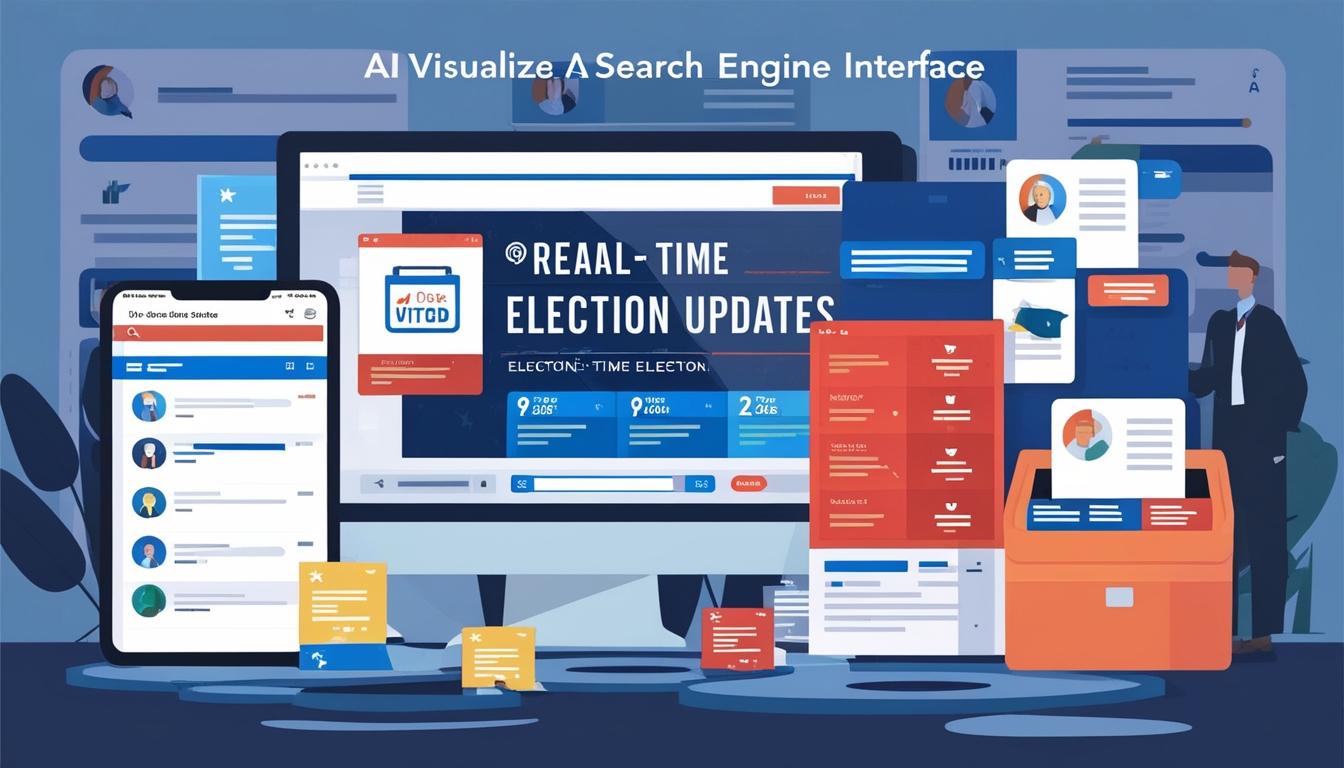
In the midst of electoral proceedings, the realm of artificial intelligence (AI) search engines is experiencing a significant test regarding its capability to dispense trustworthy and credible information. This scrutiny comes against a backdrop of heightened concerns surrounding misinformation and the so-called 'hallucinations' produced by AI technologies.
AI search applications, which have gained significant traction recently, are driven by large language models (LLMs). These models produce responses by merging data from numerous sources to respond to inquiries. The market has seen a surge of activity with the entrance of OpenAI's new search engine, ChatGPT Search. Launched just last week, it joins competitors such as Perplexity AI, established in 2022, which has already carved a growing niche for itself.
In 2023, Google innovated its search offering with the introduction of AI Overviews, which present AI-generated summaries at the top of search results. By 2024, these overviews were rolled out across the United States, providing users with succinct answers through standard Google Search or its Gemini chatbot, offering an experience akin to ChatGPT.
With the current election, AI search frontrunners are proceeding with caution, especially regarding handling election-related queries. Google has implemented stringent restrictions within its Gemini platform and Google Search AI Overviews, providing minimal guidance on electoral matters. When asked about elections, Gemini responds tactfully, acknowledging the limitations of its current capabilities and directing users to traditional Google Search.
Similarly, OpenAI's ChatGPT Search has adopted a conservative approach, redirecting users to established news outlets such as The Associated Press and Reuters for the latest electoral updates. However, the efficacy of the information provided can vary depending on how inquiries are framed. In one instance, querying about polling in US swing states resulted in ChatGPT offering a dated summary from November 5, citing Business Insider and other sources.
Perplexity AI is distinguishing itself with a bold strategy by launching an AI election hub featuring live updates. These updates rely on data from The Associated Press and a partnership with Democracy Works, offering a straightforward user interface labelled as "Your Ballot." By simply entering a zip code, users gain access to extensive details about local candidates and measures.
However, Perplexity's ambitious attempt is not without its challenges, especially regarding the credibility and source accuracy of its information. Notably, some sources such as the Hindustan Times were leveraged for US election data, raising eyebrows about their relevance and reliability. This inconsistency in sourcing has led to some discrepancies, such as mismatches in polling numbers regarding candidates in critical battleground states like Arizona.
Addressing these concerns, a spokesperson for Perplexity revealed that source selection aims to prioritise fact-checking and non-partisan organisations. Despite the controversy, Perplexity maintains that it seeks to incorporate multiple sources per query, though not all information is corroborated by several outlets.
Perplexity's new election hub underscores its dedication to delivering transparent and user-friendly electoral information. It summarises ballot initiatives, candidates' profiles, and official stances, thereby easing users through the overwhelming flood of data during elections.
The platform, which is available without a premium subscription, represents an effort to democratise access to electoral knowledge, ensuring users receive substantiated information without the influence of sponsored content. However, the accuracy and reliability of such AI-driven tools remain under close observation during this critical period. Whether Perplexity's bold move will resonate positively with users, enhancing trust in AI's role in democratic processes, is yet to be determined.
Source: Noah Wire Services