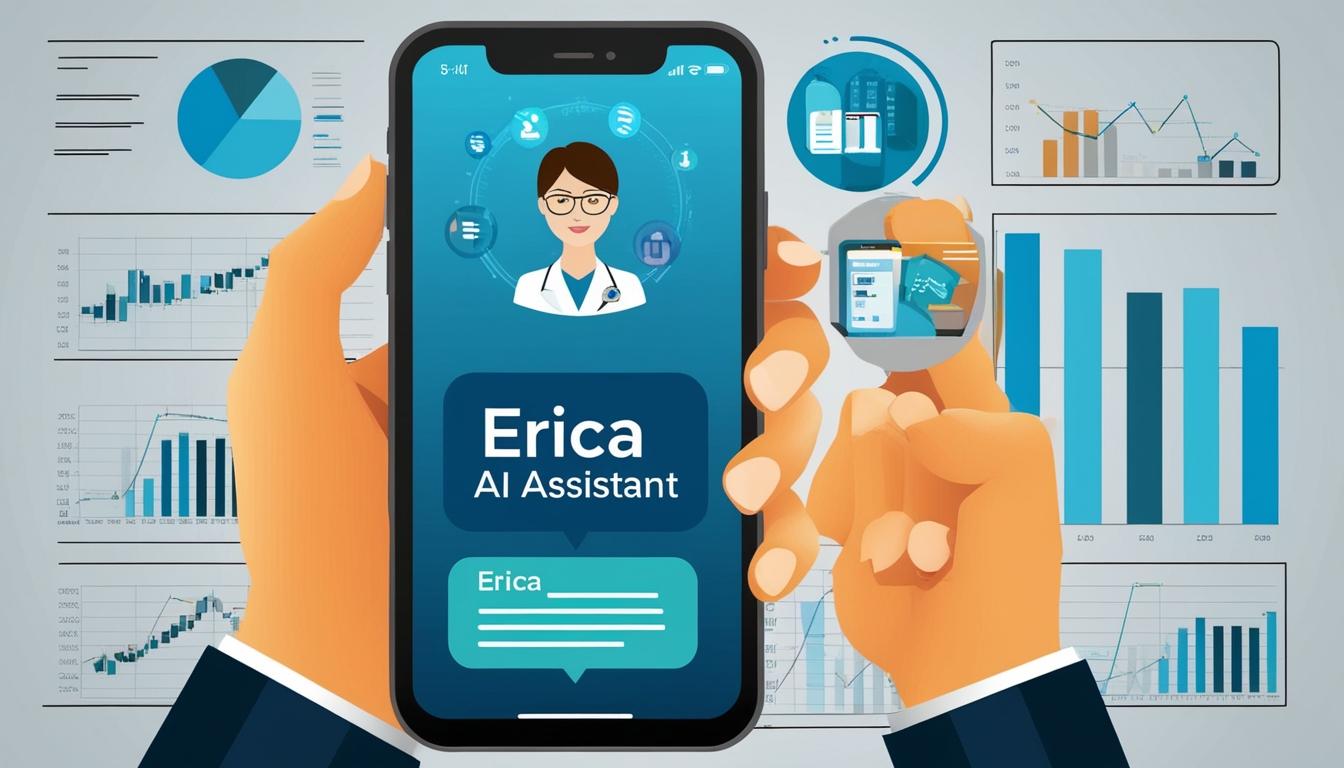
Financial institutions are increasingly integrating artificial intelligence (AI) into their services, introducing AI assistants with varying naming strategies designed to enhance user engagement and acceptance. As they grapple with the question of whether assigning a human name to these digital tools is beneficial or counterproductive, companies have adopted contrasting approaches.
Bank of America's AI assistant "Erica," which launched in 2018, epitomises the strategy of deriving names from the company’s identity—"Erica" is extracted from the final letters of "America." Since its inception, Erica has facilitated over 2.4 billion interactions with more than 45 million clients. Inez Louzonis, head of Merrill Wealth Management platforms and capabilities, explains that Erica serves as a foundational element for providing personalised client services at scale within the Bank of America ecosystem, primarily through its mobile app.
Similarly, Morningstar has introduced "Mo," a tool that utilises a human name to enhance relatability and user trust. Launched in May 2023, Mo can address over 100,000 user inquiries concerning product support, such as portfolio importing and client proposal creation. James Rhodes, Morningstar's chief technology officer, has articulated the decision to humanise Mo by providing it with a name and face, thereby attempting to position Mo as a supportive team member.
Angel Gonzalez, chief marketing officer at Snappy Kraken, supported this trend by highlighting that human names make AI technology less intimidating. He emphasised the importance of conversational AI in the wealth management sector, where user adoption has historically lagged behind other industries.
However, not all financial firms embrace this methodology. Morgan Stanley, for instance, deliberately avoids human names for its AI integration, labelling its tools as AI @ Morgan Stanley Debrief and Assistant. Koren Picariello, the company’s head of generative AI strategy and execution, explained that the firm’s decision reflects a desire to clearly differentiate AI from human intelligence, thereby managing user expectations about the AI's capabilities.
Other firms have strategically employed different tactics to solve the naming conundrum. Carson Group has gone against the grain by naming its forthcoming AI assistant "Steve," breaking away from the traditional female-oriented assistant names like Alexa and Siri. Dani Fava, chief strategy officer at Carson Group, pointed out that this decision not only counters gender-based stereotypes but also pays tribute to Steve Synowiki, the director of training who contributed significantly to the AI's development.
Additionally, Shaping Wealth, in collaboration with Alai Studios, is developing "Lydia," a tool that leverages behavioural science to support financial advisors. Expected to officially launch soon, Lydia is currently in beta testing. The name is inspired by the historical Lydian coins, representing a nod to the roots of financial systems, according to Brian Portnoy, founder of Shaping Wealth.
As financial institutions continue to innovate with AI technology, the choice of names for these digital assistants seems to signal deeper strategic perspectives, reflecting both branding considerations and broader societal commentaries on gender norms and technological capabilities.
Source: Noah Wire Services