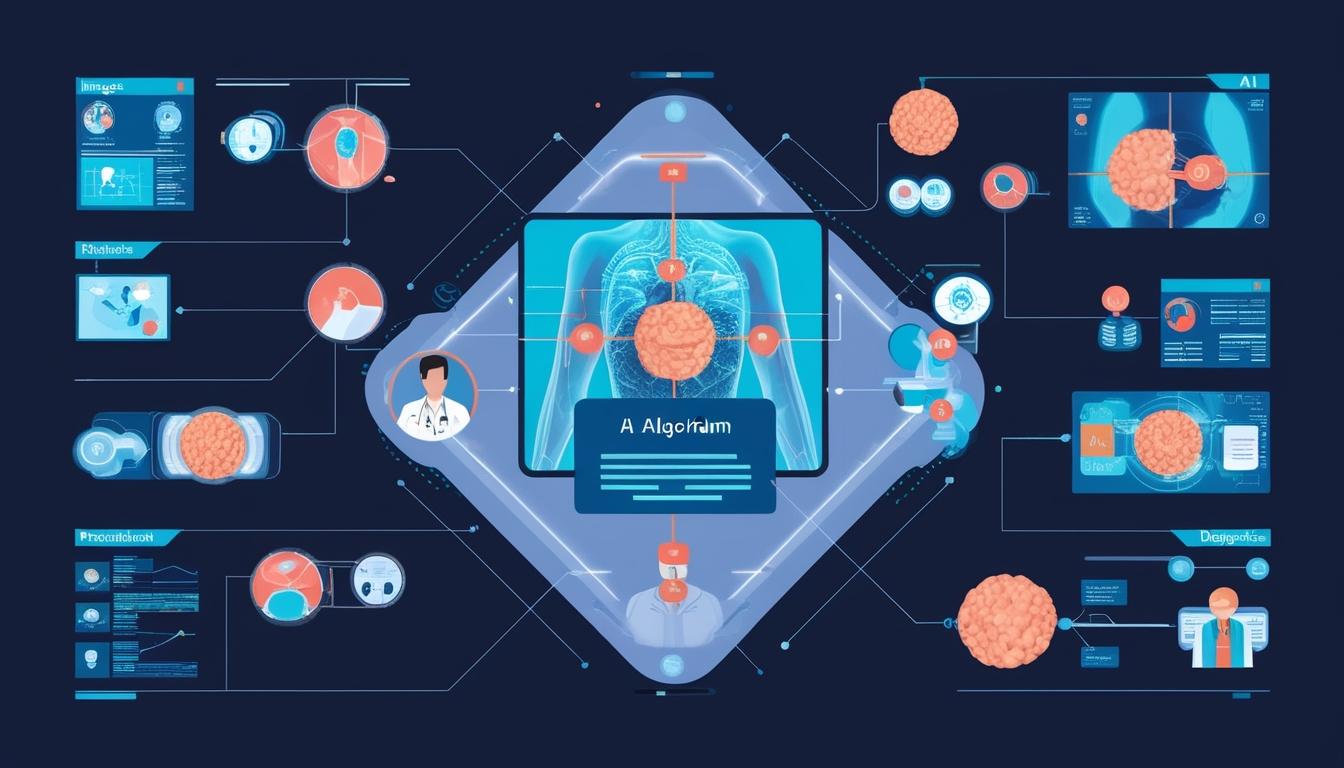
Artificial Intelligence (AI) is continuing to revolutionise the healthcare sector with its notable contributions to diagnostics and personalised treatment plans. This technological advancement promises improved accuracy and speed in disease detection and management, thanks to cutting-edge algorithms capable of processing complex data.
In the arena of diagnostics, AI is proving to be a game-changer, particularly in the early detection of diseases such as cancer. By utilising medical image sets, AI algorithms can uncover non-visible patterns and anomalies that might elude even the most trained human eye. Recent studies highlight that AI systems can identify breast cancer with an impressive accuracy of 94.5%. This rate of precision surpasses many traditional diagnostic methods and significantly accelerates the process, allowing healthcare providers to begin treatment at much earlier stages when intervention can be most effective.
AI's capabilities extend beyond just identifying diseases. In treatment planning, AI can craft strategies tailored to individual needs by examining a plethora of personal data. These include a patient's medical history, lifestyle factors, and genetic profile. By leveraging this data, AI helps in designing treatment plans that are optimally suited to each individual patient, potentially improving outcomes and reducing the risks associated with more generic treatment regimens.
The deployment of AI in these areas illustrates a shift towards more personalised medicine, where care is increasingly being tailored to cater to the unique characteristics of each patient. This approach is not only enhancing the precision of medical interventions but is also fostering a better understanding of the complexities inherent in human health.
As AI continues to evolve, its role in healthcare is likely to expand, offering new possibilities for improving patient care and optimising the overall efficiency of healthcare systems. While the integration of AI in healthcare remains a growing field, its current contributions underscore its potential to transform medical practices and outcomes in significant ways.
Overall, the use of AI in healthcare diagnostics and personalised treatment plans marks a forward step in the ongoing journey of medical innovation, offering new hope and possibilities for patients and practitioners alike.
Source: Noah Wire Services