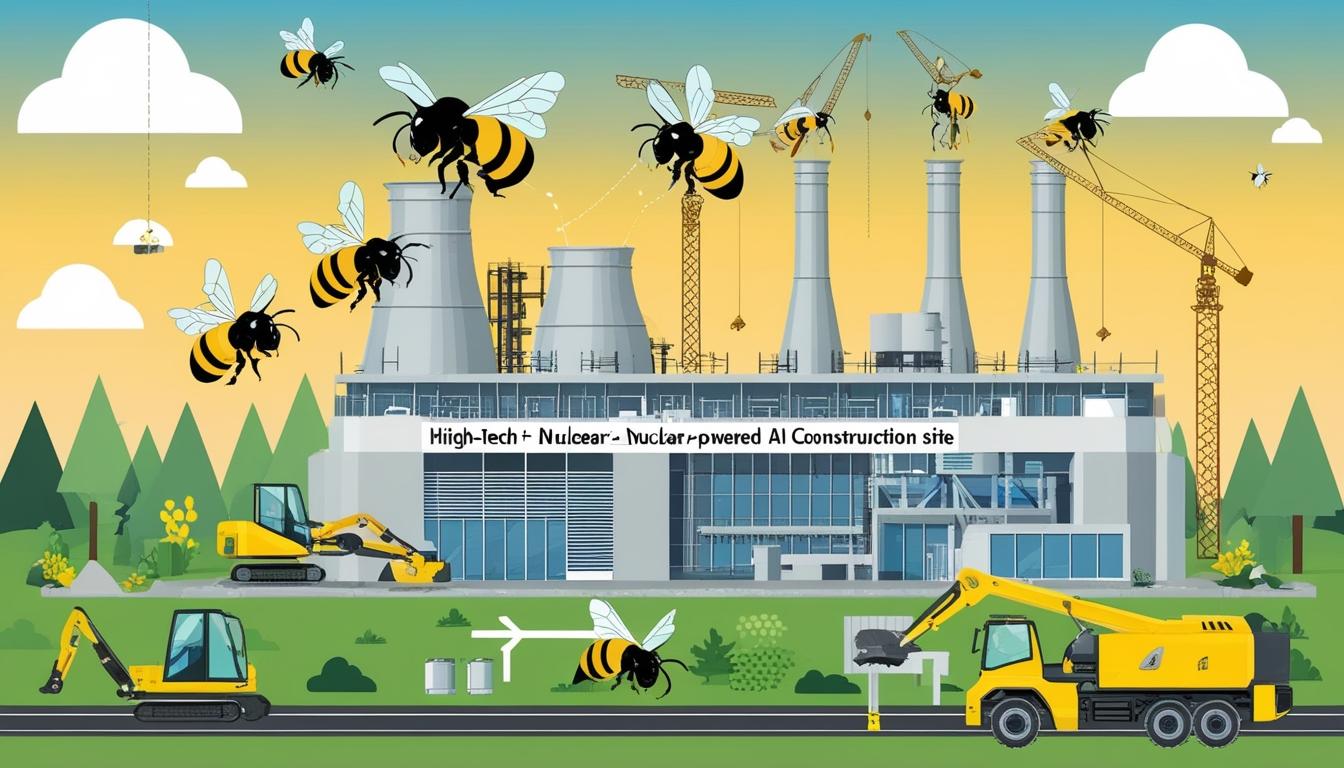
Meta's Ambitious Nuclear-Powered AI Centre Halted by Rare Bee Discovery
Meta Platforms Inc., the company helmed by Mark Zuckerberg, has encountered an unexpected obstacle in its innovative plan to power artificial intelligence systems using nuclear energy. The ambitious project to establish a nuclear-powered AI data centre has been indefinitely postponed following the discovery of a rare species of bees at the proposed building site. This development was confirmed by Zuckerberg himself during an internal company meeting last week.
The project, which sought to set a precedent as potentially the first of its kind to utilise nuclear power for AI data processing, was slated to be constructed near an undisclosed nuclear facility. However, the presence of the endangered bees, found during a mandatory environmental survey, has led to the project’s suspension, as reported by the Financial Times on November 4.
Regulators have suspended the project in order to alleviate concerns surrounding the protection of these pollinators, crucial to both agriculture and the ecosystem. Specific details about the type of bees or the exact location of the project remain confidential. Meta, however, acknowledged the environmental implications and its responsibility towards preserving biodiversity.
This unforeseen setback comes amidst growing efforts by major tech companies such as Meta, Microsoft, and Amazon, to find sustainable energy solutions to power their rapidly expanding AI infrastructures. These facilities demand significant energy, with reports indicating that an AI-assisted search query can consume up to ten times the energy of a standard search.
Meta's initiative aimed to address this energy concern while also alleviating pressures on conventional energy grids, given the company’s remarkable 65 percent increase in indirect emissions over the past two years. In line with its sustainability goals and similar efforts by peers, the company has maintained net zero greenhouse gas emissions since 2020. Meta has invested significantly in a renewable energy portfolio and designed some of the tech industry's most sustainable data centres.
However, this latest pause may also have been influenced by additional regulatory challenges, as hinted by sources cited in the Financial Times article. The project was part of a broader trend, with other tech leaders such as Google working on modular mini reactors and Microsoft exploring the revival of the Three Mile Island nuclear plant.
The broader environmental implications are significant, especially considering that many bee species are under threat. The Centre for Biological Diversity reports that one in four native bee species in the United States is at risk of extinction, emphasising the importance of pollinator preservation. These insects play a vital role in pollinating numerous crops and wild flowering plants, enhancing biodiversity and ecosystem health.
The suspension of Meta's plan underscores the ongoing balancing act between technological advancement and environmental conservation. As Meta looks to allocate an estimated $38 billion to capital expenses in 2024, a large portion of which is likely earmarked for AI and data centre projects, the company must navigate these complexities to enhance infrastructure while adhering to environmental responsibilities.
The halted project serves as a reminder of the challenges tech giants face in marrying innovation with environmental stewardship. As industries strive to meet energy demands through alternative means, the resilience of nature and regulatory frameworks continues to play a pivotal role in shaping industrial advancement.
Source: Noah Wire Services