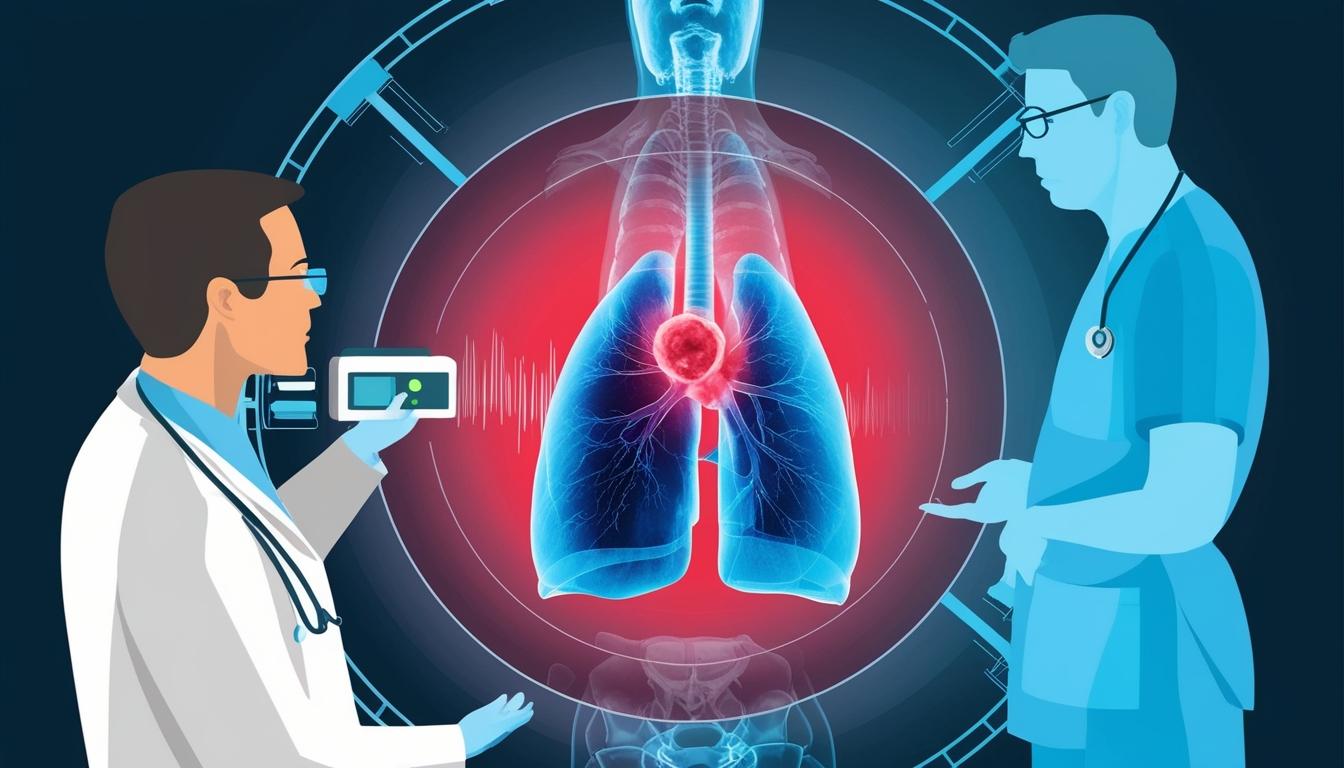
In a significant advancement in medical diagnostics, an AI-assisted process has successfully detected a lung tumour in a Scottish grandmother, paving the way for a life-saving operation. Diane McCallum, aged 60 from Bishopbriggs, underwent surgery to remove a tumour from her right lung after AI technology flagged the abnormality during a standard X-ray at Stobhill Hospital in Glasgow.
Diane first sought medical advice in May after experiencing a persistent cough. She was subsequently referred for an X-ray, and less than 24 hours later, radiologists contacted her with news of the detected anomaly. The AI software, part of the RADICAL (Radiograph Accelerated Detection and Identification of Cancer of the Lung) trial under NHS Greater Glasgow and Clyde, played a crucial role in this expedited process.
The implementation of AI seeks to revolutionise the way lung cancer is diagnosed by quickly distinguishing between normal and abnormal chest X-rays. This technology facilitates the prioritisation of patient cases, effectively reducing the time from weeks to days for patients to receive care.
After the AI detected an abnormality in Diane's X-ray, her GP was promptly notified, and she was scheduled for a CT scan. The scan confirmed the presence of a cancerous growth, and Diane was quickly slated for robotic keyhole surgery, which took place eight weeks after her initial consultation. The surgical procedure involved removing the upper lobe of her right lung, a move deemed necessary to curb the rapid growth of the tumour.
Following her operation, Diane is now undergoing preventative chemotherapy to minimise the risk of cancer recurrence. In a conversation with STV News, she expressed her gratitude for the efficiency brought about by the AI system, stating, "Without AI, I might not have even been diagnosed yet... that could have been weeks or a month before anything even started."
Diane’s case is a testament to the potential impact of AI in healthcare, particularly in the early detection and treatment of life-threatening conditions like lung cancer. Respiratory consultant Dr John Maclay, who treated Diane at Glasgow Royal Infirmary, emphasised that AI technology is designed to support, rather than replace, healthcare professionals. He noted, "That results in Diane getting a CT scan quickly, an appointment in the clinic, her diagnosis and management of cancer dealt with quickly."
The RADICAL trial is being supported by the West of Scotland Innovation Hub, ensuring that the application of AI in diagnostics is both safe and ethical. Katriona Brooksbank, the Head of the Hub, stressed the importance of deploying technology that complements human expertise, facilitating timely clinical care for patients.
This innovative use of AI not only benefits individual patients but has been implemented across the health board to aid in the early detection of suspicious anomalies, potentially transforming cancer diagnosis and treatment. The AI-driven approach holds promise for broader applications in healthcare, bolstering both the speed and accuracy of medical diagnostics.
Source: Noah Wire Services