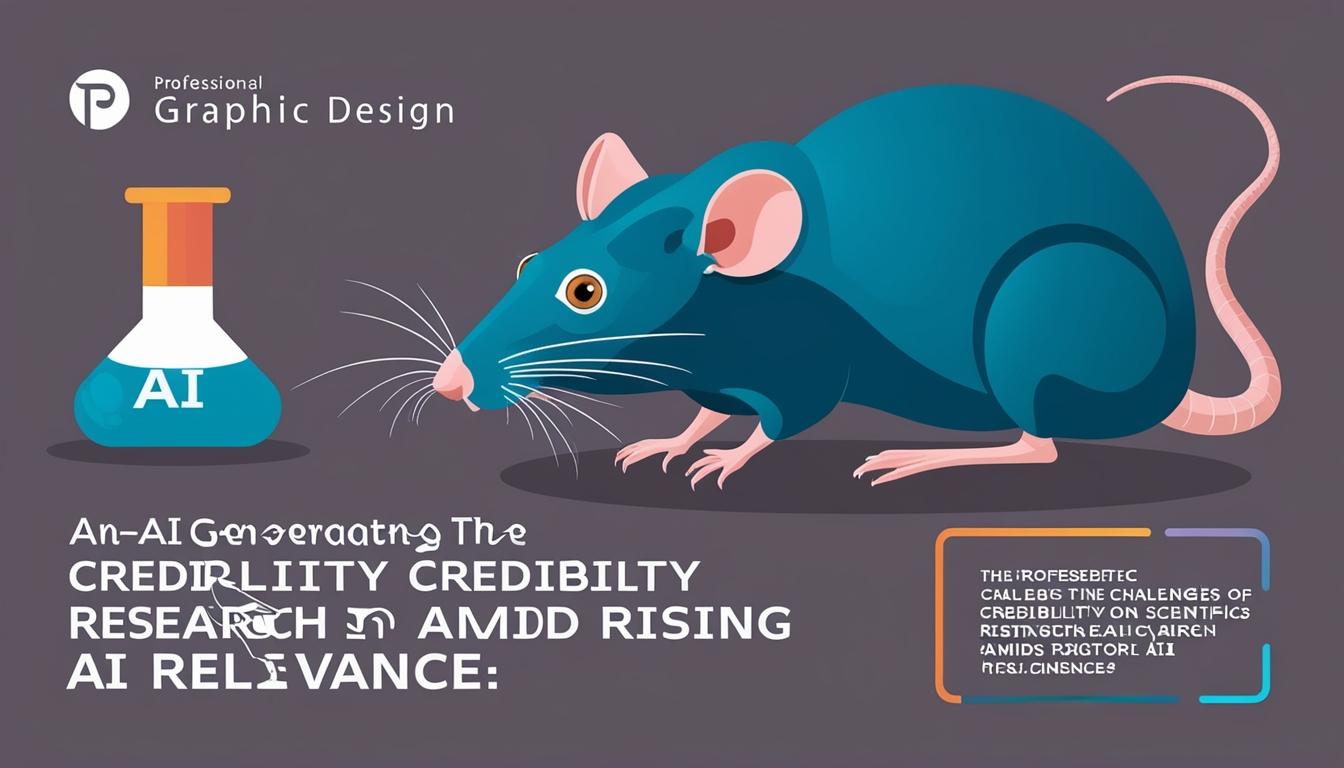
The increasing reliance on artificial intelligence (AI) across various fields has led to challenges, particularly in the realm of scientific research and publications. AI's capacity to generate images, some of which can include unusual or misleading features, has raised issues of credibility and authenticity in scientific journals. A notable case involved a bizarre AI-generated image of a rat with exaggerated features that appeared in the peer-reviewed journal "Frontiers in Cell and Developmental Biology" earlier this year. The journal retracted the paper upon recognising the inauthentic nature of the image, raising concerns about how AI could be subtly influencing scientific documentation.
To address such challenges, new technological solutions are emerging. One such solution is Proofig's AI Image Fabrication detector. Leveraging extensive datasets of known AI-generated images, this tool employs machine learning, pattern recognition, and statistical analysis to identify potential AI fabrications. The detector searches for specific patterns typical of AI generation and flags images for further scrutiny. Notably, it is equipped to discern AI-generated microscopic images, a particularly tricky area given the lack of human familiarity with the minute details these images present.
The tool's effectiveness is notable, with Proofig reporting a 98% success rate in detecting AI-generated images and a mere 0.02% false-positive rate, making it a reliable aid in maintaining the integrity of scientific publications. Dror Kolodkin-Gal, the co-founder of Proofig, expressed the company’s commitment to regular updates, ensuring the tool evolves alongside AI advancements by incorporating new datasets from emergent AI models.
Major scientific publications have started integrating this tool into their review processes. For instance, the esteemed "Science" journal utilises the Proofig detection system, although it has yet to identify any suspicious images. Likewise, Springer Nature, the publishing house behind the journal "Nature", is developing its own suite of detection tools. These tools, dubbed Geppetto and SnapShot, are designed to assess both textual and visual content for potential AI-generated characteristics.
Outside the scientific domain, AI continues to make headlines with both its potential and controversies. Netflix recently attracted criticism for its plans to produce games using AI technology, following layoffs of human developers. Similarly, Transport for Ireland's AI-generated Halloween art installation caught the attention of commuters, demonstrating both the creative potential and the eerie outcomes of AI-generated content.
These instances reflect a dual narrative surrounding AI in content creation—its innovative capabilities juxtaposed with the need for careful application to prevent misleading results, particularly in fields where accuracy is paramount. As AI technologies evolve, so too must the measures to ensure they are used ethically and effectively, safeguarding the veracity of critical research and media content.
Source: Noah Wire Services