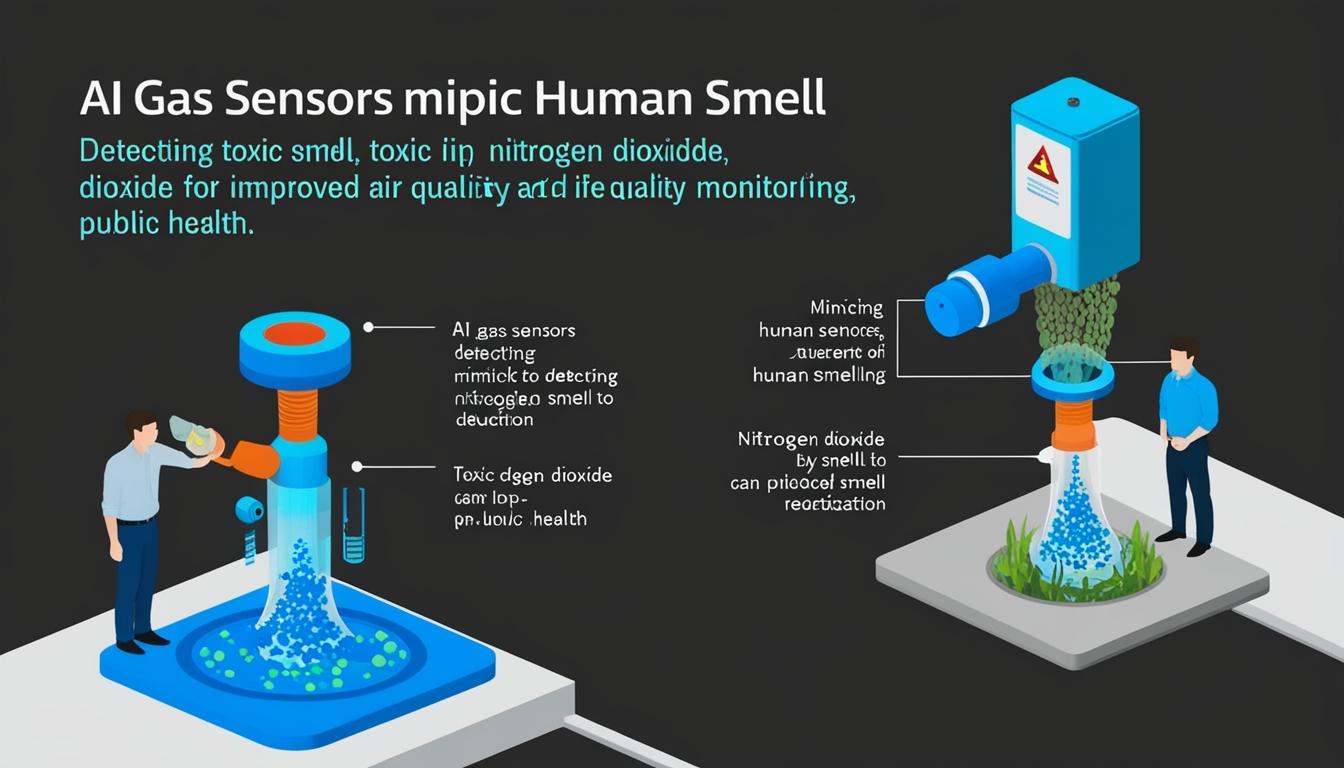
Researchers at the University of Virginia School of Engineering and Applied Science have developed an innovative artificial intelligence system designed to detect and monitor toxic gases mimicking the human olfactory senses. This groundbreaking AI-powered technology aims to address a significant environmental health concern by providing a method to track and identify harmful substances in the air promptly.
The novel system utilises advanced artificial neural networks in combination with a meticulous network of sensors, enabling it to identify sources of dangerous gases such as nitrogen dioxide (NO₂) effectively. NO₂ is a prevalent by-product of combustion processes, including those from vehicles and industrial operations. It represents a major threat to respiratory health, with long-term exposure potentially leading to conditions such as asthma and chronic obstructive pulmonary disease (COPD).
The research and subsequent development of this technology were led by a team at the University of Virginia, with significant contributions coming from associate professor of electrical and computer engineering and materials science engineering, Kyusang Lee. Their findings have been documented in the reputed scientific journal, Science Advances.
The implications of this technology extend far beyond academic interest. According to the World Health Organization, outdoor air pollution accounts for approximately 4.2 million premature deaths globally each year. The ability to detect and monitor pollutants like NO₂ in real-time could be a game-changer in mitigating the health impacts associated with poor air quality.
The innovative system's ability to mimic the human sense of smell represents a significant technological achievement, marking a step forward in the field of environmental engineering. The continuous development and potential deployment of such technology offer the possibility of improved air quality monitoring systems, which in turn could inform policies and initiatives aimed at reducing pollution and its detrimental effects on public health.
Source: Noah Wire Services