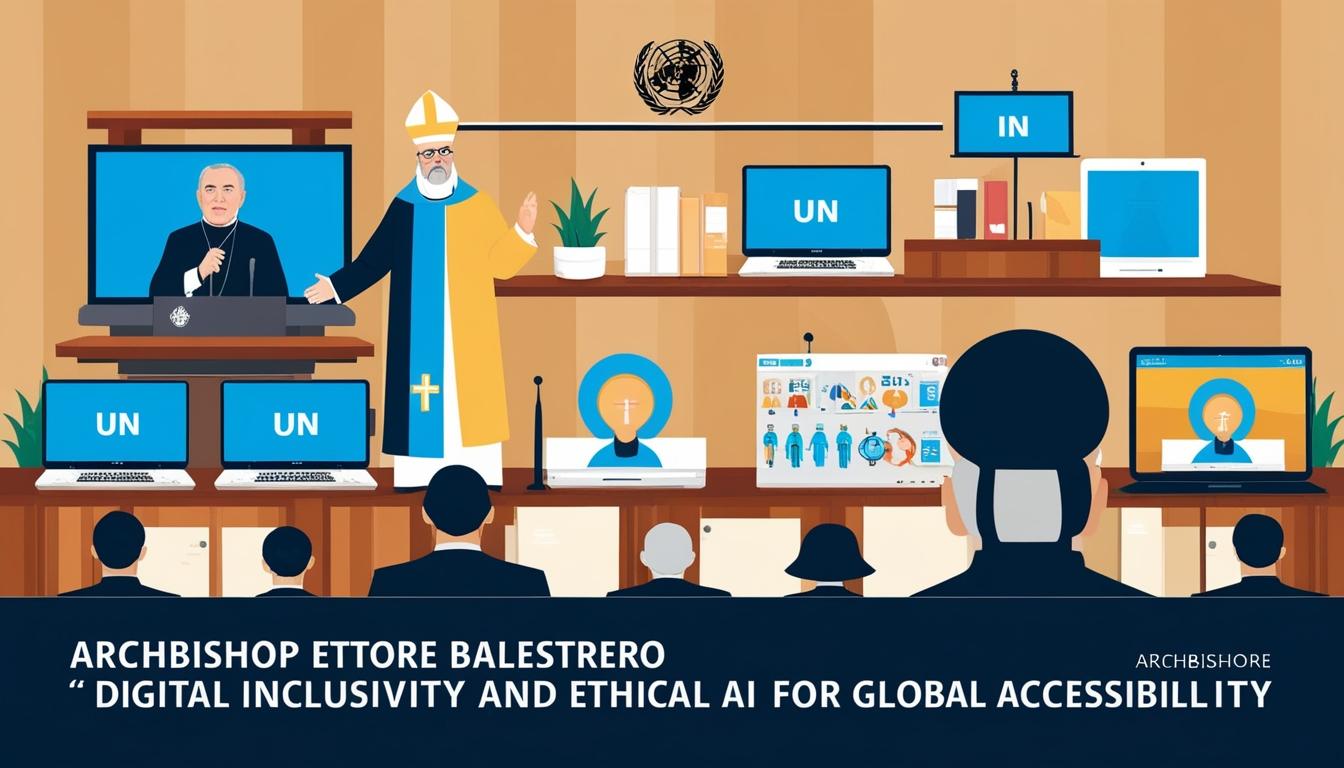
At a recent meeting of a United Nations committee, a senior Vatican official advocated for the universal and affordable access to digital technology, highlighting its importance for individual development and well-being. Addressing the assembly, Archbishop Ettore Balestrero, who serves as the apostolic nuncio and Permanent Observer to the United Nations and other international organisations based in Geneva, underscored the necessity of digital inclusivity.
The meeting, which took place in Geneva, Switzerland, focused on global digital access and emerging technology regulation. Archbishop Balestrero emphasised that digital technology and connectivity are crucial components for personal development and societal well-being. He pointed out that there is a fundamental requirement to ensure equitable access to digital resources for all individuals, including those residing in remote or rural areas, as well as those living in the Least Developed Countries (LDCs). These comments reflect a growing recognition of the digital divide that can exacerbate existing social and economic inequalities.
Archbishop Balestrero brought special attention to the adoption of the Global Digital Compact. This international agreement aims to establish a mutual understanding among nations regarding the use and governance of digital technologies. The archbishop expressed his optimism about this development and further called for the elaboration of comprehensive ethical frameworks that will govern the advancement and use of artificial intelligence (AI).
The Vatican's stance at the UN reflects the broader objectives of the Catholic Church to address modern technological challenges in a manner that upholds human dignity and promotes equitable development. By advocating for these measures, the Vatican signals a commitment to integrating ethical considerations into the rapidly evolving world of digital technology and AI innovation.
This push for an inclusive digital environment articulated by Archbishop Balestrero highlights a significant intersection of technology, ethics, and international policy, emphasizing a unified global approach to overcoming digital disparities and ensuring technology serves the broader human good.
Source: Noah Wire Services