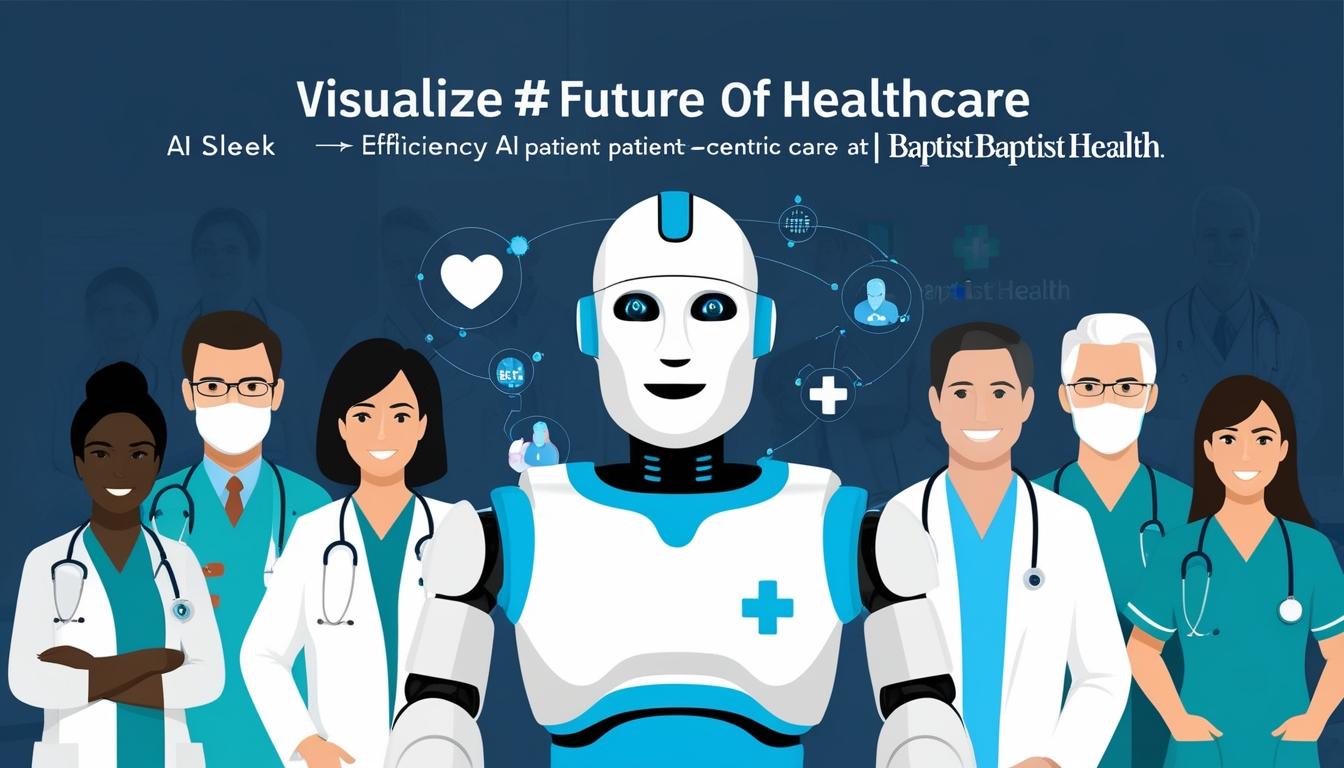
Baptist Health recently made significant strides in incorporating generative artificial intelligence (AI) into its operations, revealing considerable potential for increasing efficiency and reducing costs in healthcare settings. This was outlined in a presentation by Miri, during a meeting attended by numerous leaders in the healthcare industry, where he emphasised the importance of clarifying the purpose behind implementing AI solutions. According to Miri, success hinges on maintaining a focus on the foundational need driving the adoption of AI, rather than solely the returns on investment (ROI).
Baptist Health’s primary motivations for adopting AI were clear: mitigating staff burnout, expanding patient access, and enhancing the focus on clinical practice. One of their first ventures was the introduction of a conversational AI tool, dubbed the Baptist Enterprise Linguistic Learning Environment (BELLE). Initially deployed to manage password reset queries at the internal service desk, BELLE's rollout coincided with the launch of a new electronic health records system, which was expected to increase service desk requests significantly.
The internal deployment of BELLE yielded promising results between July and October, as it effectively managed service requests, leading to notable improvements in patient satisfaction and labour savings. The AI system allowed Baptist Health to terminate their engagement with an external firm previously handling password resets, saving the organisation approximately $1 million annually.
Despite these successes, Miri acknowledged that the deployment of AI tools in healthcare is not without challenges. He cited an instance where the chatbot provided an incorrect response to a patient’s inquiry about telemedicine appointments, underscoring the need for continuous refinement and quality assurance of AI systems. He stressed the importance of data quality and the necessity of having specialised teams dedicated to quality assurance.
Baptist Health has also been proactive in collaborating with other healthcare systems, sharing AI model anomalies through their electronic health records vendor’s library, a move aimed at refining best practices across the sector.
Furthermore, Baptist Health is exploring additional AI applications, including AI-driven scribing solutions for providers and nurses, and automated response technologies. These innovations are part of a broader strategy to streamline operations, reduce workload on staff, and improve service delivery to patients.
For healthcare executives grappling with the complexities of generative AI, Miri advocated for a back-to-basics approach. By continuously revisiting the essential needs of users—whether they are clinicians or patients—and maintaining a patient-centred focus, healthcare organisations can effectively harness the potential of AI technologies.
Miri’s insights were shared as part of the broader discussions at the 2024 CHIME Fall Forum, marking a significant moment for healthcare leaders considering AI's transformative impact on the industry.
Source: Noah Wire Services