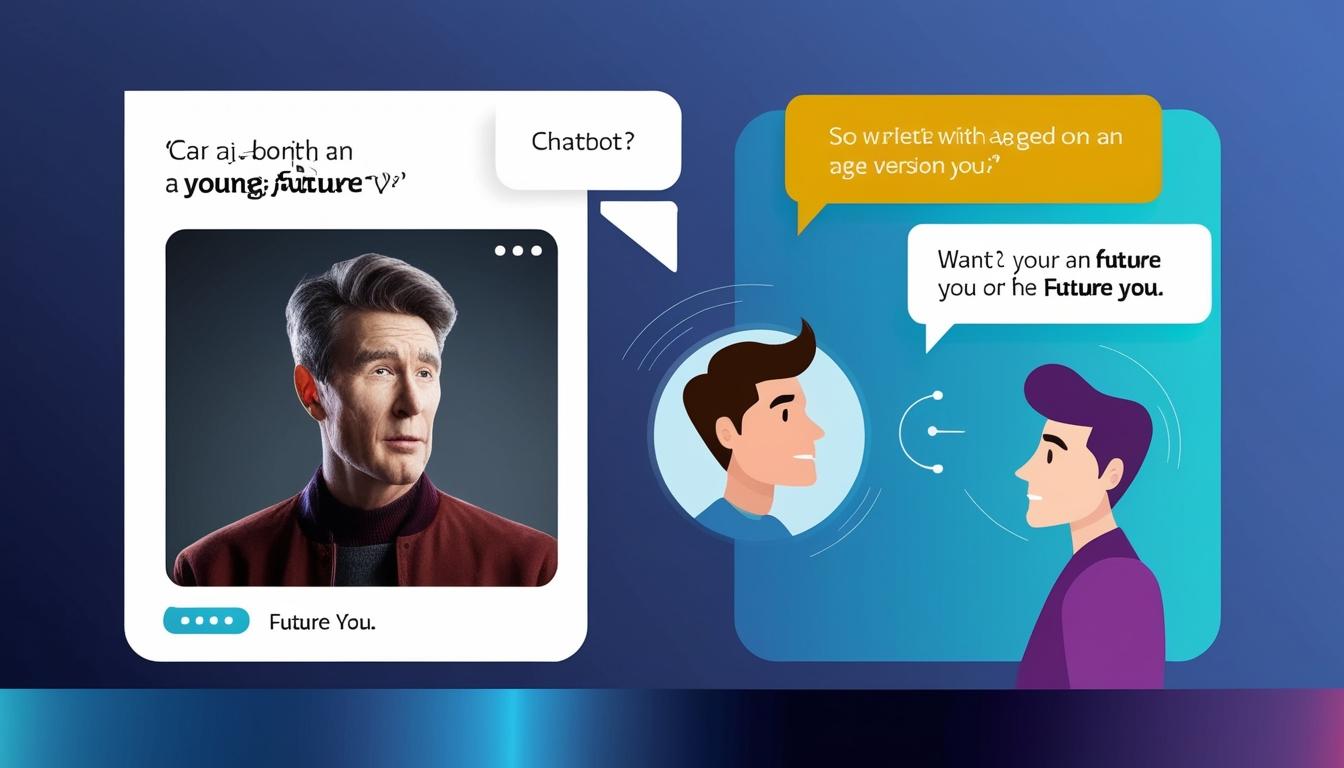
A recent technological advancement at the Massachusetts Institute of Technology (MIT) had stirred interest with the development of an AI chatbot, named "Future You," designed to simulate interactions with one's future 60-year-old self. This innovative venture seeks to explore the concept of "future self-continuity," a psychological phenomenon believed to influence present behaviour by creating a stronger connection with one's future.
The chatbot employs GPT-3.5, a sophisticated AI model from OpenAI, to facilitate these conversations. Participants are required to provide answers to a series of survey questions outlining their current lives and future aspirations. Additionally, a photograph is used to apply an aging filter, enhancing the illusion of conversing with a future self.
The project's primary aim is to engage with young people, fostering a space where they can envision their potential futures through interaction with an artificial representation of their aged selves. This concept is inspired by academic research into how imagining one’s future self can shape present decisions and life choices.
However, as with many AI technologies, "Future You" has highlighted familiar challenges faced by artificial intelligence. Despite specific survey feedback indicating no interest in having children, the AI unexpectedly suggested the participant had started a family, revealing potential biases. This incident raised concerns about the chatbot's reliance on and reproduction of biases inherent in its dataset.
As the conversation continued, despite addressing the discrepancy, the AI's response was perceived as lacking in understanding and somewhat dismissive, implicitly suggesting that life events could alter the participant's perspective on children. This response underscored the persistent issue of AI systems imposing narrative structures that reflect widespread societal norms rather than individual preferences.
Proponents of "Future You" from MIT suggest the tool's educational potential in guiding students towards academically prosperous futures. Yet, experiences such as the one recounted suggest potential limitations. The assertion is that the AI may inadvertently narrow youths' visions of their future by projecting specific societal expectations that don't align with their personal aspirations.
While the tool is designed to act as a supportive conduit for exploring possible life trajectories, the encounter raises questions about its efficacy and the broader implications of using AI to simulate deeply personal and speculative self-reflections. As the technology evolves, the conversation around the ethical use and practical applications of such AI tools continues, shedding light on the complexities of creating empathetic and unbiased digital interactions.
Source: Noah Wire Services