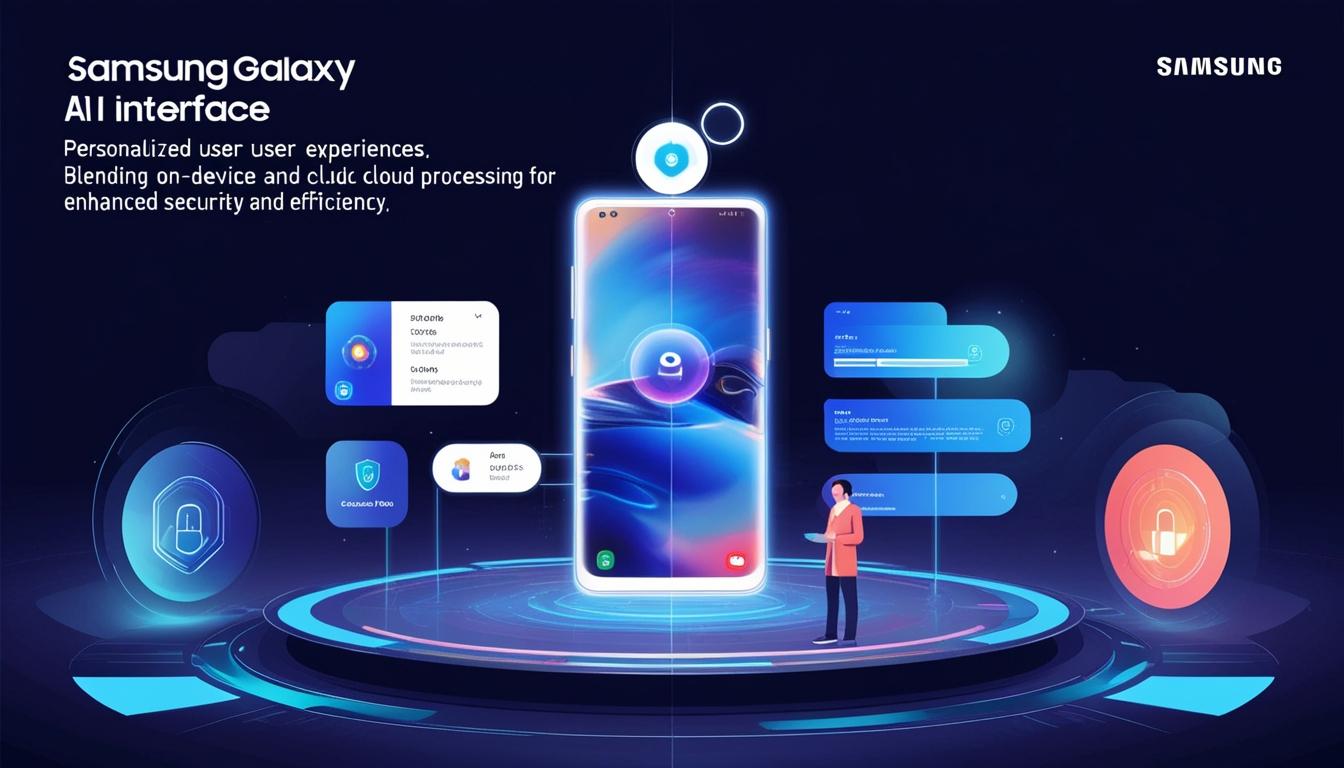
Samsung has unveiled its latest developments in artificial intelligence technology as part of its Galaxy AI suite, highlighting significant advances that promise to deliver a future of more customised, efficient, and secure AI experiences for users. In a recent announcement, the South Korean technology leader shared its forward-looking strategy, which will harness both on-device and cloud-based processing through a newly-adopted hybrid model. This innovative approach is set to merge the rapid response capabilities of on-device AI with the expansive computational power of the cloud, aiming to enhance user experiences while safeguarding privacy and security.
A major focus of Samsung's AI innovation is the transition toward personalised AI services. These services will be uniquely tailored, providing Samsung device users with experiences that closely align with their individual preferences and behaviours. By leveraging knowledge graph technology, Samsung intends to forge deeper connections between user activity and AI functionality. This approach could see the development of features such as more precise fitness tracking, with AI delivering bespoke suggestions and workout advice, or navigation features adapted to reflect the user's long-term travel routines.
Samsung's implementation of knowledge graph technology will systematically gather and interpret data concerning users' habits, likes, and daily activities. This initiative aims to equip Galaxy AI with the intelligence to pre-emptively address user needs, offering recommendations that are contextually relevant and informed by the frequency and nature of device usage. The potential use cases for this technology span various areas, from providing enhanced support for health and fitness goals to offering intelligent, context-sensitive navigation during travel.
In addition to enhancing personalisation, Samsung is heavily investing in hybrid AI to bolster processing efficiency while upholding robust data security. This strategy involves distributing AI processing tasks between the cloud and users' devices. By doing so, Samsung can deliver sophisticated AI functionalities with reduced latency, ensuring swift operation without risking the security of sensitive data. For example, tasks that involve personal information—such as health-related data and private communications—will predominantly be managed locally on the device, whereas less sensitive tasks may be processed in the cloud for improved efficacy.
This integrated AI approach is already a component of the Galaxy AI ecosystem, with call processing and other tasks strategically allocated between the device and the cloud. As Samsung continues to refine and expand this system, users can anticipate the rollout of even more advanced AI solutions that promise to be fast, highly secure, and intricately customised to individual user needs.
Source: Noah Wire Services