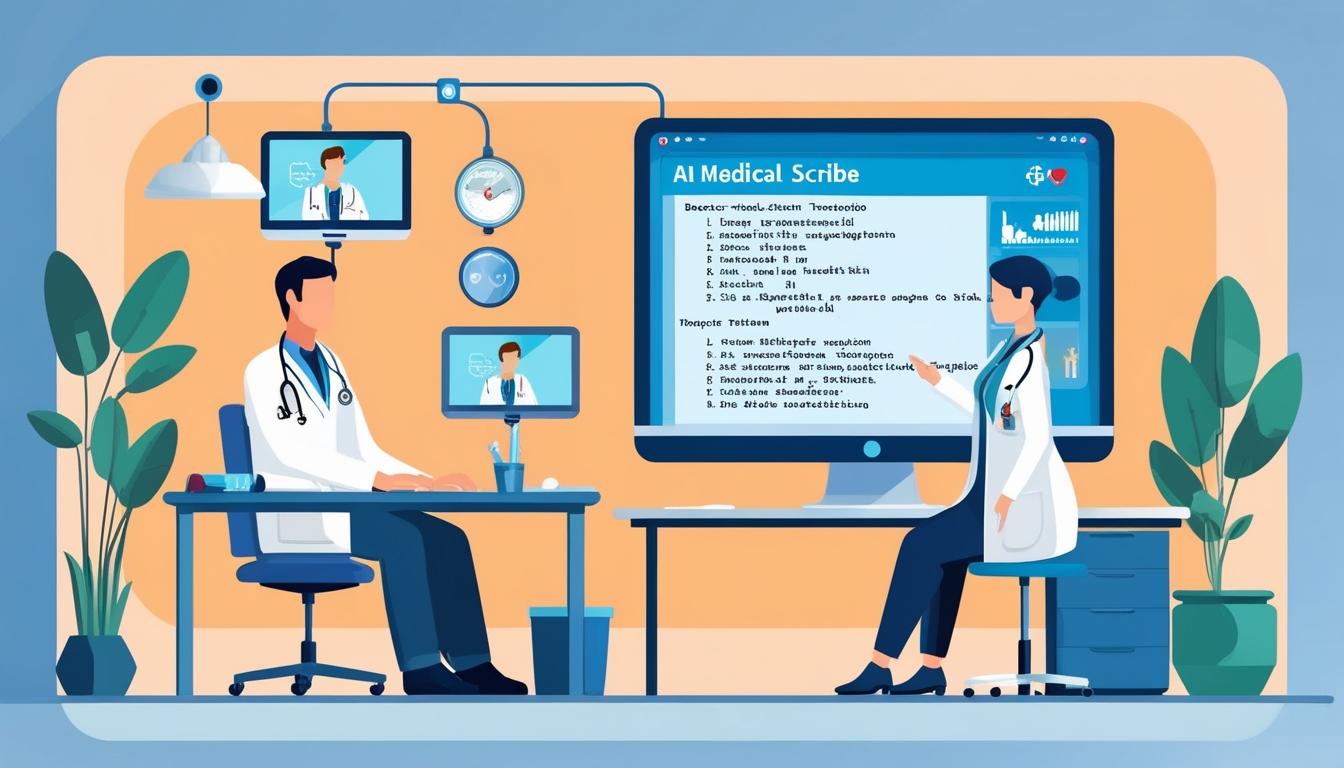
The integration of artificial intelligence (AI) tools into healthcare has been a transformative development, particularly in the realm of medical scribing and charting. This innovation involves the use of advanced machine learning algorithms to capture, transcribe, and input physician-patient interactions into electronic health records (EHRs) in real time. Terry Ciesla, Senior Vice President of ScribeEMR in Woburn, Massachusetts, highlights that these AI-enabled medical scribing solutions are progressively being adopted by healthcare providers (HCPs), although some remain cautious due to concerns about privacy and workflow disruption.
In practice, AI medical scribes offer several notable benefits. According to a study published in the Journal of Medical Systems, implementing such technology can reduce documentation time by nearly 30%, enabling healthcare providers to focus more on patient care, see more patients, and potentially increase revenue. The AI systems are designed to accurately capture and transcribe natural, conversational speech, including various dialects and languages, which is critical in diverse clinical settings.
The appeal of AI in healthcare documentation lies not only in the speed and accuracy of data entry but also in the potential for enhancing care quality. AI-generated clinical notes are produced swiftly—often in as little as 20 to 30 seconds with over 90% accuracy—which helps reduce the after-hours documentation burden on physicians. This efficiency could contribute to significant fiscal benefits, as indicated by a report from the American Medical Association. The report asserts that physicians can accommodate up to 20% more patients daily with the aid of AI scribes, which translates to a substantial increase in annual revenue.
Despite these advantages, choosing the appropriate AI solution requires careful consideration of several factors. A robust AI scribing system should possess features such as fast and accurate clinical note generation, an intuitive user interface with minimal clicks, and the ability to improve accuracy over time through training. Additionally, the system should be customizable to suit the specific jargon and protocols of various medical specialties.
Healthcare providers can choose from different levels and models of AI scribing integration. Real-time AI charting solutions can automatically generate encounter notes for immediate review and upload them to any electronic medical record (EMR). Alternatively, post-visit notes can be processed securely on HIPAA-compliant platforms for later refinement by trained medical scribes. A hybrid model involves a human scribe enhancing AI-generated notes before they are integrated into EMRs.
Despite the evident operational and financial benefits, one of the critical challenges for healthcare organisations remains finding an AI solution that seamlessly integrates into their existing practices. The comfort level of clinical teams with technology, and their willingness to adapt to new processes, plays a crucial role in this integration. Notably, AI's ability to streamline documentation can also mitigate the significant challenge of healthcare provider burnout. Recent data from the Annals of Internal Medicine reveals that physician burnout costs the U.S. healthcare system a staggering $4.6 billion annually, and reducing the documentation workload with AI could partially address this issue.
As AI continues to revolutionise medical documentation, the decision to adopt these technologies involves balancing the potential improvements in efficiency and revenue against concerns about data privacy and organisational change. The ongoing evolution of AI in healthcare settings remains a critical area of interest as providers strive to deliver high-quality care while managing operational demands.
Source: Noah Wire Services