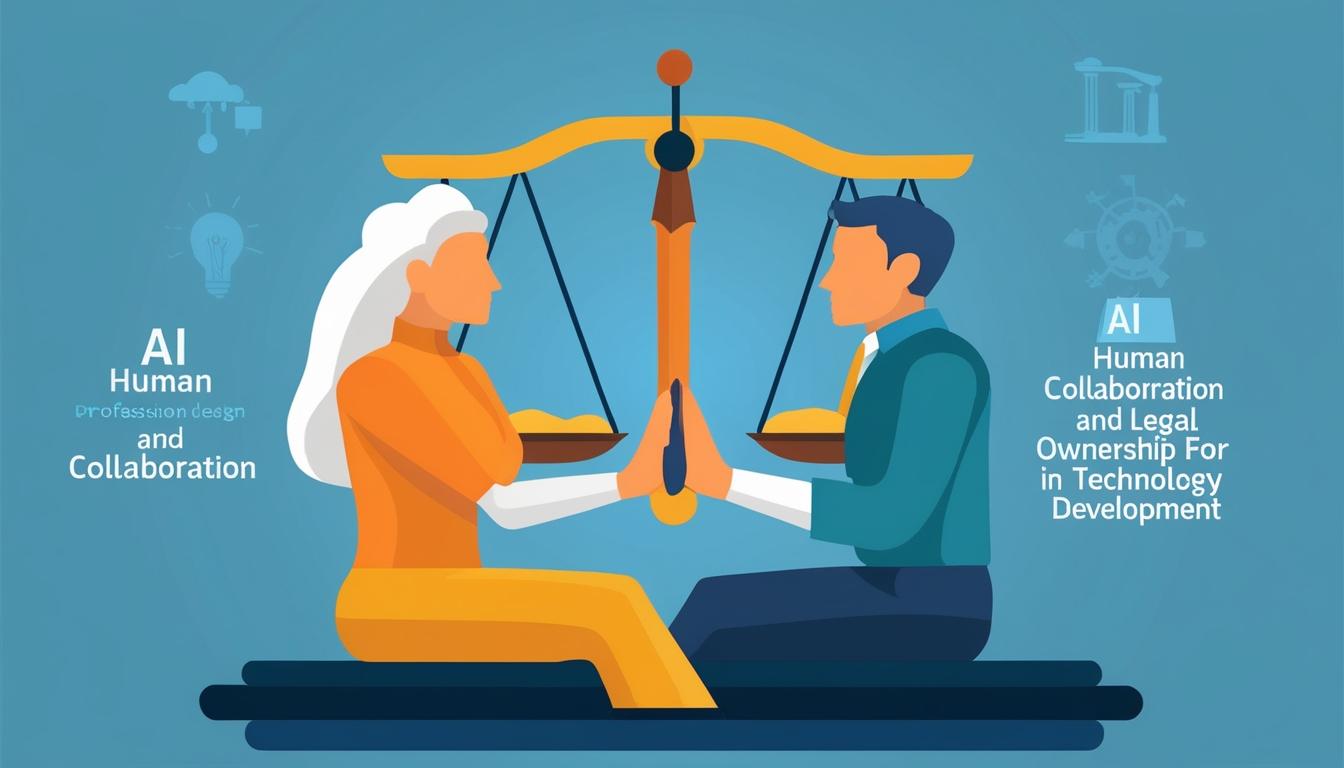
Understanding the Legal Landscape of AI in Company Technology Development
As companies increasingly integrate artificial intelligence (AI) into their technology development strategies, it's crucial to navigate the legal landscape that currently governs AI outputs. Under U.S. law, the products generated by AI are not inherently protected by copyright or patent regulations. This presents unique challenges concerning ownership, which necessitate a strategic approach to incorporating human contribution in company projects involving AI.
Ownership and Human Contribution
In the current legal framework, the protection of AI outputs through copyright or patents hinges on demonstrable human input. For copyright protection, this involves human roles in providing creative input such as storyboarding, software architecture, and design elements. In the case of patents, it means the human's role is in the conception of the invention. Therefore, companies must meticulously document these human contributions to establish a clear claim to ownership.
This documentation is central to the enforcement of intellectual property rights. In future litigation or enforcement scenarios, the ability to demonstrate specific human contributions to AI-developed products can be critical. It determines ownership claims, entitlements to damages, or injunctions—vital factors in asserting and defending intellectual property rights.
Strategic Deployment of AI Tools
Another significant consideration is where and how AI tools are deployed within an organisation. The deployment of AI in creating proprietary technology that could potentially provide a competitive advantage requires careful planning. Such technology could exclude competitors and bolster company growth, making it essential to be vigilant about ownership and legal compliance.
Conversely, for more peripheral functions such as testing, debugging, or producing marketing materials, where a company might not intend to enforce intellectual property rights, the deployment of AI tools can be more liberal. The key is a balanced approach that considers both the potential advantages and the legal implications of using AI in various business operations.
Navigating the Legal Interplay
Ultimately, the integration of AI into company technology must be thoughtfully managed, considering the complex interplay between new technological possibilities and existing legal structures. Companies need to ensure they can both leverage AI's capabilities and protect their creative investments under current legal standards. Understanding these dynamics allows businesses to innovate while safeguarding their intellectual assets in an evolving technological and legal environment.
Source: Noah Wire Services